Thinking Process
PHASE 1: VISUAL DECONSTRUCTION
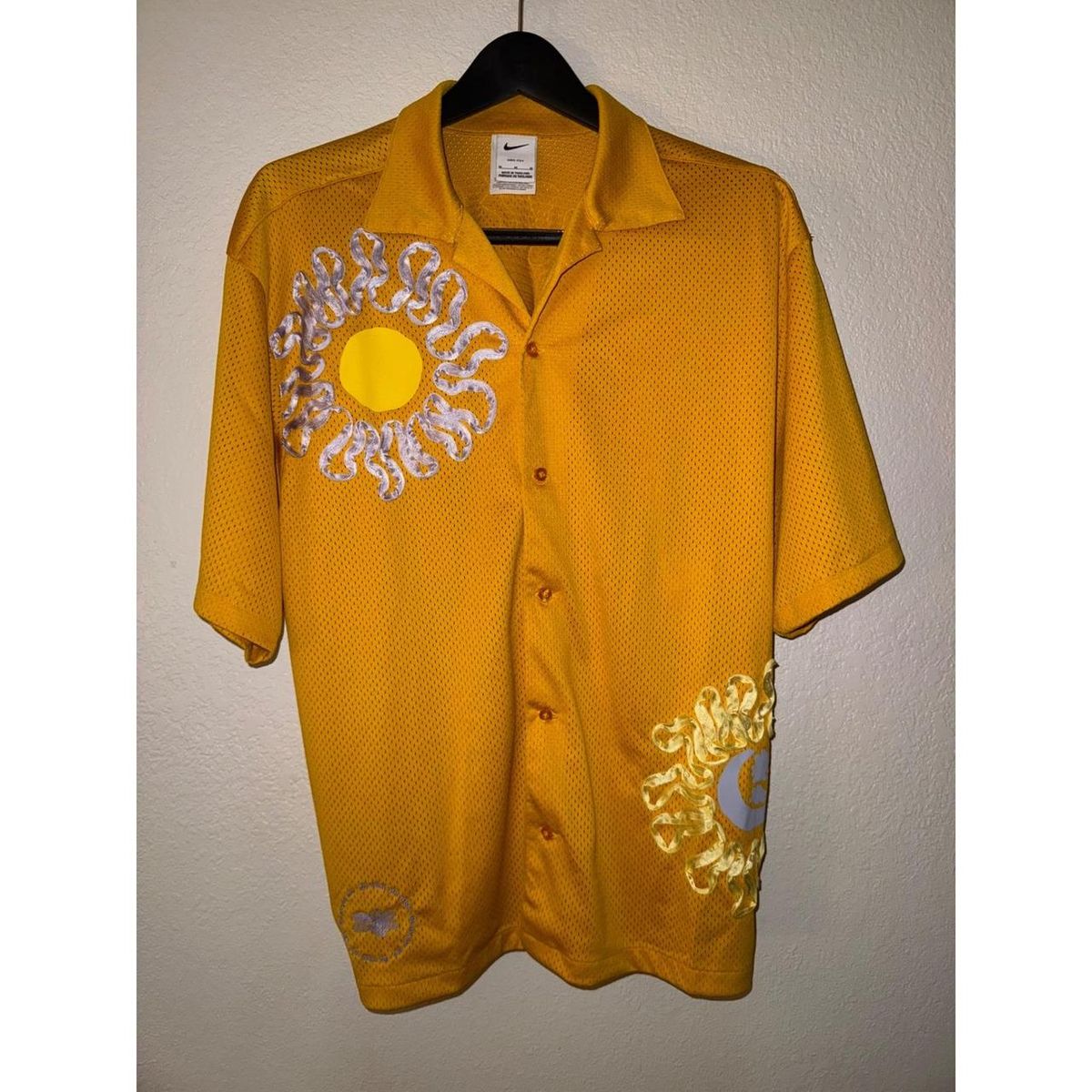
- **Fabric Physics:** The source garment is a synthetic athletic mesh (jersey knit) with a porous, open-hole texture. Unlike the user's current stiff leather jacket, this material is lightweight, breathable, and has a moderate drape with high elasticity. Light interaction should show a soft, diffuse sheen consistent with polyester, rather than the sharp, oily specular highlights of the leather. The fabric should absorb light in the mesh perforations.
- **Key Features:** The distinctive yellow hue must remain vibrant but affected by the outdoor lighting. Critical details include the "ribbon-like" 3D embroidered sun/floral appliques (lavender/silver on the right chest, yellow/grey on the left hip), the camp collar structure, the specific button placement, and the visible mesh texture of the base fabric.
PHASE 2: FIT & DRAPE SIMULATION
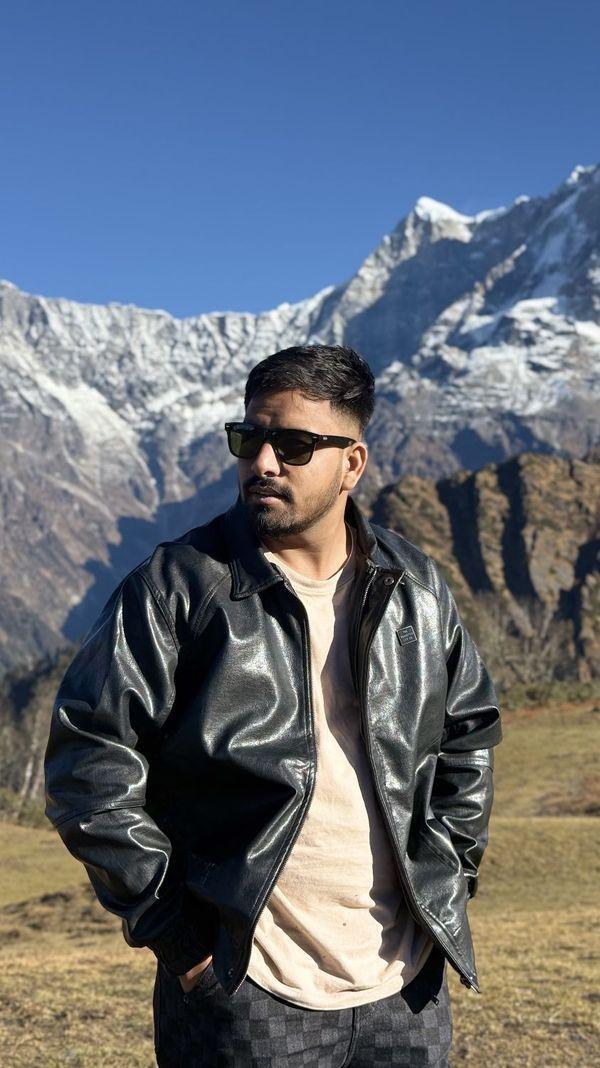
- **Body Mapping:** The user is currently wearing a bulky leather jacket which adds artificial volume to the shoulders and torso. The simulation must adhere to the user's actual torso shape defined by the beige t-shirt underneath, removing the "bulk" of the leather. Since the user has hands in pockets, the new shirt's hemline must bunch and rise slightly at the waist/hip contact points, creating tension lines radiating from the pocket entry. *Crucial:* The source shirt is short-sleeved, while the user wears a long-sleeved jacket; the system must generatively reconstruct the user's forearms and skin texture where the leather sleeves currently exist.
- **Occlusion Handling:** The user's beard and chin obscure the very top of the neck area and must layer *over* the new collar. The user's hands/wrists are tucked into the jacket; the new garment must appear to be tucked behind the wrists or deformed by the wrists entering the pants pockets, depending on the target pocket height.
PHASE 3: ENVIRONMENT & LIGHTING
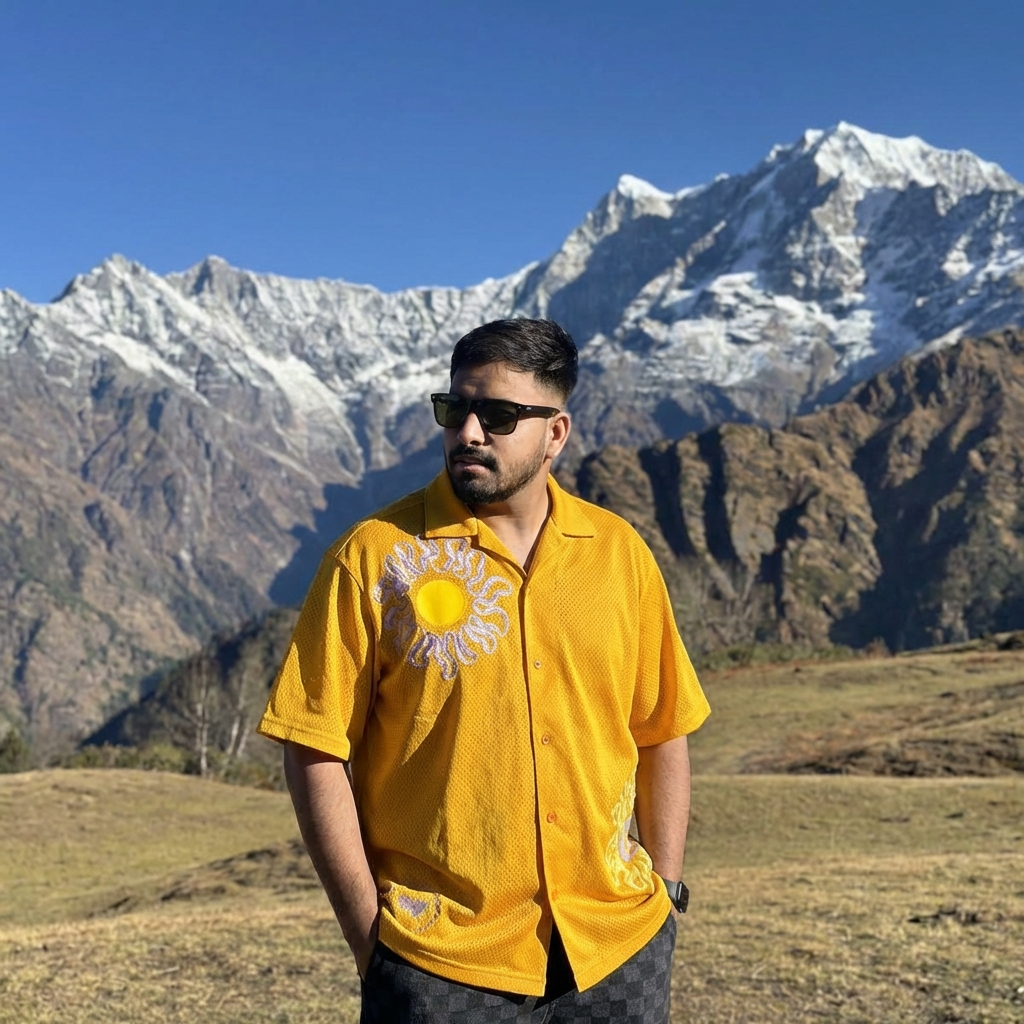
- **Light Match:** The scene features harsh, high-altitude mountain sunlight coming from the user's right (viewer's left), creating high-contrast shadows. The new yellow shirt must exhibit bright exposure on the left side and cast sharp, deep shadows on the user's right side and inside garment folds.
- **Color Calibration:** The source image is indoor/flat lighting. The yellow must be color-graded to match the cool color temperature of the outdoor environment (bluish shadows from the sky ambient occlusion) and high dynamic range of the sunny background. The yellow should not look "neon" but rather sun-washed on the highlights.
PHASE 4: IDENTITY PROTECTION
- **Facial Lock:** The user's hair, forehead, sunglasses, nose, mouth, beard, and ears must be frozen pixel-perfectly. The jawline definition must remain sharp.
- **Body Integrity:** Do not slim the user's build. Maintain the shoulder width and chest breadth evident in the user's stance. While the jacket volume is removed, the underlying muscular/skeletal structure must remain robust and consistent with the head size.