Thinking Process
PHASE 1: VISUAL DECONSTRUCTION
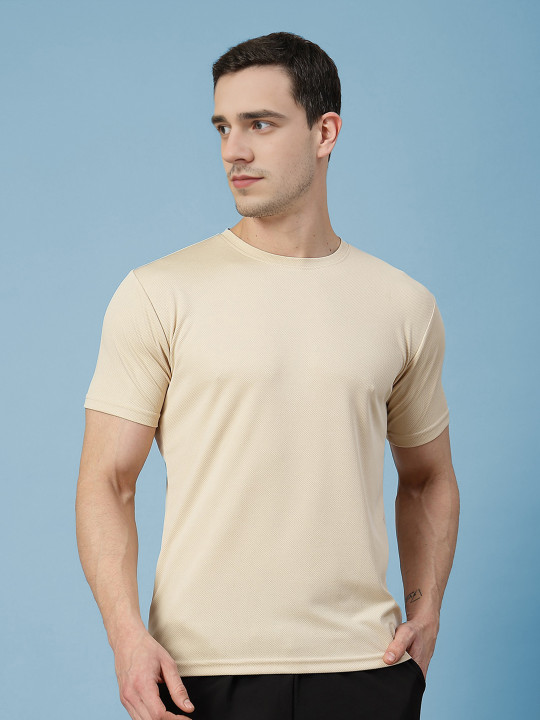
- **Fabric Physics:** The source garment is a textured, technical knit (likely a polyester blend or waffle weave). It exhibits a semi-matte finish with specific specular highlights on the upper chest, suggesting a lightweight material that holds structural integrity rather than draping heavily like silk. It has moderate elasticity.
- **Key Features:** The distinctive micro-mesh/waffle texture pattern must be preserved at high resolution. The ribbed crew neck collar, the double-stitched hem on the short sleeves, and the straight bottom hem are critical geometry markers.
PHASE 2: FIT & DRAPE SIMULATION
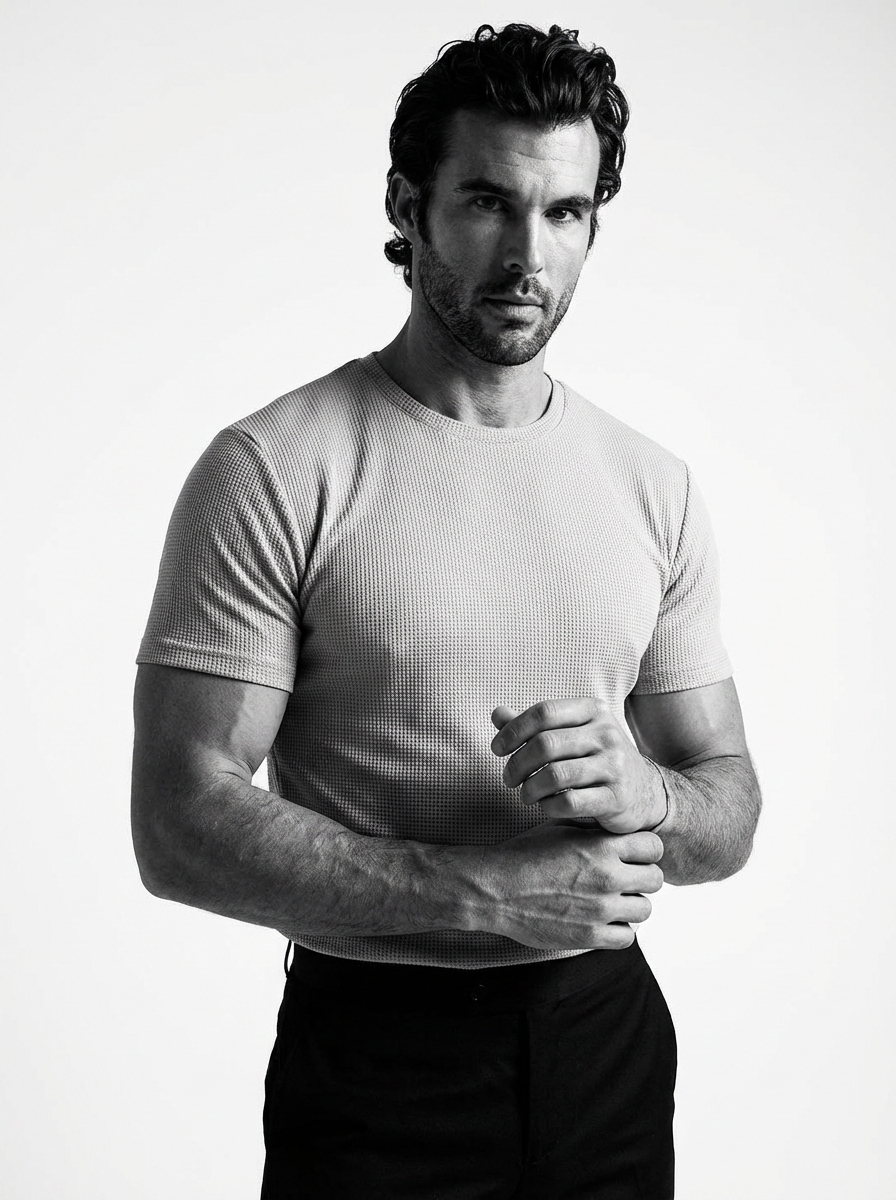
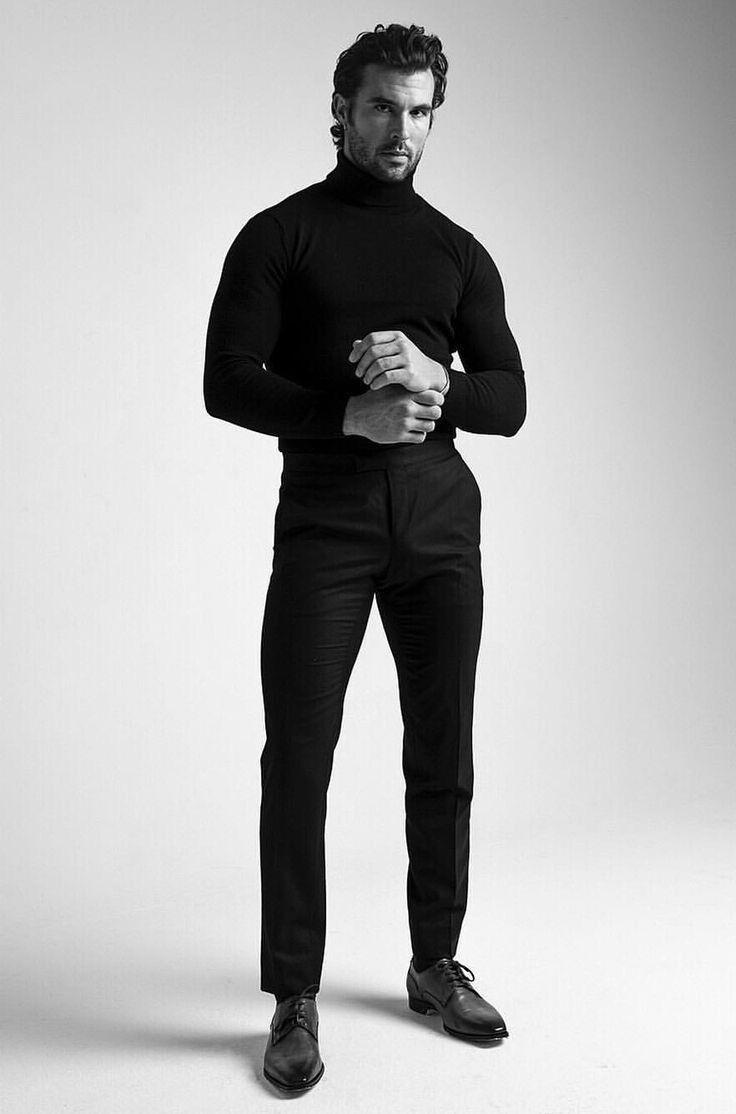
- **Body Mapping:** The target user has a muscular, athletic build (broad shoulders, narrow waist). The new garment must sit flush against the deltoids and pectorals but drape vertically with slight looseness around the abdominals, avoiding the skin-tight silhouette of the current turtleneck. The fabric must deform naturally around the latissimus dorsi. *Critical Note:* Since the source is short-sleeved and the target is currently wearing long sleeves, skin generation/in-painting will be required for the biceps and forearms.
- **Occlusion Handling:** The user's hands are clasped at the mid-torso/solar plexus level. These hands act as a hard occlusion layer; the beige fabric must flow *behind* the fingers and wrists. The shadow cast by the hands onto the stomach area must be rendered onto the new fabric.
PHASE 3: ENVIRONMENT & LIGHTING
- **Light Match:** The target environment utilizes high-contrast studio lighting, likely a single key light from the upper-left (viewer's perspective), resulting in deep shadows on the model's left side (viewer's right). The beige shirt must adopt this high dynamic range—bright highlights on the right shoulder/pec and deep, nearly black shadows on the opposing side.
- **Color Calibration:** The target image is monochromatic (grayscale). If the output remains B&W, the beige luminance values must be converted to a light grey that contrasts with the black trousers. If the output is color, the beige temperature must be cooled slightly to match the stark, studio white-balance of the environment, ensuring it doesn't look like a warm overlay on a cold image.
PHASE 4: IDENTITY PROTECTION
- **Facial Lock:** The user's hair structure, facial hair, jawline, and neck structure above the clavicle must be completely frozen.
- **Body Integrity:** The user's V-taper physique must be maintained. Do not slim the waist or reduce shoulder width. The garment should add volume (fabric thickness) on top of the body mesh, not replace the body volume.