Thinking Process
PHASE 1: VISUAL DECONSTRUCTION
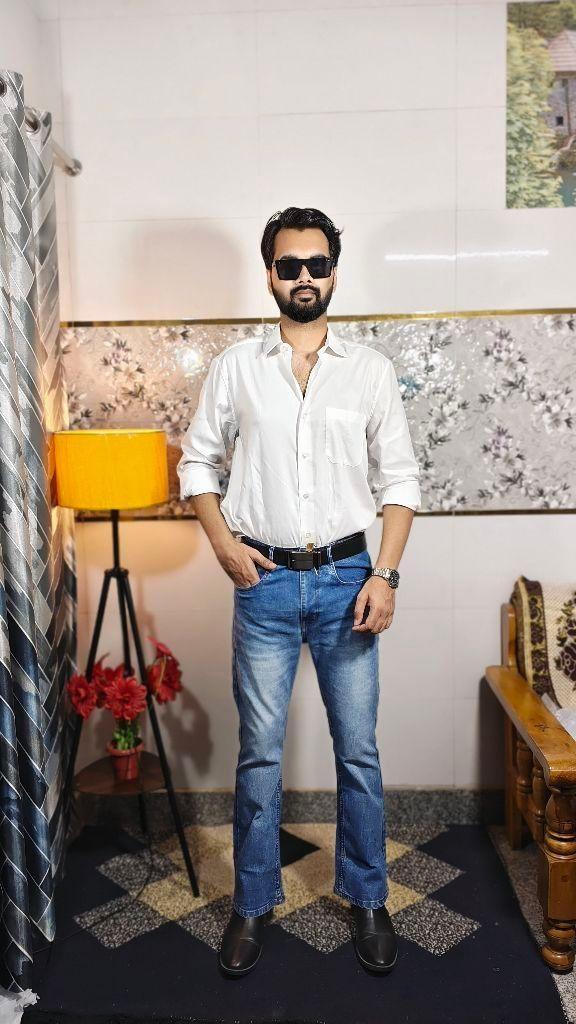
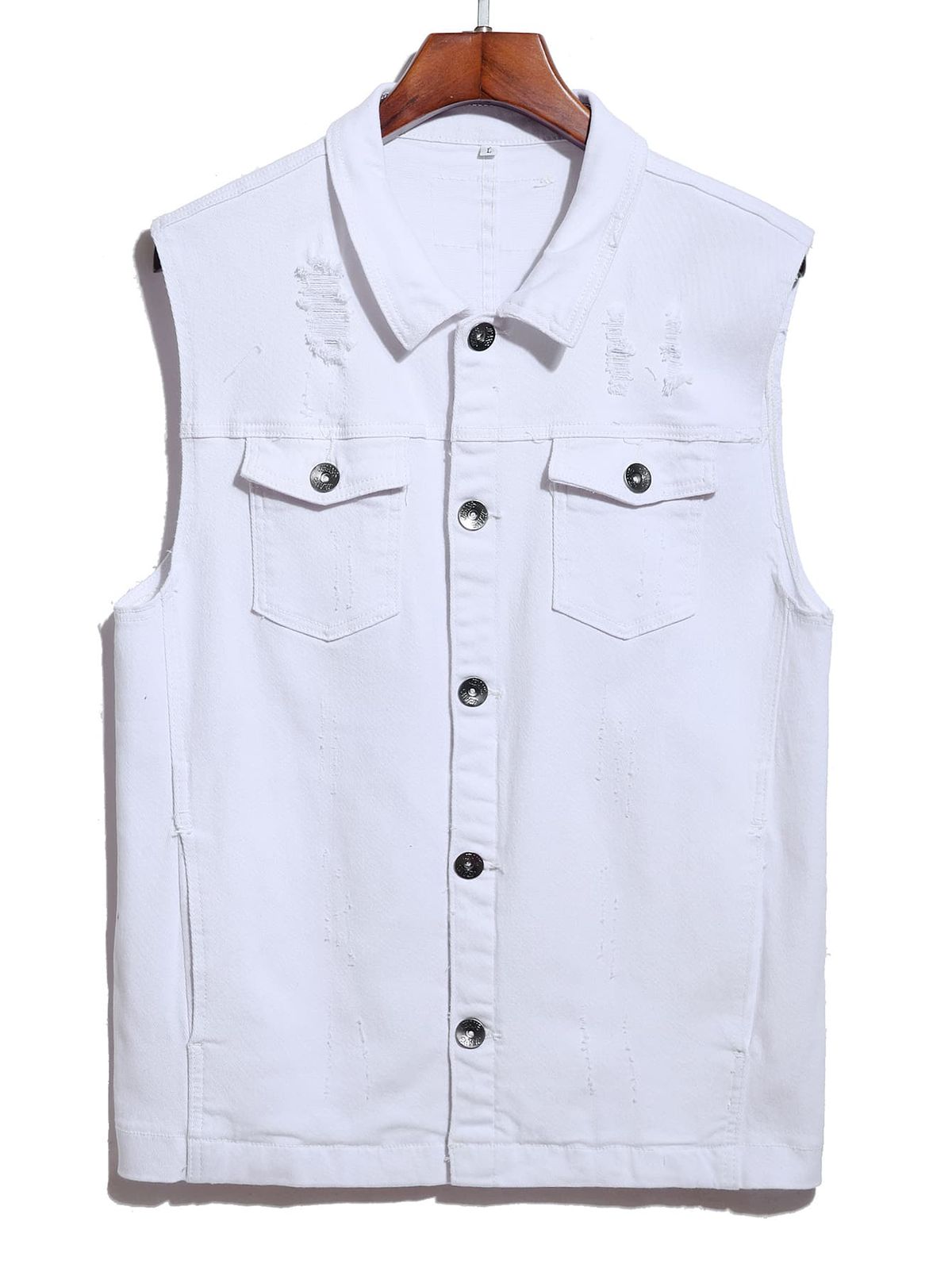
- **Fabric Physics:** The source material is heavyweight, non-stretch white denim. Unlike the user's current soft cotton shirt, this fabric possesses high structural rigidity. It must not conform tightly to muscle definition but rather hold its own boxy shape. Light reflection should be matte with high-frequency texture scattering (canvas weave), while the metal buttons must exhibit sharp, specular highlights consistent with hard surfaces.
- **Key Features:** Preservation of the distressed/ripped texture on the upper chest panels is critical. The distinct vertical panel stitching (felled seams), the two chest pockets with buttoned flaps, and the center-front button placket must remain clearly defined. The collar is a structured spread collar which must sit higher and stiffer than the current soft shirt collar.
PHASE 2: FIT & DRAPE SIMULATION
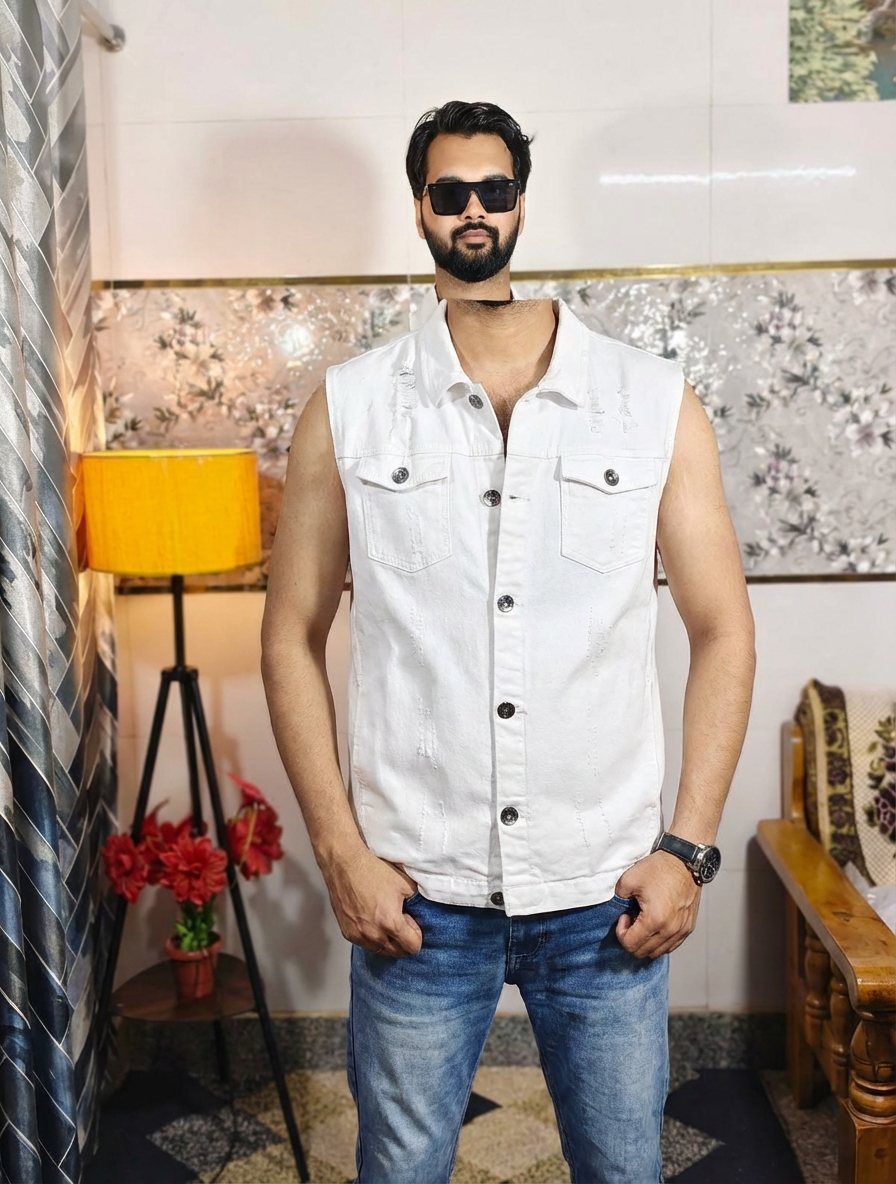
- **Body Mapping:** Due to the rigid nature of denim, the vest must bridge the gap between the pectoral muscles and the waist, hanging relatively straight rather than tapering aggressively. The armholes must be positioned correctly at the shoulder joint; since the source is sleeveless and the target has long sleeves, the simulation must account for the change in silhouette, exposing the arms (requiring texture generation for skin consistent with the face/neck) or strictly layering over the existing shirt if a layered look is intended. The hemline should fall near the belt line, potentially sitting slightly wider than the hips due to fabric thickness.
- **Occlusion Handling:** The user's beard overlaps the collar region; the new vest collar must be masked *behind* the beard hair. The user's right hand is tucked into the jeans pocket; the vest's hemline on the right side must interact naturally with the wrist/forearm, likely resting just above the wrist entry point to avoid physics clipping.
PHASE 3: ENVIRONMENT & LIGHTING
- **Light Match:** The scene features a warm local light source (lamp on the left) and a diffuse, cooler ambient light from the front/ceiling. The white denim must adopt the ambient ambient occlusion of the room—absorbing the slight yellow cast from the lamp on the left flank while maintaining a cooler white on the front planes. Shadows must be cast by the collar onto the neck and by the vest hem onto the jeans/belt area.
- **Color Calibration:** The source image is a high-key, neutral white studio shot. The target environment is warmer. The white point of the vest must be shifted slightly towards the warm spectrum (approx. 3500K-4000K range) to match the white balance of the user's current shirt and the tiled background, ensuring it doesn't appear as a "blue-white" cutout.
PHASE 4: IDENTITY PROTECTION
- **Facial Lock:** Absolute freeze required on the region above the neck line. The sunglasses, beard, nose, ears, and hairstyle must remain pixel-perfectly identical to the original image.
- **Body Integrity:** The user's shoulder width, torso length, and stance must be preserved. Do not slim the waist or artificially bulk the shoulders. The underlying body mesh used for the cloth collision must match the user's current biometric proportions exactly.