Thinking Process
PHASE 1: VISUAL DECONSTRUCTION
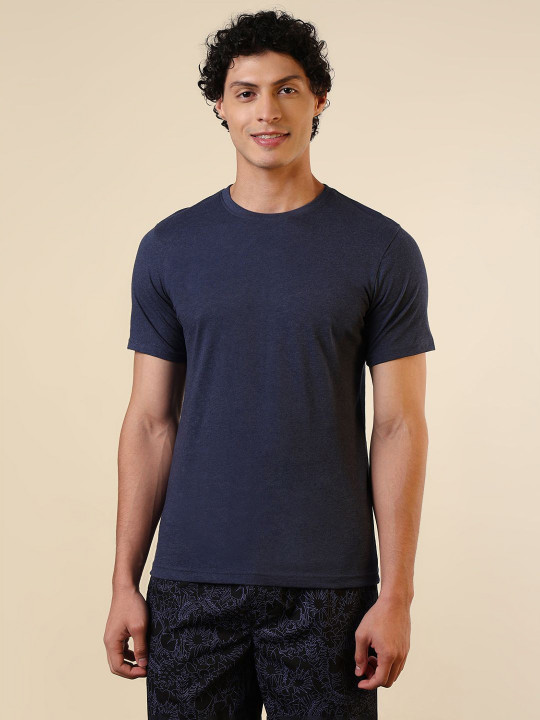
- **Fabric Physics:** The source garment is a standard cotton or cotton-blend jersey. It has low specularity (matte finish) and moderate weight. In the target simulation, the fabric must exhibit soft fold recovery and conform to the body without rigid stiffness. The texture should appear slightly heathered or grainy, preventing it from looking like a flat, solid block of color.
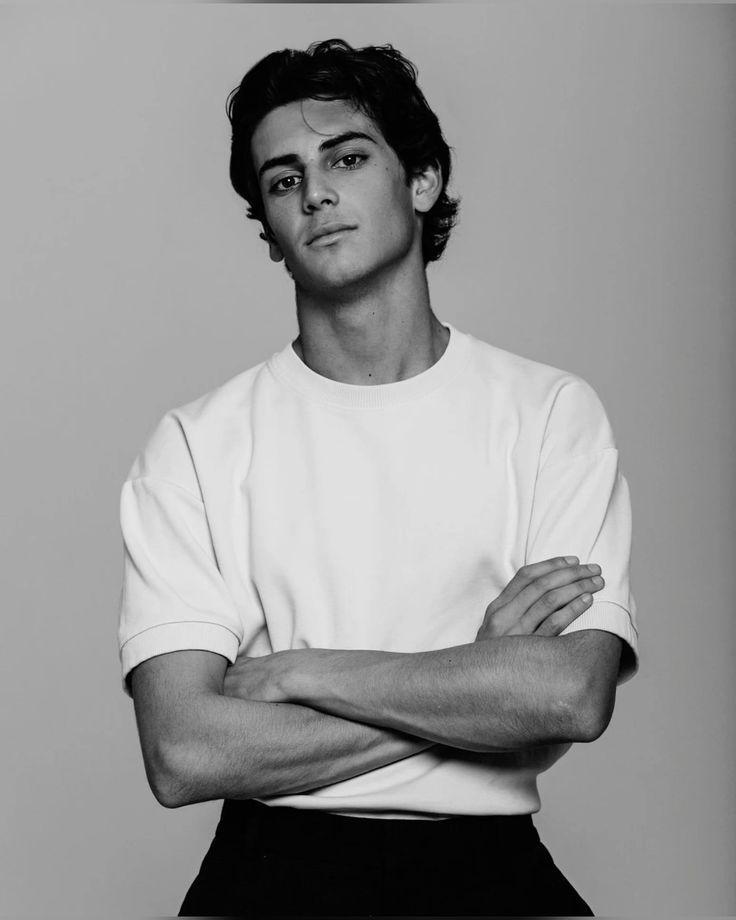
- **Key Features:** The ribbed crew-neck collar is the defining structural element and must replace the target’s current wider neckline. The standard hemmed short sleeves of the source must replace the target's current rolled-up cuffs. The dark navy blue color must be translated into a deep, textured charcoal grey value to match the black-and-white medium of the target image.
PHASE 2: FIT & DRAPE SIMULATION
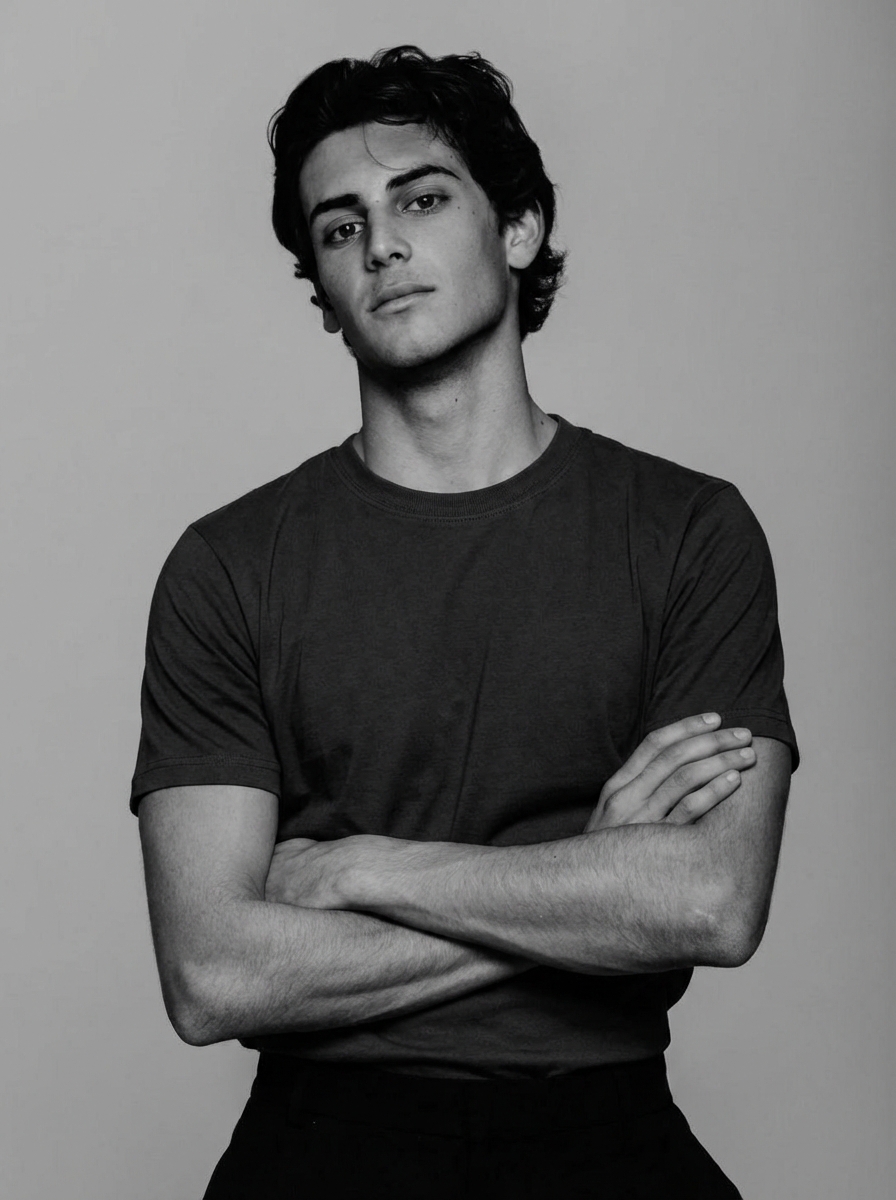
- **Body Mapping:** Due to the target's "arms crossed" pose, gravity is secondary to tension. The fabric must appear pulled tight across the shoulder blades (upper back) and the deltoids. Significant "bunching" and horizontal stress folds must be generated immediately above the forearms and in the armpit area where the fabric is compressed. The chest area should show slight flattening where the arms press against it.
- **Occlusion Handling:** This is a high-complexity occlusion scenario. The user’s forearms, hands, and the visible portion of the biceps MUST be segmented as a foreground layer. The new garment must pass *under* the crossed arms but *over* the torso. The precise boundary where the arms press into the chest requires contact shadows to ground the garment.
PHASE 3: ENVIRONMENT & LIGHTING
- **Light Match:** The User Image utilizes dramatic black-and-white studio lighting, likely a softbox positioned to the user's right (viewer's left), creating a gradient from light to shadow across the face and torso. The new garment must replicate this high-contrast luminance map: lighter on the left deltoid/chest, fading into deep shadow on the right side and under the crossed arms.
- **Color Calibration:** Total desaturation is required. The source garment's navy blue must be converted to a low-luminance grayscale (dark grey/black) to match the target photo's aesthetic. The black point of the shirt must match the black point of the user's trousers to ensure the image looks cohesive.
PHASE 4: IDENTITY PROTECTION
- **Facial Lock:** The user's entire head, including the specific tousled hairstyle, jawline, and neck musculature (sternocleidomastoid), must be frozen. The shadow cast by the jaw onto the neck must be preserved.
- **Body Integrity:** The user's arm vascularity and muscle definition are prominent; absolutely no smoothing or resizing of the arms is permitted. The torso width must remain consistent with the original image; the shirt should not artificially bulk up or slim down the user's frame.