Thinking Process
PHASE 1: VISUAL DECONSTRUCTION
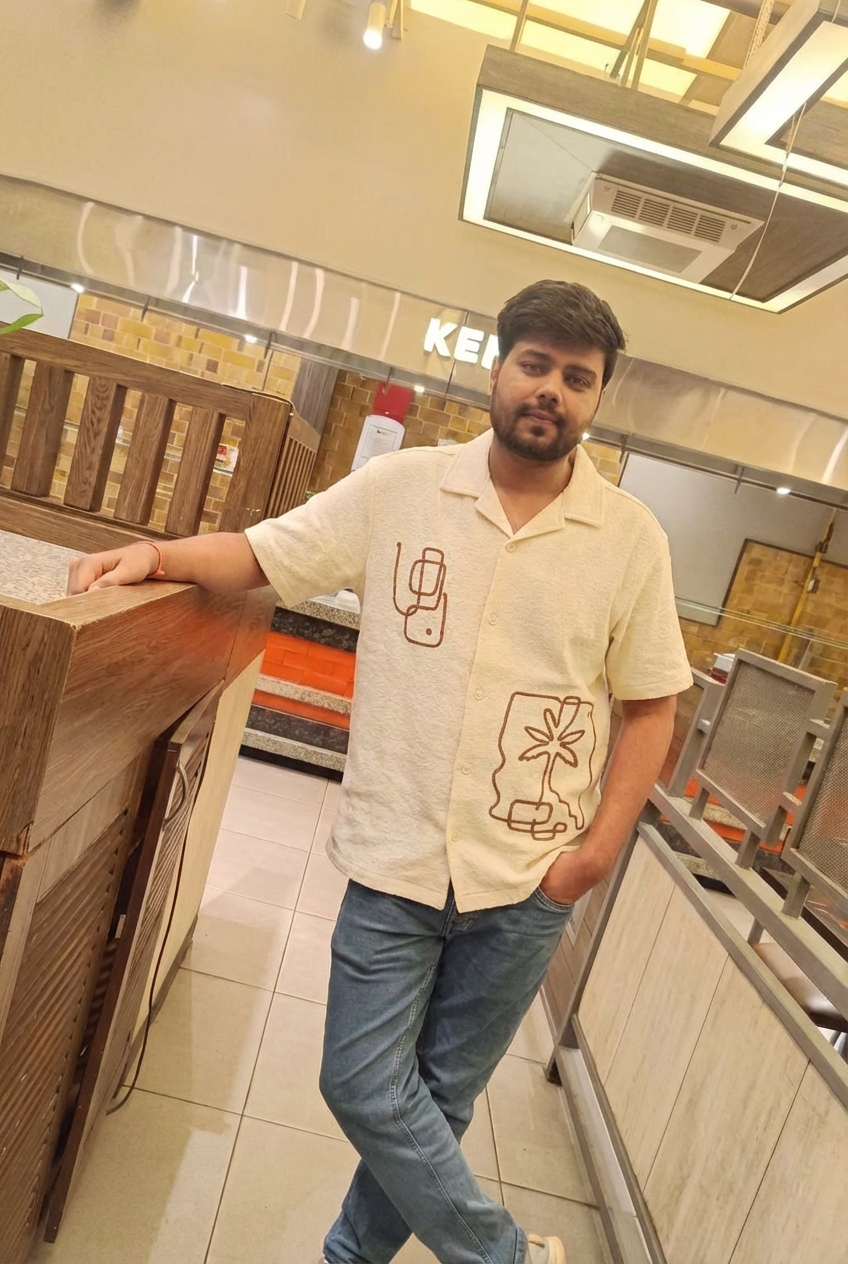
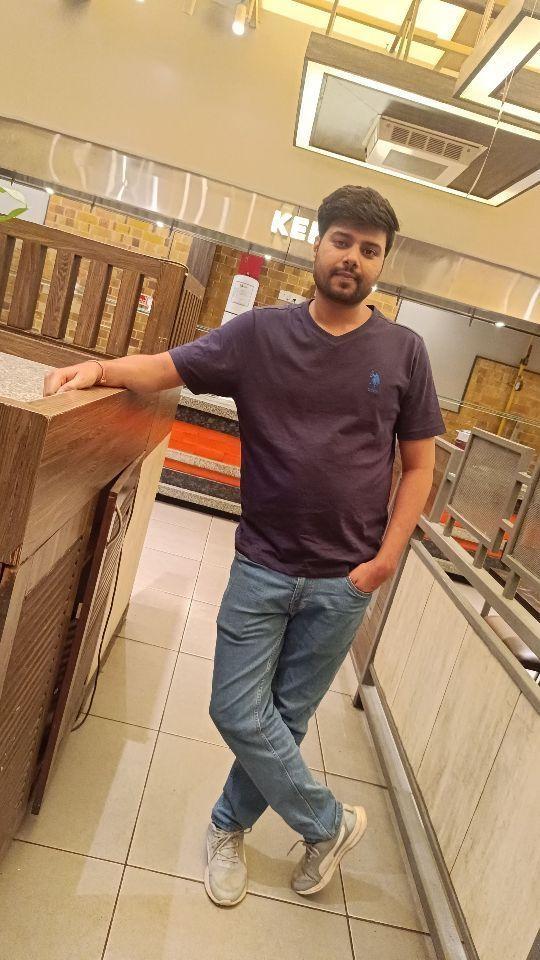
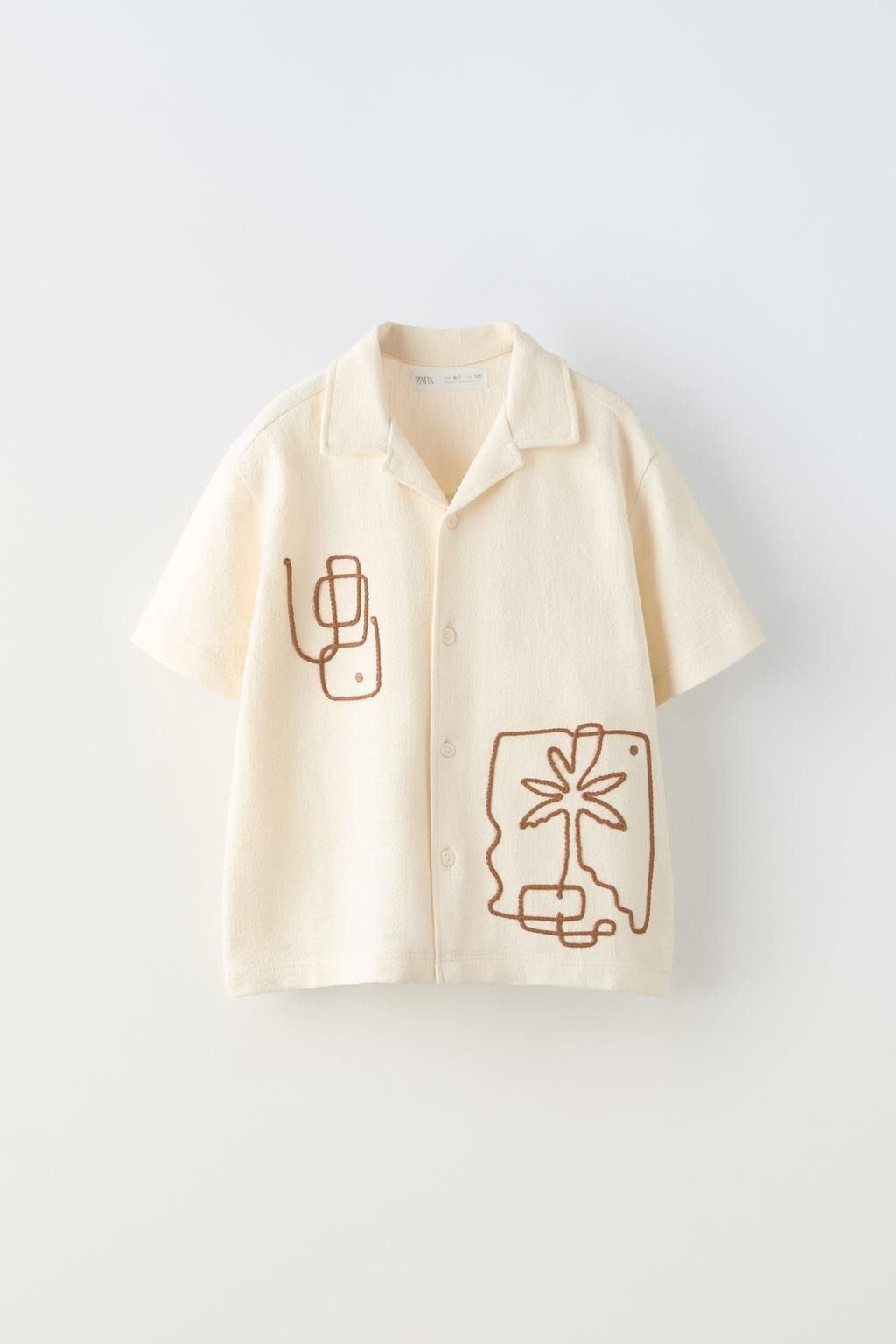
- **Fabric Physics:** The source garment appears to be a textured, heavyweight cotton-terry or linen blend with a matte finish. It possesses high structural rigidity compared to the user's current thin cotton t-shirt. The simulation must render this as a non-reflective, substantial fabric that holds its own shape rather than clinging tightly to the skin.
- **Key Features:**
- **Abstract Embroidery:** The brown, rope-like embroidered designs on the left chest and right torso must be preserved with 3D relief (bump mapping) to show texture.
- **Camp Collar:** The open, notched lapel style (cuban collar) must replace the current V-neck geometry.
- **Texture:** The "towel-like" or boucle surface grain of the cream fabric must be visible.
- **Buttons:** The center-front button placket must remain straight, distorting only slightly with the body's lean.
PHASE 2: FIT & DRAPE SIMULATION
- **Body Mapping:**
- **Right Arm (Leaning):** As the user's right arm is raised and resting on the partition, the new shirt's sleeve must pull upward, creating heavy compression folds at the right armpit and shoulder. The sleeve opening should flare slightly relative to the arm's angle.
- **Left Arm (Relaxed):** The left sleeve should hang naturally with gravity.
- **Torso Fit:** The source shirt is a "relaxed/boxy fit," whereas the current t-shirt is "slim/regular." The simulation must add volume around the waist and midsection; the fabric should drape vertically from the chest, bridging the gap between the ribs and hips without sucking in at the belly.
- **Occlusion Handling:**
- **Left Hand (Thumb in Pocket):** The hemline of the new shirt (likely longer than the current tee) will naturally fall *over* the belt line. The simulation must either drape the hem over the wrist or bunch the fabric slightly behind the left wrist if the "hand-in-pocket" visual is prioritized.
- **Right Arm Interaction:** The right forearm is resting on a surface; the sleeve hem must not clip through the wooden counter but rest naturally against the arm or the surface.
PHASE 3: ENVIRONMENT & LIGHTING
- **Light Match:** The scene utilizes warm, overhead artificial lighting (likely around 3000K-3500K). The cream color of the source shirt must be color-graded to absorb this warm ambient yellow/orange tint, avoiding a sterile "bright white" look.
- **Color Calibration:** Shadows must be warm-grey, not black. Highlights on the textured fabric should be diffuse (soft) due to the matte material, concentrated on the right shoulder and upper chest where the light source hits.
- **Shadow Casting:** The new camp collar must cast a distinct shadow onto the user's upper chest/neck area, deeper than the current flat V-neck seam.
PHASE 4: IDENTITY PROTECTION
- **Facial Lock:** The user's entire head, including the beard, hairstyle, and neck area above the suprasternal notch, must remain pixel-perfectly frozen.
- **Body Integrity:** Strictly prohibit any "slimming" or "muscle enhancement" algorithms. The user's shoulder width and leaning posture mechanics must remain exact; only the *volume* of the clothing changes (adding bulk due to the heavier fabric), not the volume of the person.