
Thinking Process
PHASE 1: VISUAL DECONSTRUCTION
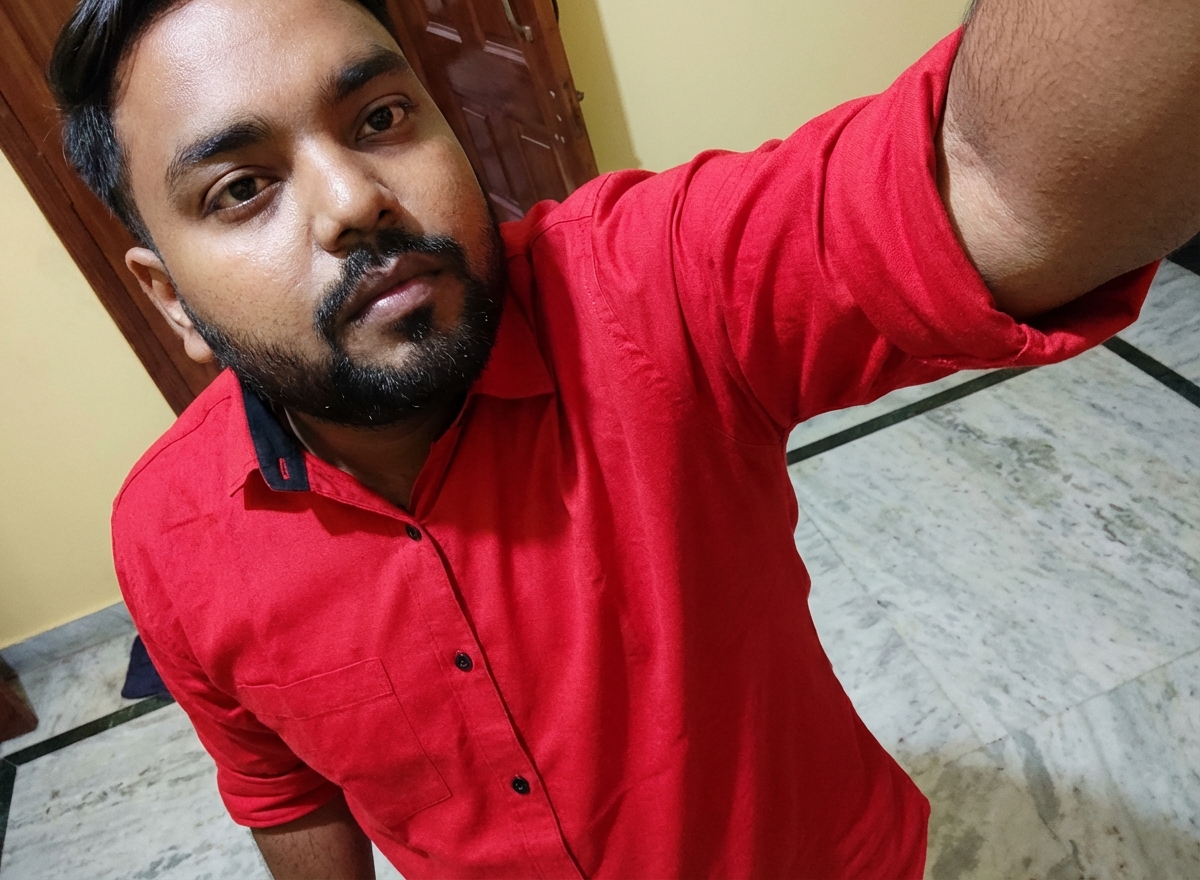
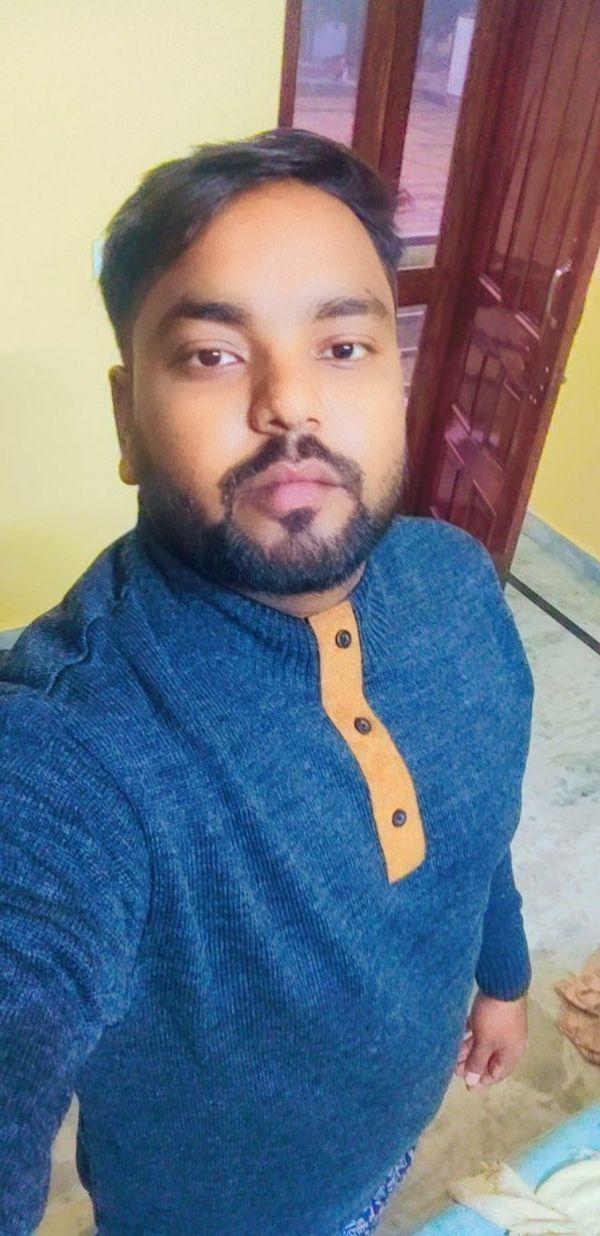
- **Fabric Physics:** The source garment is a woven cotton or cotton-blend shirting fabric. Unlike the user's current knit sweater, this material has structural rigidity (low elasticity). It will not cling to the body contours but rather drape with sharp, angular creases (buckling) rather than soft folds. The surface requires a matte finish with low specularity; it should diffuse light rather than reflect it shinily.
- **Key Features:**
- **Rolled Sleeves:** The preset rolls at the biceps/elbows are critical structural elements that must be maintained (replacing the long sleeves of the current sweater).
- **Contrast Trim:** The black inner collar lining and black buttons provide essential contrast against the red and must remain sharp.
- **Pocket & Placket:** The left chest pocket and the center button placket provide vertical alignment references that must respect the body's rotation.
PHASE 2: FIT & DRAPE SIMULATION
- **Body Mapping:**
- **Selfie Perspective:** Due to the high-angle selfie shot, the shoulders of the shirt must be wider in perspective, tapering down toward the waist.
- **Right Arm (Camera Arm):** The right arm is raised and extended. The woven fabric must simulate tension across the right pectoral and significant bunching/compression at the junction of the shoulder and collarbone. The rolled sleeve on this arm should sit higher on the bicep due to the lift.
- **Torso Volume:** The shirt must drape somewhat straight down from the chest, bridging over the stomach area rather than hugging it (unlike the current jersey knit).
- **Occlusion Handling:**
- **Beard:** The user's beard obscures the very top of the neck. The new shirt collar must be masked *behind* the beard hairs to ensure a realistic depth.
- **Forearms:** Since the source shirt has rolled sleeves and the target image has long sleeves, the blue sweater fabric on the forearms must be segmented out and replaced with skin texture generation matching the user's facial skin tone.
PHASE 3: ENVIRONMENT & LIGHTING
- **Light Match:** The target environment is a warm, indoor setting with a tungsten (yellow-orange) cast. The light source originates from the upper-right (user's left), casting shadows on the user's left side (right side of image). The red shirt must have a gradient shadow applied to its right side (viewer's right) to match the shadow on the user's cheek.
- **Color Calibration:** The source shirt is photographed in bright, neutral white light. To integrate, the red saturation must be lowered slightly, and a warm temperature filter (approx. 3500K-4000K) must be applied to the red fabric so it doesn't look "pasted on" or fluorescent against the warm room background.
PHASE 4: IDENTITY PROTECTION
- **Facial Lock:** The entire head region above the thyroid cartilage—specifically the jawline, beard, mouth, nose, eyes, and hair—must be rigidly frozen. No pixel alteration is permitted above the neck line.
- **Body Integrity:** The volumetric shape of the user must remain constant. Do not apply "slim fit" warping that reduces the user's shoulder width or torso mass. The shirt must be warped to fit *his* frame, not the frame warped to fit the shirt.