Thinking Process
PHASE 1: VISUAL DECONSTRUCTION
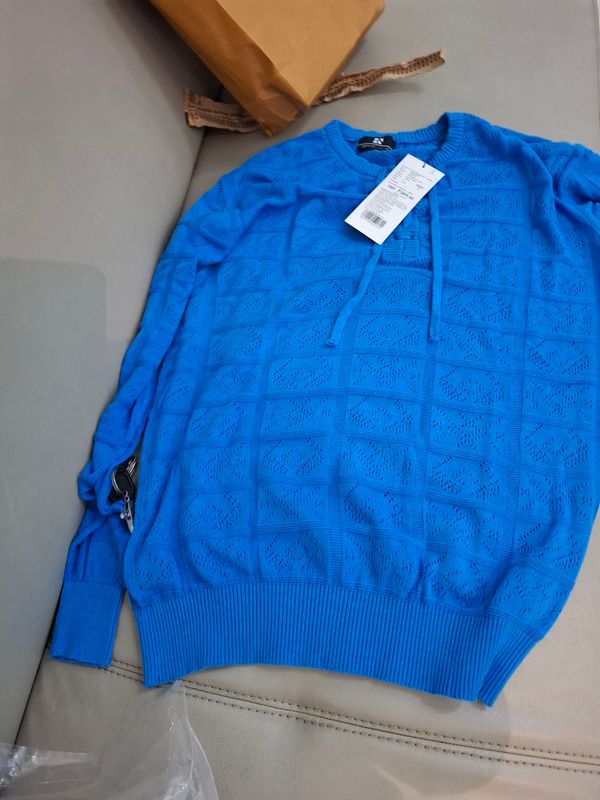
- **Fabric Physics:** The source garment is a textured waffle-knit or basket-weave sweater. The simulation must treat this as a medium-weight, pliable fabric with high surface friction. Unlike the smooth reflection of the user's current cotton shirt, this knitwear absorbs light, producing a matte finish with micro-shadowing within the textured squares. The material has inherent thickness (volumetric displacement) and will not hold sharp creases like a dress shirt; instead, it will form soft, rolling folds.
- **Key Features:** The distinctive square/grid textured pattern is the primary visual identifier and must be preserved without distortion. The ribbed knitting at the cuffs and bottom hem provides structural tension. The drawstring detail at the neckline must be rendered hanging naturally against gravity. The tag attached to the collar in the source image should be removed for the final output.
PHASE 2: FIT & DRAPE SIMULATION
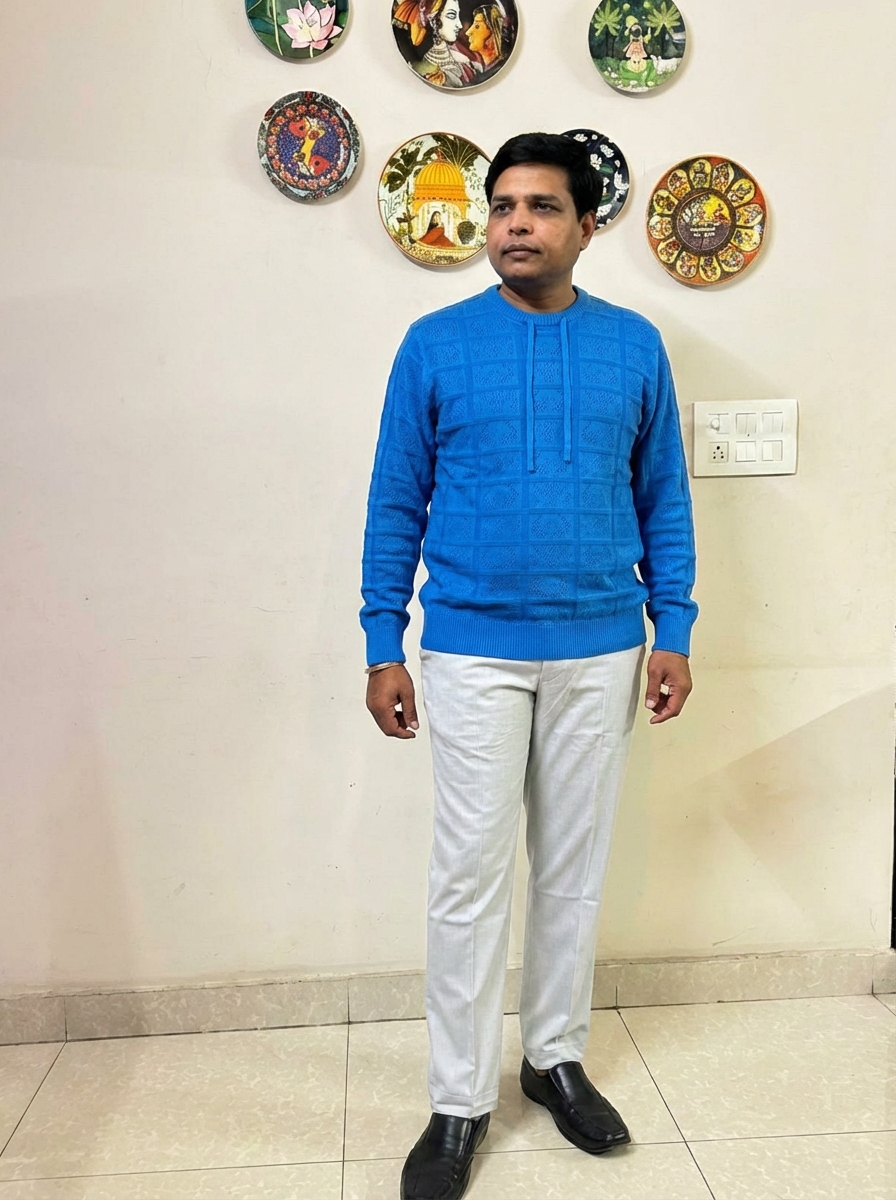
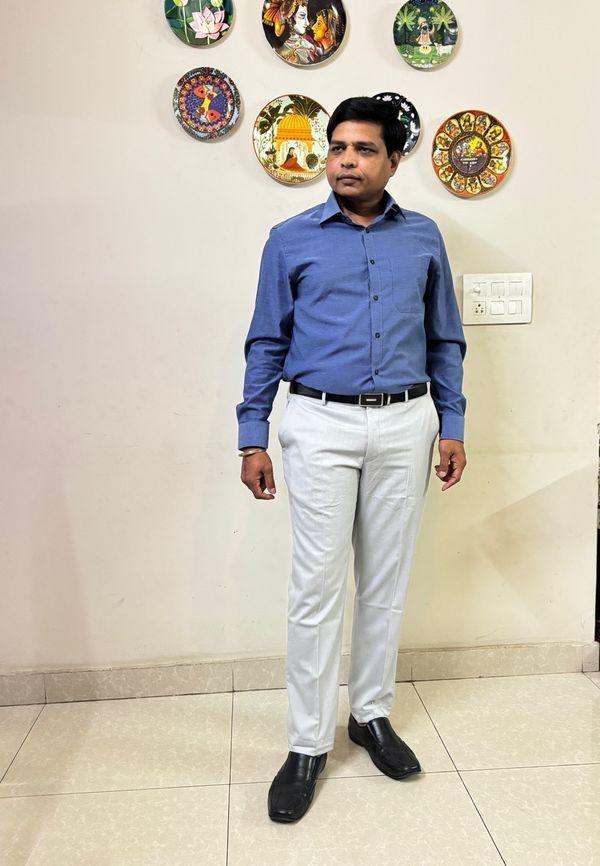
- **Body Mapping:** The user is currently wearing a tucked-in shirt, but the source sweater is designed to be worn untucked. The simulation must extend the sweater's hem *over* the user's belt line, naturally resting at the upper hip level. The shoulders should transition from the user's current structured seam to the softer, potentially dropped-shoulder silhouette of the knitwear. At the user's slightly bent elbows, the thick fabric will create bulkier, horizontal bunching compared to the fine creases of the current shirt.
- **Occlusion Handling:** The user's wristwatch/bangle on the left wrist is a critical occlusion point; depending on sleeve length, it should either be covered by the ribbed cuff or mask the cuff if the sleeve is pushed up. The current belt and trouser waistline will be occluded by the new garment's hem. The neck area needs precise masking to replace the collar of the button-down with the round/crew neck of the sweater without clipping the user's neck skin.
PHASE 3: ENVIRONMENT & LIGHTING
- **Light Match:** The user is in a room with overhead, somewhat diffuse lighting, casting soft shadows downwards (visible under the nose and chin). The new garment must render self-shadowing in the knit texture consistent with this overhead source. The shadows in the arm folds must be soft and diffuse, not harsh.
- **Color Calibration:** The User Image has a slightly warm, indoor tungsten cast (evident in the off-white walls). The Cloth Image is under cooler, flatter light. The bright cyan/electric blue of the sweater must be color-graded to accept the warm ambient light of the room, likely resulting in a slightly warmer, less sterile blue tone to blend user and object realities.
PHASE 4: IDENTITY PROTECTION
- **Facial Lock:** The user's entire head, including the hairline, facial structure, skin tone, and neck (above the clavicle), must remain pixel-perfectly frozen. The gaze and expression must not be altered.
- **Body Integrity:** The user's torso shape must be respected. Do not slim the stomach or broaden the chest artificially. The silhouette should actually expand slightly outward to account for the thickness of the knit fabric replacing the thin cotton shirt. The trousers and shoes below the hip line must remain completely untouched.