Thinking Process
PHASE 1: VISUAL DECONSTRUCTION
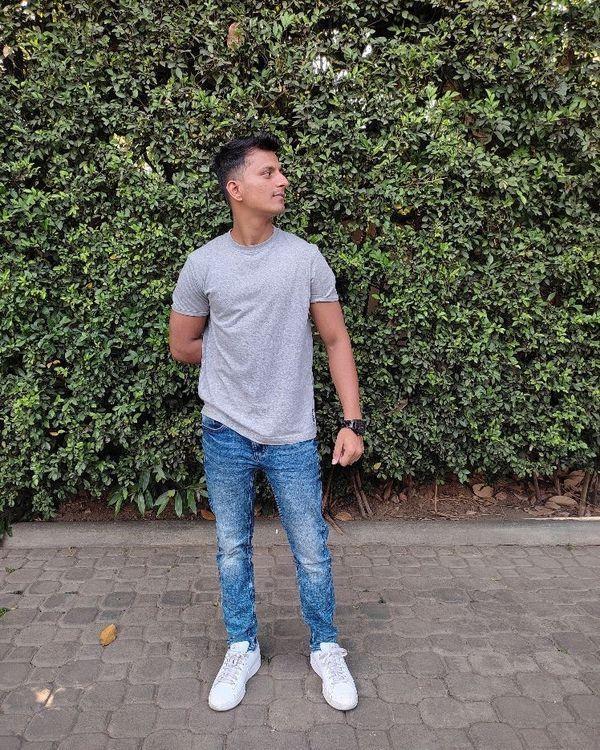
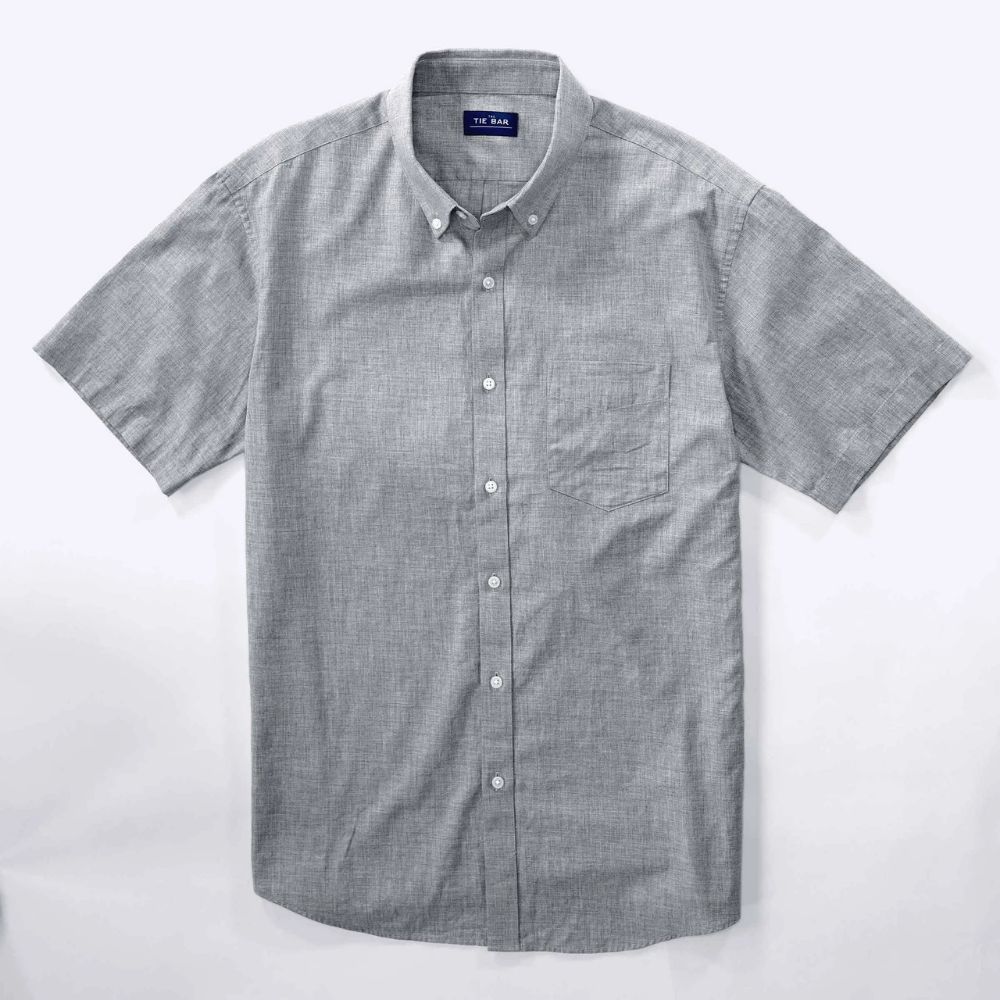
- **Fabric Physics:** The source garment appears to be a Chambray or Oxford cotton blend. Unlike the user's current jersey-knit t-shirt, this material has structural rigidity and does not cling to the skin. It features a matte finish with high-frequency textural noise (heathered weave) that diffuses light rather than reflecting it specularly.
- **Key Features:** The button-down collar structure must replace the existing crew neck. The vertical placket with contrasting white buttons, the single chest pocket on the wearer's left side, and the structured cuff stitching on the short sleeves must be preserved. The curved "shirttail" hemline needs to be rendered, replacing the straight hem of the current t-shirt.
PHASE 2: FIT & DRAPE SIMULATION
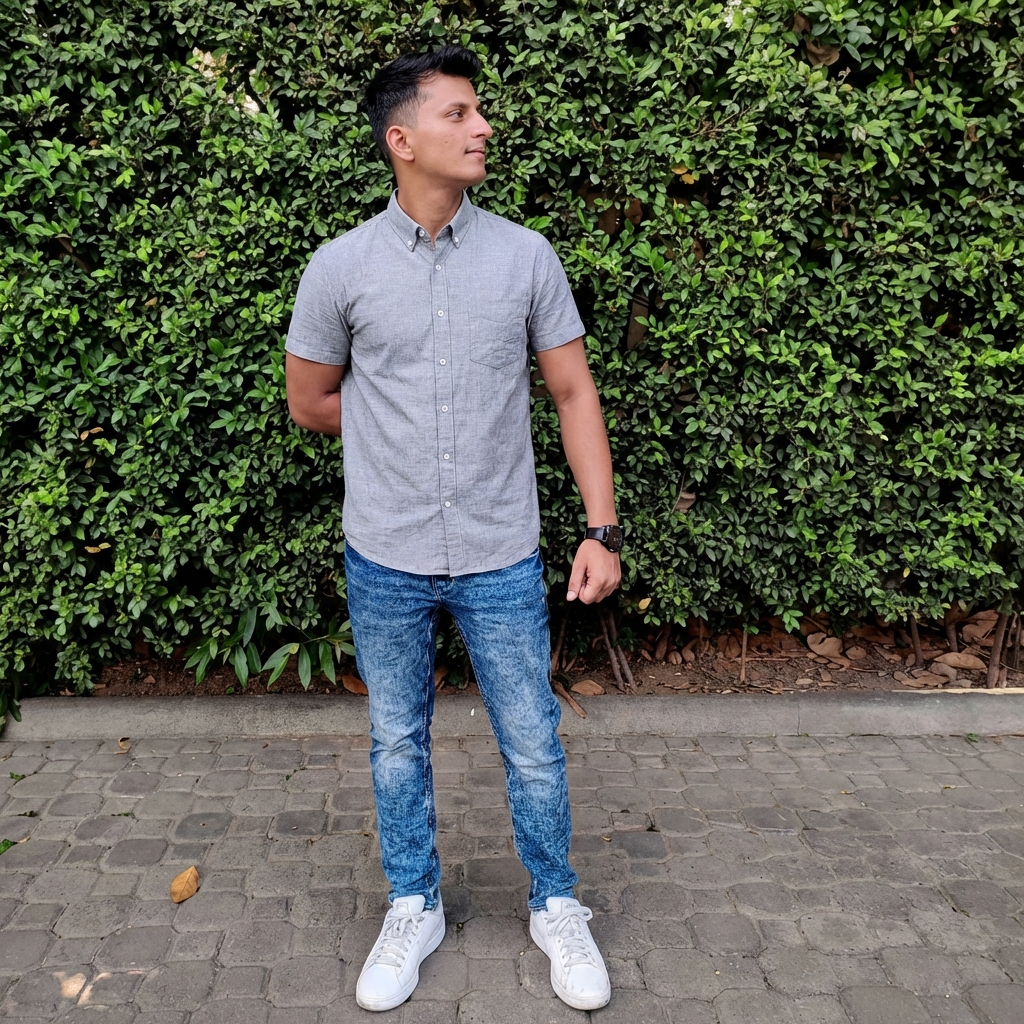
- **Body Mapping:** Due to the user's pose (right arm tucked behind the back), the new shirt must exhibit tension lines pulling diagonally from the left hip toward the right shoulder. The fabric on the right shoulder must appear taut. On the left side (user's relaxed arm), the sleeve should not hug the bicep tightly; it must hang with a cylindrical opening, creating negative space between the fabric and the skin.
- **Occlusion Handling:** The user's wristwatch on the left wrist is a critical occlusion point; the sleeve must terminate above it or the watch must be layered over the garment if the sleeve is long (though this source is short-sleeved, so the watch remains fully visible). The user's jawline and neck must mask the back of the new collar. The right arm disappears behind the torso; the garment must wrap naturally around the flank without distorting into the background.
PHASE 3: ENVIRONMENT & LIGHTING
- **Light Match:** The user is in an outdoor environment with diffuse sunlight coming from the top-left (casting shadows to the right). The new garment must generate self-shadowing under the collar points, inside the button placket, and cast a shadow onto the user's left bicep. The brightness of the studio-lit source image must be lowered slightly to match the exposure of the outdoor scene.
- **Color Calibration:** The source grey is neutral/cool. To integrate into the scene, the garment needs a subtle warm/green color cast adjustment to account for bounce light from the surrounding heavy foliage and the warm pavers.
PHASE 4: IDENTITY PROTECTION
- **Facial Lock:** Absolute freeze on the user's face, haircut, and neck skin above the Adam's apple. The angle of the head and the gaze direction must remain untouched.
- **Body Integrity:** The user's shoulder width and torso volume must be maintained; the shirt should add volume only via fabric thickness, not by altering the underlying biological mesh. The jeans and belt-line region must remain unaltered, with the new shirt likely draped *over* the waistband (untucked) or tucked in depending on desired styling, but without warping the denim texture.