Thinking Process
PHASE 1: VISUAL DECONSTRUCTION
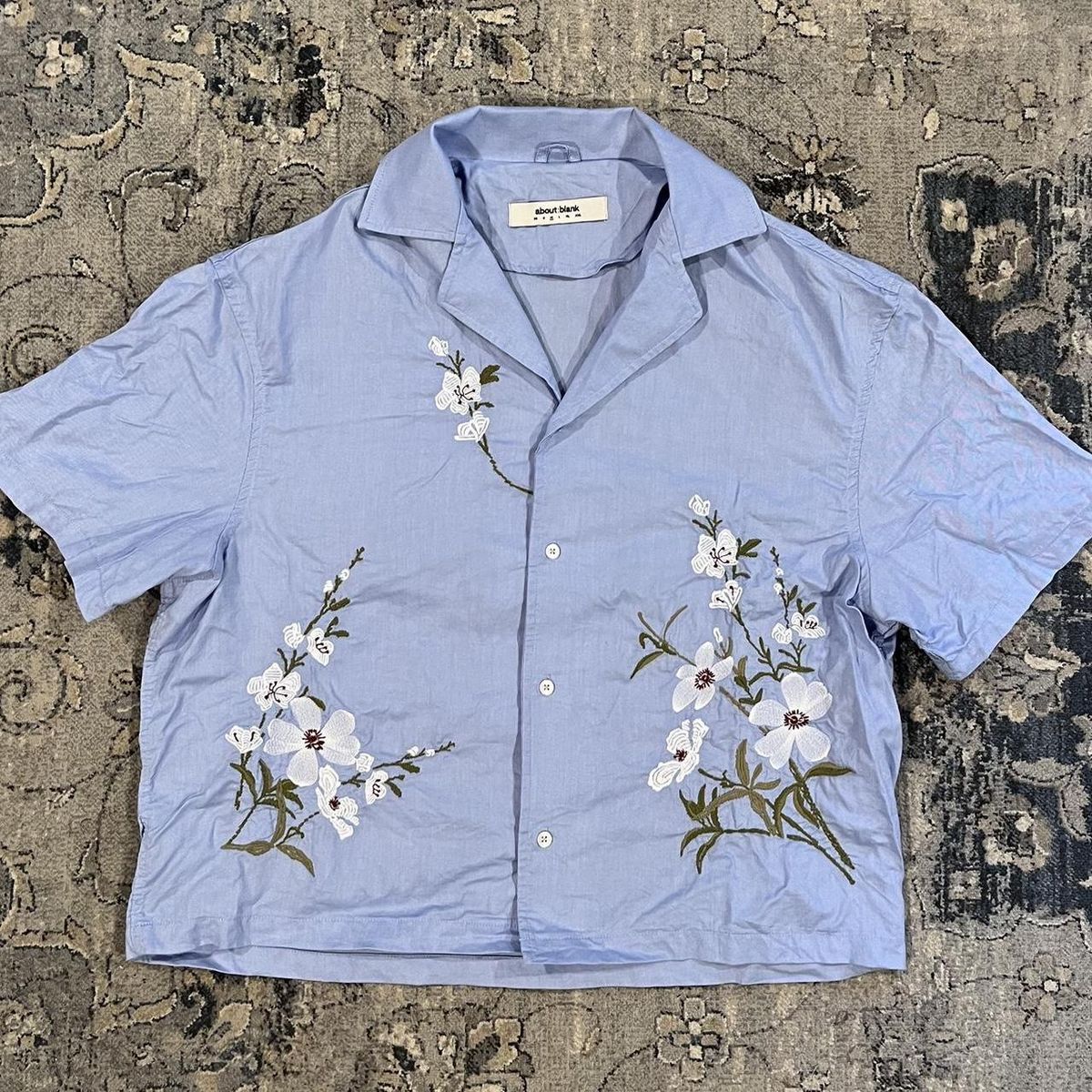
- **Fabric Physics:** The source garment appears to be a lightweight woven cotton or linen blend. It possesses a matte finish with no specular highlights. The simulation must treat this as a semi-structured fabric that holds its shape slightly at the collar and cuffs but drapes vertically with gravity. It lacks the elasticity of the user's current jersey knit t-shirt.
- **Key Features:** The floral embroidery on the left and right lower quadrants is the defining visual element and must not be distorted. The "camp collar" (open, notched lapel) structure is critical and distinct from the user's current crew neck. The four white buttons and the visible placket stitching must be preserved. The boxy, relaxed cut of the sleeves must be maintained.
PHASE 2: FIT & DRAPE SIMULATION
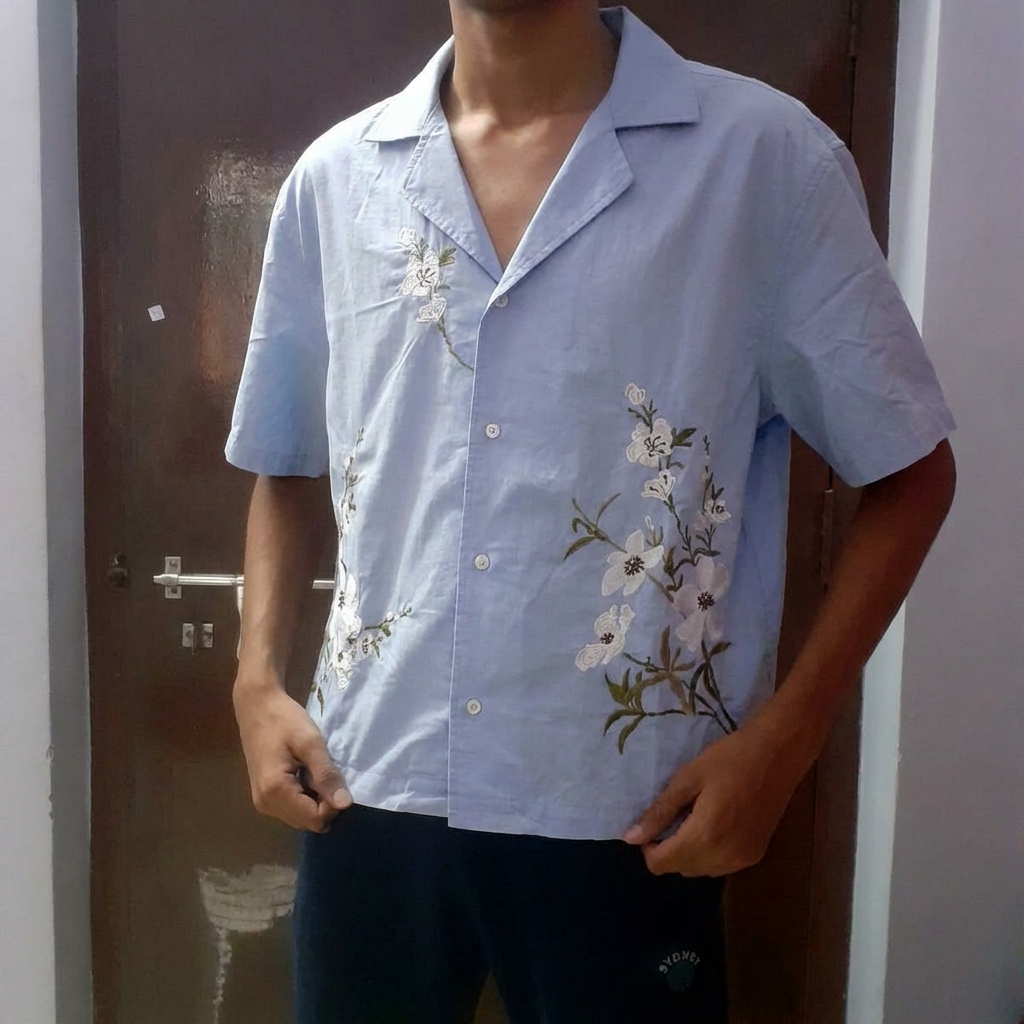
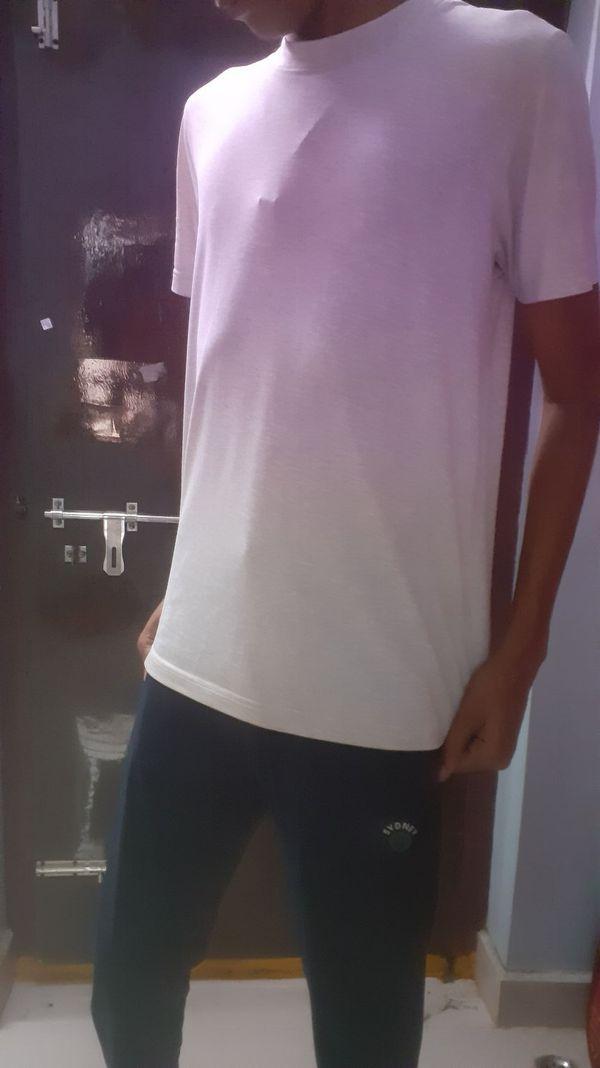
- **Body Mapping:** The user has a slim build. The source shirt is a "boxy fit." Therefore, the simulation must anchor firmly at the shoulders (acromion process) and drape loosely over the torso, avoiding a skin-tight fit. There should be visible negative space between the user's bicep and the shirt's sleeve opening. The hemline appears shorter than the user's current long t-shirt; the simulation must interact naturally with the waist/hip area, likely falling just below the belt line without bunching excessively.
- **Occlusion Handling:** The user's hands are positioned near the hips/thighs. If the shirt length reaches this point, the fabric must pass *behind* the thumbs/hands. Crucially, the user is wearing a high-neck t-shirt, while the source is an open-collar shirt. The system must perform generative inpainting to expose the skin at the base of the throat and upper chest, removing the existing white collar.
PHASE 3: ENVIRONMENT & LIGHTING
- **Light Match:** The user image features diffuse, cool-toned indoor artificial lighting, seemingly originating from the top-left (indicated by the shadow on the door). The generated garment must cast a self-shadow onto the user's right side (ribcage area) and cast a small drop shadow onto the user's exposed neck from the collar.
- **Color Calibration:** The source image is high-contrast and sharp. The user image has a lower resolution with visible noise/grain. The rendered shirt must be slightly softened (blur/noise injection) and the saturation of the light blue slightly reduced to match the ambient, somewhat dim exposure of the user's environment.
PHASE 4: IDENTITY PROTECTION
- **Facial Lock:** The user's jawline, chin, mouth, and exposed neck skin must be frozen. The specific skin tone on the arms must remain consistent when inpainting the newly exposed chest area required by the open collar.
- **Body Integrity:** Strict prohibition on "bulking" the user to fill the boxy shirt. The user's slim torso width must be preserved; the shirt must appear to hang *around* the body, not morph the body to fit the shirt's width.