Thinking Process
PHASE 1: VISUAL DECONSTRUCTION
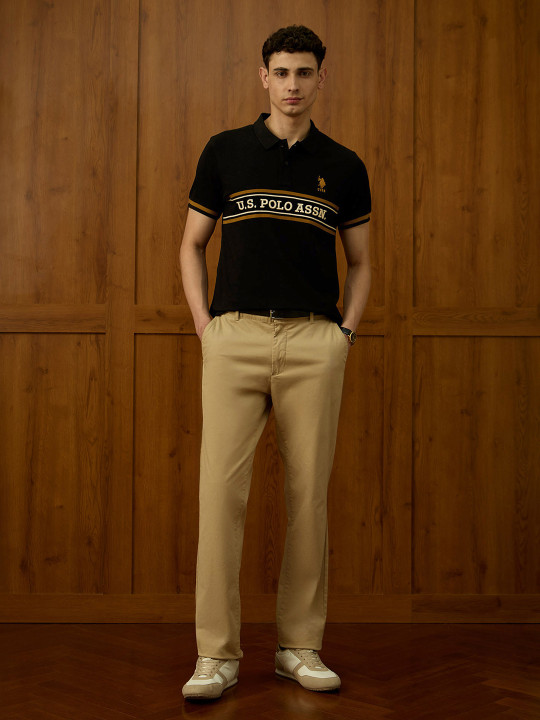
- **Fabric Physics:** The source garment is a Cotton Piqué (standard polo mesh). It has a honeycomb micro-texture that is matte and breathable. It is heavier than a standard t-shirt but lighter than denim. It should absorb light rather than reflect it, maintaining a soft, non-glossy appearance. The collar is ribbed and stiff enough to maintain structure without collapsing.
- **Key Features:**
- The horizontal chest stripe containing "U.S. POLO ASSN." text and gold/white borders is the critical anchor point; this must not distort illegibly across the chest curvature.
- The small embroidered logo on the upper left chest.
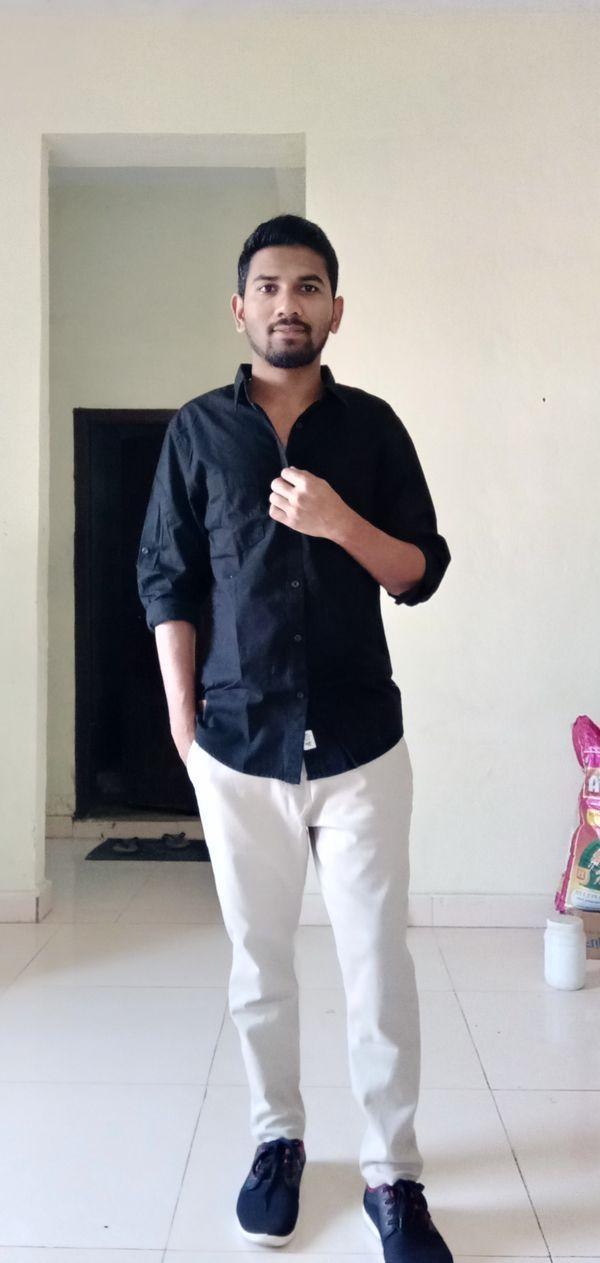
- The 2-button placket at the neck (distinct from the user's current full button-down).
- Short sleeves with ribbed cuffs (requires accurate transition from the user's current rolled long sleeves).
PHASE 2: FIT & DRAPE SIMULATION
- **Body Mapping:**
- **Shoulders:** The seam must sit precisely at the user's acromion bone, draping vertically.
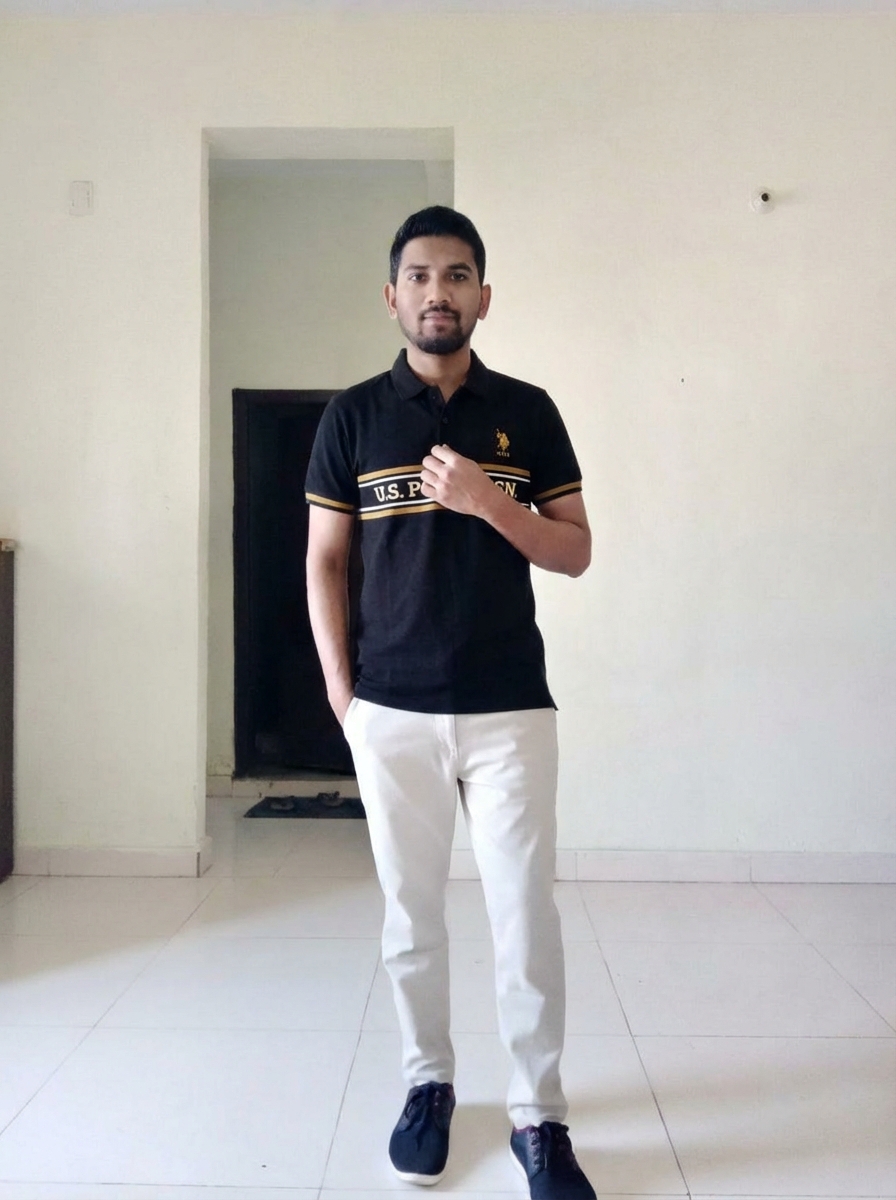
- **Torso Interaction:** The user's left hand (viewer's right) is actively gripping/touching his chest. The new polo fabric must deform and wrinkle radially around his fingers at this contact point. The fabric cannot simply "ghost" through the hand.
- **Hemline:** Since the user's right hand (viewer's left) is in his pocket, the hem of the polo must be pulled upward and tucked slightly on that side, creating tension lines radiating from the pocket towards the opposite shoulder.
- **Occlusion Handling:**
- **Left Hand:** The user's left hand and fingers are the primary occluder. They must be segmented out and layered *over* the chest stripe of the polo.
- **Forearms:** The target garment is short-sleeved, while the user wears long sleeves. Skin generation/inpainting is required for the user's forearms to replace the current black fabric.
- **Neck/Chin:** The user's beard creates a shadow that must be cast onto the new polo collar.
PHASE 3: ENVIRONMENT & LIGHTING
- **Light Match:** The user's environment has cool, diffuse ambient daylight coming from the right (viewer's perspective), causing shadows on the left side of the body. The source garment's warm, studio-lit highlights must be neutralized. Shadows on the polo must be cast to the viewer's left to match the shadows on the user's white trousers.
- **Color Calibration:** The source black is deep and warm. The target black must be adjusted to match the exposure levels of the user's room—likely lifting the blacks slightly to prevent "crushing" (loss of texture detail) in the lower-light indoor environment. The gold stripe must react to the cool room light, shifting slightly less yellow/orange.
PHASE 4: IDENTITY PROTECTION
- **Facial Lock:** The user's entire head, including the beard, jawline, ears, and hairstyle, must remain absolutely frozen. The neck transition point is critical; the new collar must sit below the existing beard line.
- **Body Integrity:** The user's shoulder width and slight hip sway must remain unchanged. Do not slim the torso to match the model in the source image. The garment must expand to fit the user's natural build, specifically maintaining the volume of his chest and waist.