Thinking Process
PHASE 1: VISUAL DECONSTRUCTION
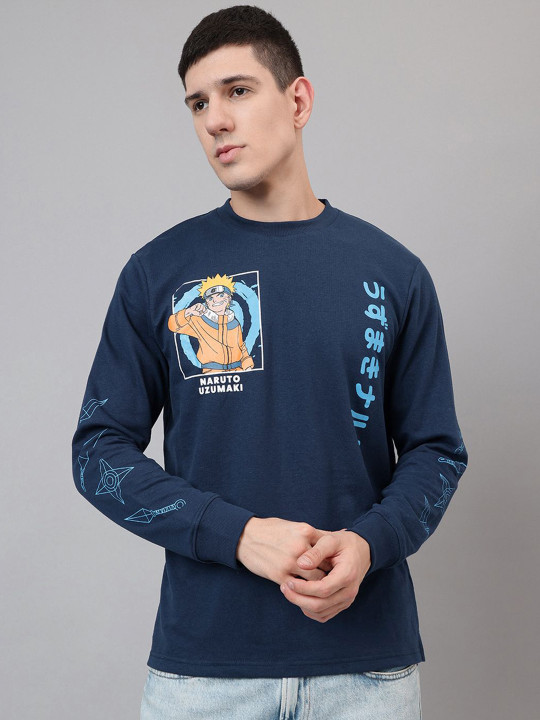
- **Fabric Physics:** The source garment is a medium-weight cotton jersey (long-sleeve t-shirt or light sweatshirt). It possesses a matte finish with low specularity (no shine). The physics model must simulate soft-body dynamics typical of cotton, allowing for gentle folding rather than sharp, rigid creasing.
- **Key Features:**
- **Chest Graphic:** The "Naruto Uzumaki" rectangular illustration (orange/yellow/blue) centered on the chest.
- **Side Text:** The vertical cyan Japanese text running down the wearer's left side.
- **Sleeve Graphics:** The line-art outlines of ninja tools (kunai/shuriken) on both sleeves.
- **Structural Details:** Ribbed crew neckline and ribbed wrist cuffs.
PHASE 2: FIT & DRAPE SIMULATION
- **Body Mapping:**
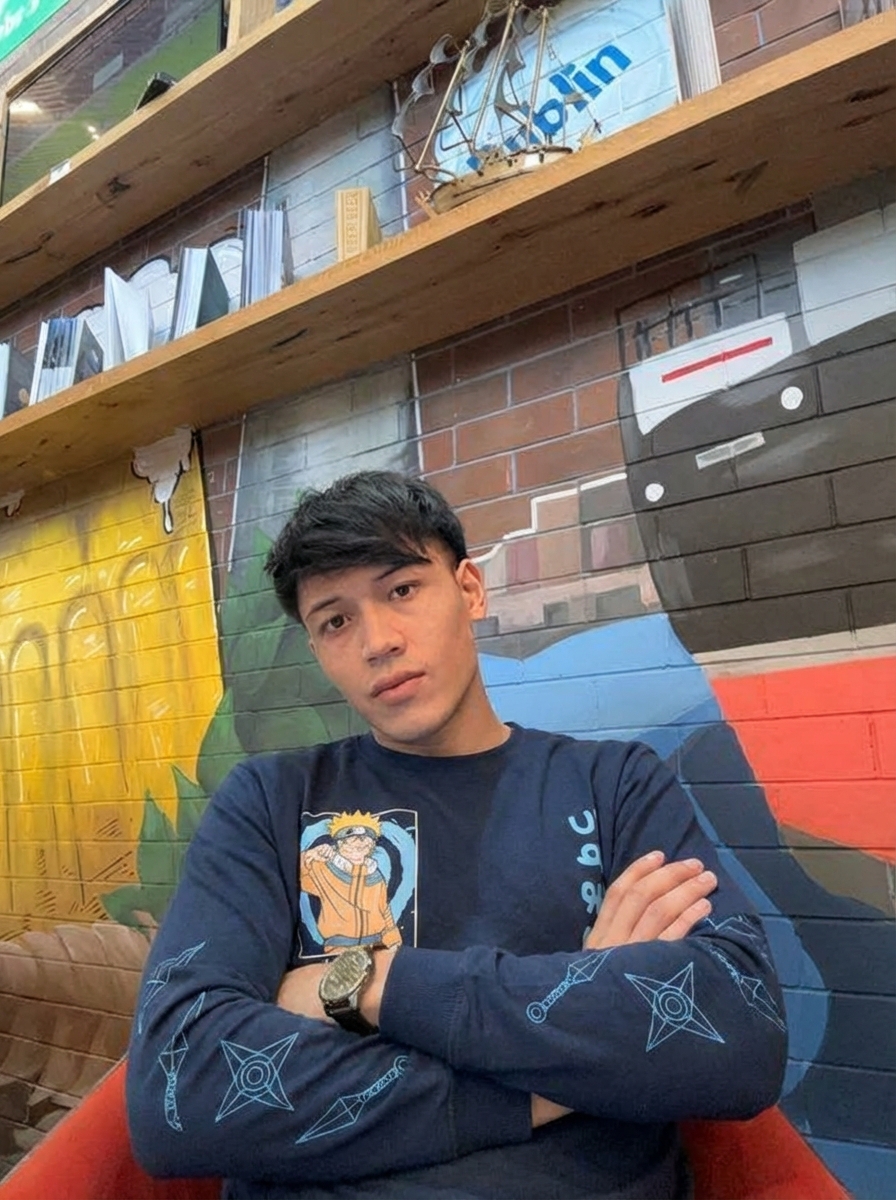
- **Pose Complexity:** The crossed-arm pose requires high-tension mapping across the shoulders and upper back (scapula area).
- **Fabric Compression:** The fabric must bunch significantly at the inner elbows due to the flexion. The sleeve graphics will be heavily distorted and warped around the spiral of the arm position.
- **Torso Interaction:** Since the user is seated, the lower hemline should create transverse folds (pooling) around the mid-section rather than hanging straight down.
- **Occlusion Handling:**
- **Primary Occlusion:** The user's forearms and hands are the dominant occlusion layer. The chest graphic will be partially obscured by the crossed arms.
- **Accessory Layering:** The wristwatch on the user's left wrist (image right) must be segmented and layered *on top* of the new sleeve, or the sleeve must be simulated to bunch proximally to the watch face.
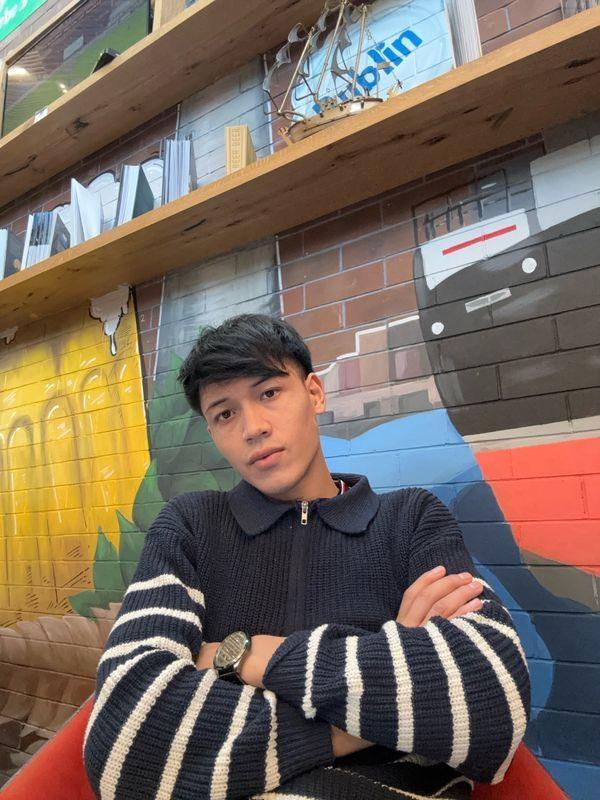
- **Neckline:** The current high-collared zip sweater must be digitally excised. The new crew neck sits lower; skin texture synthesis may be required if the current collar hides part of the neck that the new shirt exposes.
PHASE 3: ENVIRONMENT & LIGHTING
- **Light Match:** The target environment features warm, diffuse ambient lighting, likely originating from overhead ceiling fixtures (creating soft shadows under the chin and nose). The flat, cool studio lighting of the source garment must be replaced with a warmer, yellow-tinted profile to match the cafe setting.
- **Color Calibration:**
- The deep navy of the source cloth must be graded to match the contrast levels of the user's current black sweater but adjusted for the cotton texture.
- Shadows must be cast by the crossed arms onto the chest area of the new garment to ground it in the scene.
PHASE 4: IDENTITY PROTECTION
- **Facial Lock:** Absolute freeze on the user's hair (fringe), eyes, nose, mouth, and jawline. The segmentation mask boundary lies strictly at the neck transition.
- **Body Integrity:** The user's underlying somatic structure must be preserved. Do not slim the arms or torso. Note that the target user is currently wearing a thick knit sweater; the new garment is thinner, so the volumetric displacement should be slightly reduced to reflect the thinner fabric, while maintaining the user's actual shoulder width and arm mass.