Thinking Process
PHASE 1: VISUAL DECONSTRUCTION
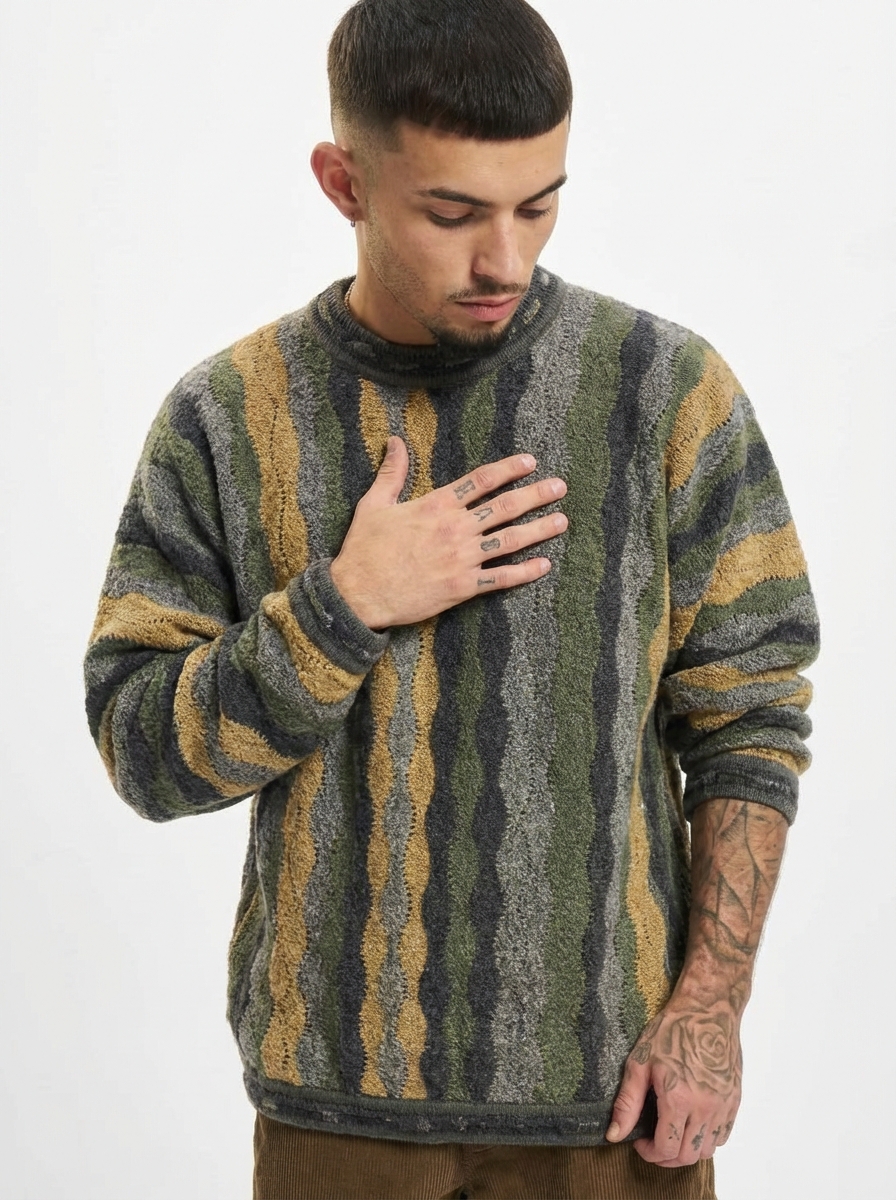
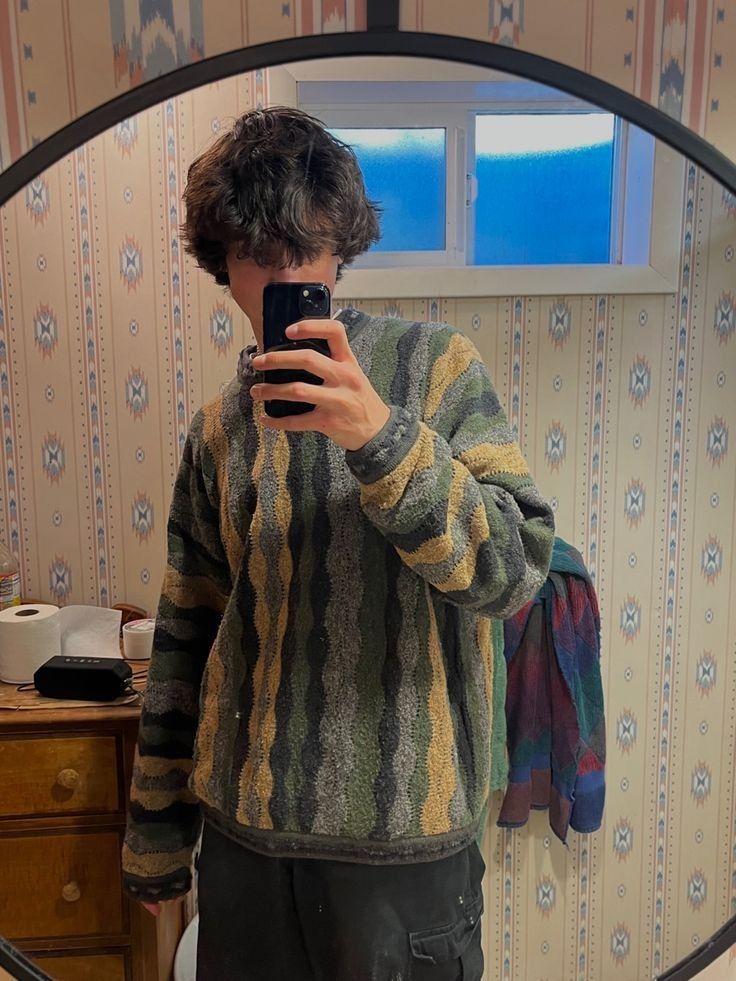
- **Fabric Physics:** The source garment is a heavy-gauge, textured knit (likely wool or acrylic blend). It possesses significant weight and thickness, meaning it will exhibit low elasticity and high structural rigidity compared to the user's current thin t-shirt. The surface is matte and fuzzy; it should diffuse light rather than reflect it, absorbing ambient occlusion in the deep recesses of the knit loops.
- **Key Features:** The vertical, wavy, multi-colored stripe pattern (olive green, mustard yellow, charcoal) is paramount. The thick ribbed crewneck collar, ribbed cuffs, and hemline elasticity must be preserved. The "fuzzy" surface texture and visible pilling must remain to sell the realism of the material.
PHASE 2: FIT & DRAPE SIMULATION
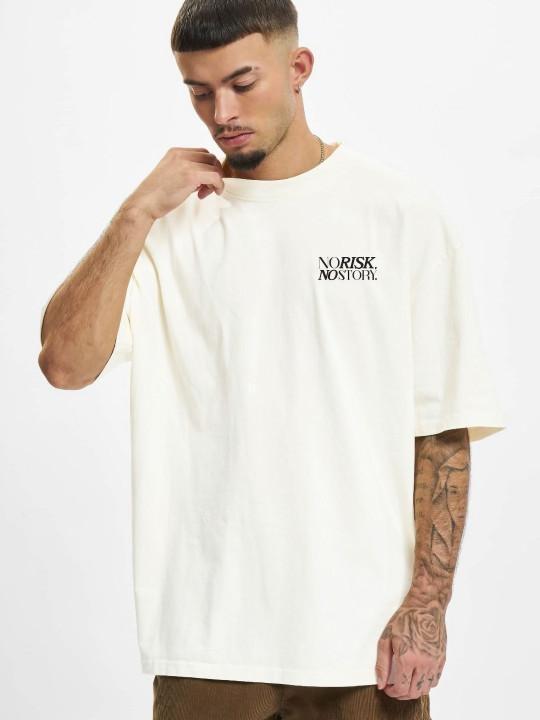
- **Body Mapping:** Due to the fabric's thickness, the new garment will add volumetric bulk to the user's torso and shoulders; it must not hug the skin as closely as the current t-shirt. Gravity will pull the heavy knit vertically, creating tube-like folds rather than sharp creases. The garment should break at the shoulder line and drape straight down, masking the definition of the pectorals slightly more than the source t-shirt.
- **Occlusion Handling:** CRITICAL: The user's right hand and fingers are actively pressing against the upper chest/clavicle area. The sweater must be rendered *beneath* this hand. The fabric must appear compressed and slightly deformed where the fingers press into the knit. The gold necklace should be layered *over* the sweater's collar or tucked in naturally depending on the collar height. The tattoos on the visible left forearm must remain completely unobstructed.
PHASE 3: ENVIRONMENT & LIGHTING
- **Light Match:** The user's environment is high-key studio lighting (neutral/cool white) with soft shadows falling downward and slightly to the user's left. The source garment image has warm, yellow domestic lighting. The source texture must be color-corrected to neutralize the yellow cast and re-lit to match the clean, white studio light of the target. Shadows on the sweater must correspond to the fold depth generated by the heavy knit.
- **Color Calibration:** Desaturate the warm tones from the source sweater slightly to match the sterile environment of the user image. Ensure the black/grey stripes achieve a true black point relative to the user's hair, avoiding the washed-out grey look from the source mirror selfie.
PHASE 4: IDENTITY PROTECTION
- **Facial Lock:** The user's entire head, including the specific fade haircut, beard texture, and facial expression (looking down), is frozen. The neck area above the collar line must remain untouched.
- **Body Integrity:** The user's shoulder width and arm muscularity must remain constant. Do not slim the torso; if anything, the silhouette should expand slightly outward to account for the thickness of the sweater material. The visible tattoos on the left arm and hand must be preserved exactly as they appear in the original pixel data.