Thinking Process
PHASE 1: VISUAL DECONSTRUCTION
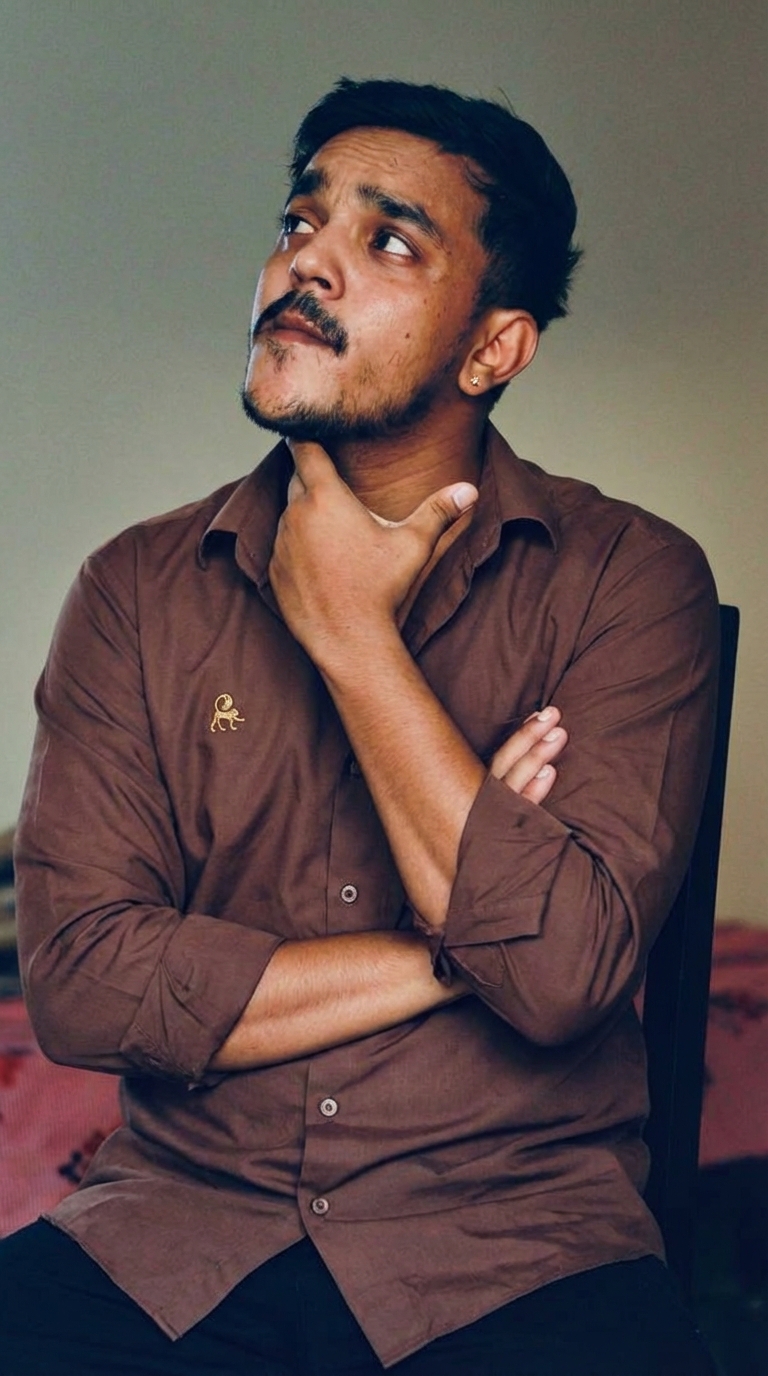
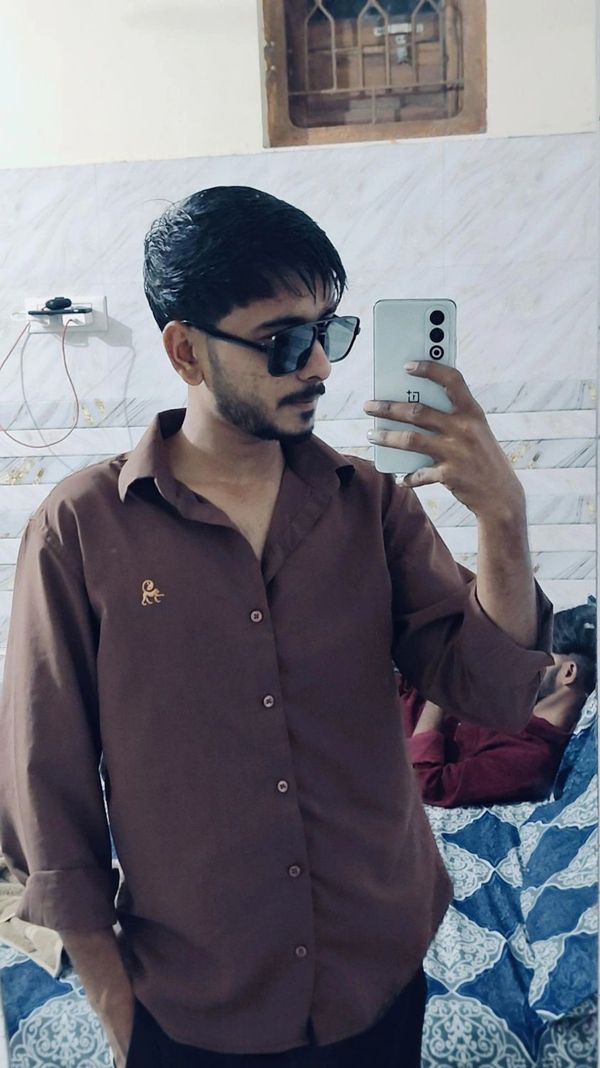
- **Fabric Physics:** The source garment is a woven cotton or cotton-blend poplin. Unlike the user's current knit t-shirt, this material has structural rigidity (low elasticity). It has a matte finish but shows distinct, sharp creasing rather than soft draping. Lighting must reflect a semi-matte surface, absorbing more light than it reflects, with specular highlights only on tight folds.
- **Key Features:**
- **Logo:** The gold/yellow embroidered logo on the wearer's left chest must be preserved and warped correctly to follow the curvature of the pectoral muscle.
- **Placket & Buttons:** The central button line is structural; it must remain straight but bend slightly with the torso's twist.
- **Collar:** The stiff, pointed collar structure must replace the soft crew neck of the t-shirt.
- **Sleeves:** The source image shows a rolled-up sleeve; the generation should render long sleeves bunched at the user's elbows due to the crossed-arm pose.
PHASE 2: FIT & DRAPE SIMULATION
- **Body Mapping:**
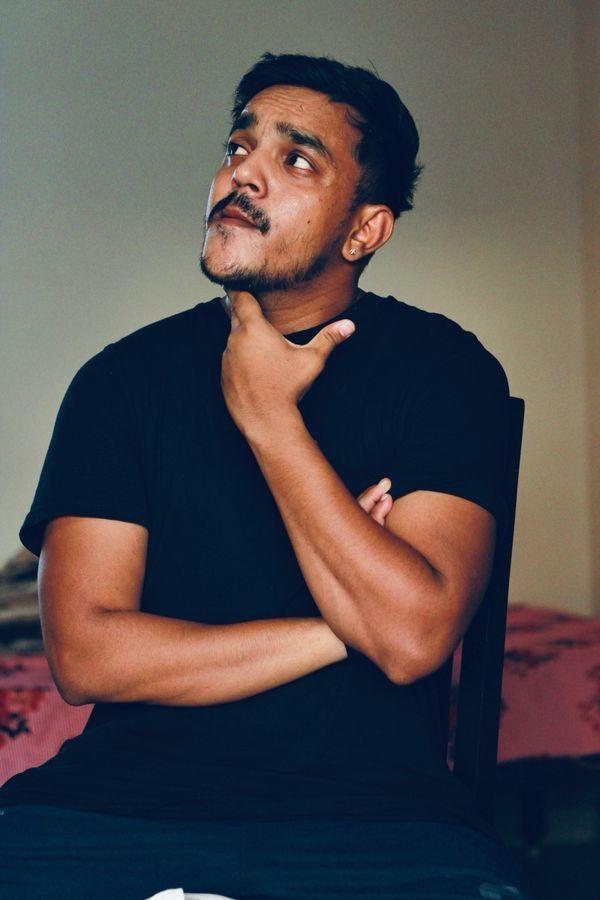
- **Crossed Arms:** This is a high-tension pose. The fabric must show significant lateral tension wrinkles pulling across the scapula (back) and bunching heavily in the inner elbow (antecubital fossa) of the crossed arms.
- **Collar Interaction:** The collar must sit high on the trapezius but remain open at the front. It must visually interact with the user's jawline area without clipping.
- **Torso Volume:** The shirt is a "regular fit" (not slim), so it should not cling tightly to the abdomen; it needs a slight air gap between the fabric and the lower stomach area.
- **Occlusion Handling:**
- **High Priority:** The user's **Right Hand and Forearm** (touching the chin) and the **Left Hand** (tucked under the bicep) are distinct foreground elements. The brown shirt must be generated largely *behind* these limbs.
- **Neck/Jaw:** The user's hand touching the chin creates a complex contact point. The shirt collar must be layered behind the wrist/palm.
PHASE 3: ENVIRONMENT & LIGHTING
- **Light Match:** The user image features a warm, directional light source coming from the viewer's left (user's right), creating soft shadows on the user's left side. The new garment must drop the cool, fluorescent lighting of the source image and adopt this warmer temperature.
- **Shadow Casting:**
- **Occlusion Shadows:** The crossed arms must cast deep ambient occlusion shadows onto the chest and stomach area of the shirt.
- **Chin/Hand Shadow:** The hand touching the chin must cast a drop shadow onto the new collar/upper chest area to ground the depth.
- **Color Calibration:** The source brown is desaturated by the mirror selfie flash. It must be color-corrected to a richer, warmer chocolate brown to match the contrast levels of the user's environment.
PHASE 4: IDENTITY PROTECTION
- **Facial Lock:** The user's entire head, including the hairline, facial hair (beard/mustache), and skin tone, is frozen. The boundary line is the neck base where the new collar begins.
- **Body Integrity:**
- **Arm Volume:** The user's muscular structure in the forearms must be preserved exactly. The shirt sleeves must accommodate the arms, not shrink them.
- **Shape Preservation:** No "slimming" or "bulking" filters. The silhouette of the crossed arms must remain identical to the original image.