Thinking Process
PHASE 1: VISUAL DECONSTRUCTION
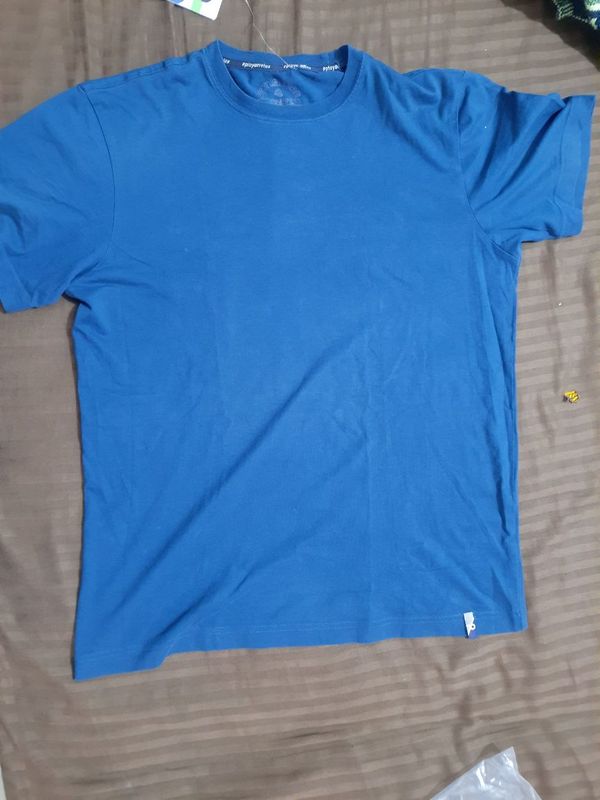
- **Fabric Physics:** The source garment is a standard cotton jersey knit. It possesses low specularity (matte finish) and high flexibility. Unlike the user's current heavy knit sweater, the target t-shirt has a lighter weight (~150-180 gsm). It should exhibit micro-wrinkles rather than heavy, structural folds. Light absorption should be diffuse, with no glossy highlights.
- **Key Features:** The ribbed crew-neck collar structure must be preserved. The visible hem stitching on the sleeves and waist must be retained. The small white brand tag located at the bottom hem (viewer's left) is a critical anchor point for realism and must be visible in the final render.
PHASE 2: FIT & DRAPE SIMULATION
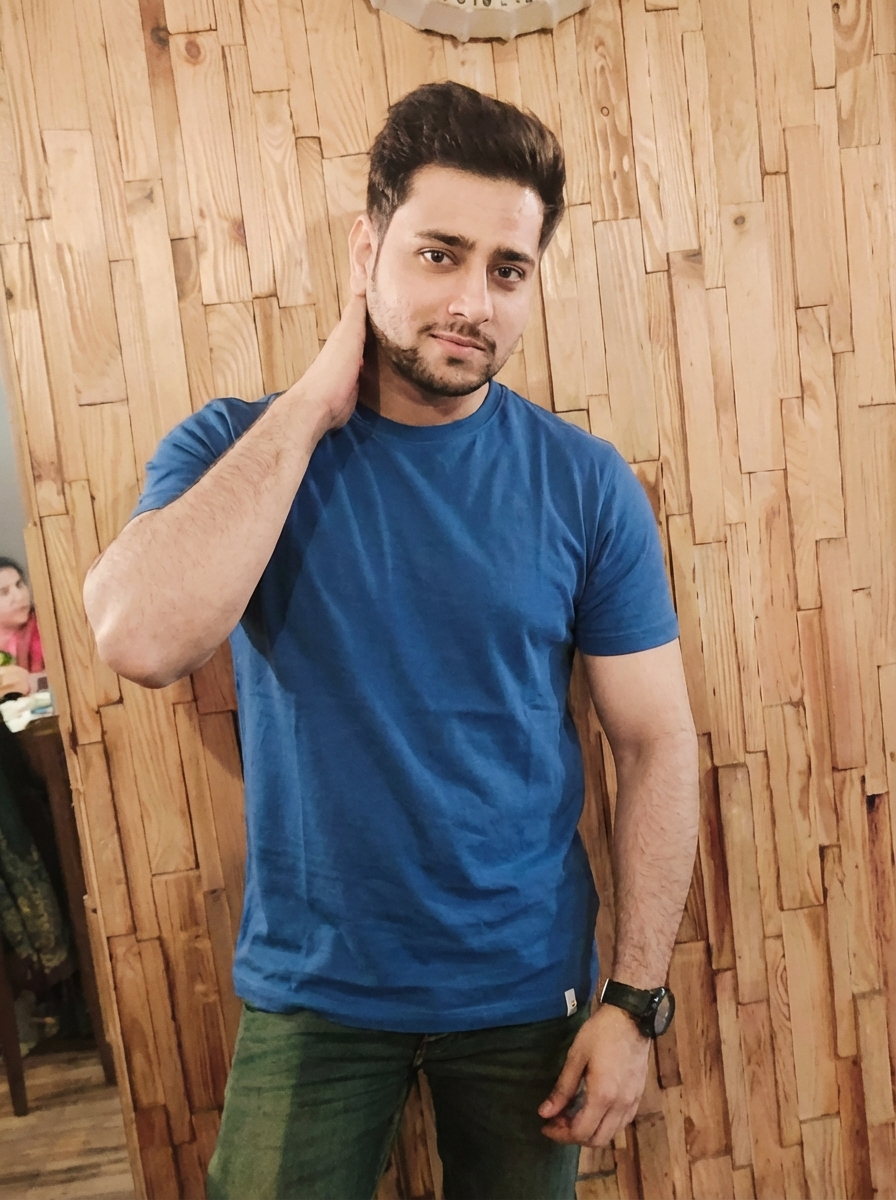
- **Body Mapping:** The user's right arm is raised in a flexion pose. Physics simulation must generate diagonal tension folds stretching from the right armpit across the pectorals towards the left hip. The right shoulder of the t-shirt must lift slightly, shortening the hemline on the right side. Since the source is short-sleeved and the user is currently wearing long sleeves, the simulation must account for the reduction in volume; the t-shirt will sit closer to the skin than the current bulky sweater.
- **Occlusion Handling:** The user's right hand is positioned behind the neck/head. While it does not directly obscure the chest, the collar of the new t-shirt must sit naturally around the neck without clipping into the jawline or the raised forearm. The user's wrist watch is currently visible; ensure the new sleeve length terminates well above the elbow, requiring generative inpainting for the forearms if the system supports skin reconstruction, or strict masking to the upper torso if not.
PHASE 3: ENVIRONMENT & LIGHTING
- **Light Match:** The user environment features strong, warm, top-down artificial lighting (likely tungsten), casting hard shadows against the wooden backdrop. The source cloth image is lit with cooler, diffuse light. The albedo of the blue t-shirt must be color-graded to accept the warm yellow/orange ambient tint of the room, likely shifting the blue slightly towards a teal/warmer hue.
- **Color Calibration:** Cast shadows from the new garment (under the pectorals and in fold crevices) must match the dark contrast levels of the user's jeans. Self-shadowing on the t-shirt must align with the overhead light source direction.
PHASE 4: IDENTITY PROTECTION
- **Facial Lock:** The user's face, hairstyle, facial hair, and the specific position of the right hand behind the neck are strictly frozen. No pixel alteration is permitted above the neckline.
- **Body Integrity:** The underlying skeletal structure (shoulder width and torso length) must remain unchanged. While the *volume* of the clothing will decrease (transitioning from a thick sweater to a thin t-shirt), the user's actual physical build must not be slimmed or distorted. The "V" shape of the torso must be maintained.