Thinking Process
PHASE 1: VISUAL DECONSTRUCTION
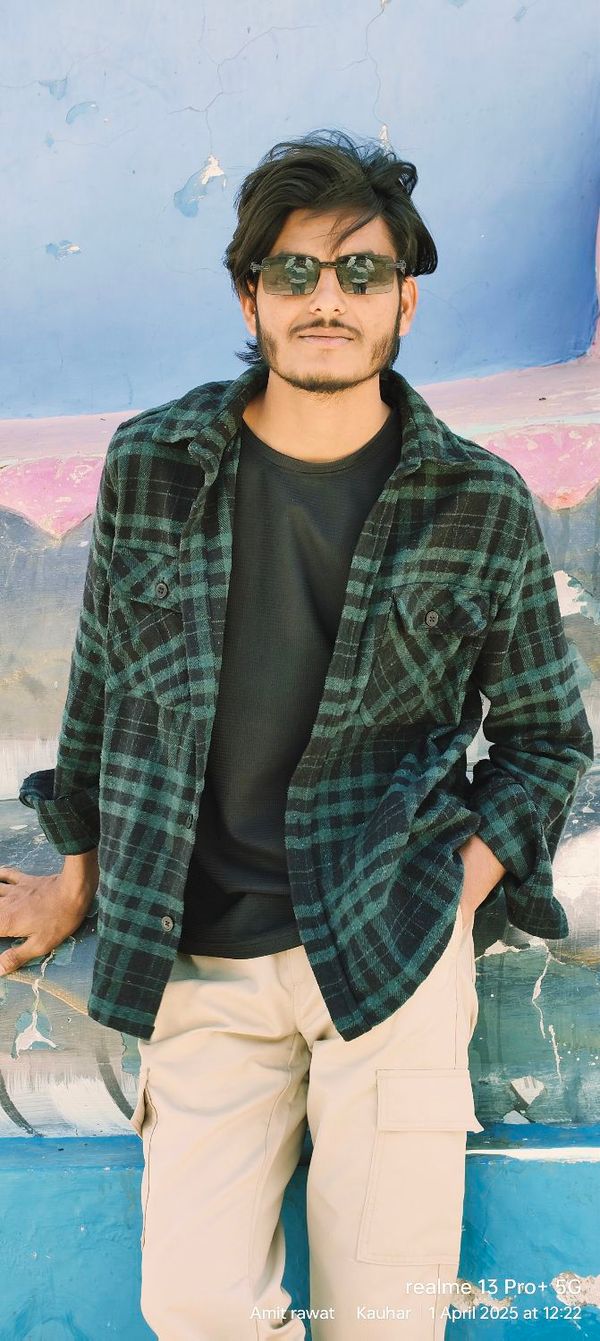
- **Fabric Physics:** The source garment is a flannel or heavy cotton blend "shacket" (shirt-jacket). It possesses a matte finish with low light reflectivity and high surface friction. The simulation must treat the material as medium-weight; it should hold structural shape at the collar and cuffs rather than draping fluidly like silk. The inner black t-shirt (layering) has a softer, lower-tension knit physics.
- **Key Features:** The specific green-and-black buffalo check plaid pattern must be preserved without distortion. Critical geometry includes the semi-rigid collar structure, the two breast pockets with button details, the front button placket, and the cuffed/rolled sleeves. The open-front styling reveals the inner layer, which constitutes a defining feature of the look.
PHASE 2: FIT & DRAPE SIMULATION
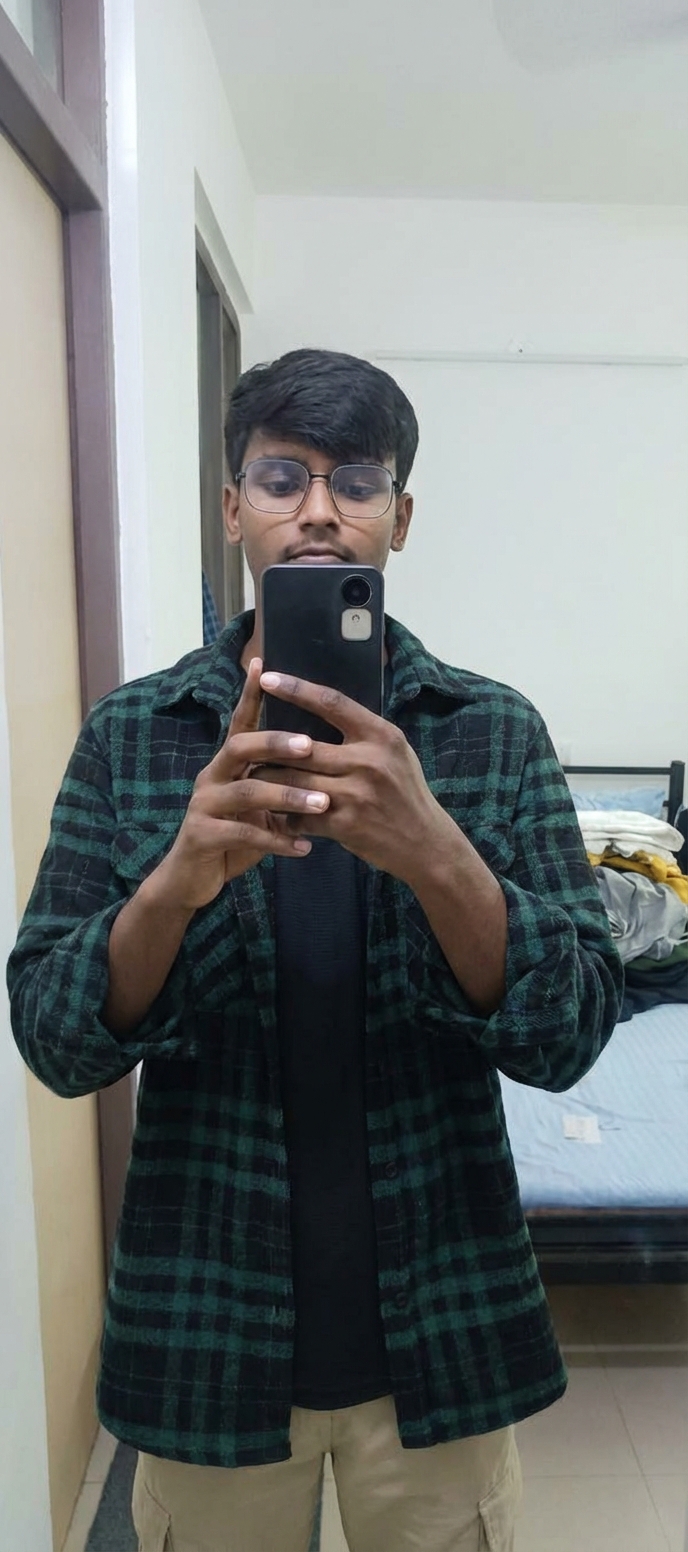
- **Body Mapping:** The user is in a standing pose with arms bent inward at the chest. The fabric simulation must account for significant compression and folding at the inner elbows (antecubital fossa) due to the bent arms. The shoulders of the flannel must align with the user's natural shoulder line, replacing the current sweater's bulk. Gravity will pull the open sides of the shirt vertically, but the bent arms will pull the fabric slightly taut across the upper back and deltoids.
- **Occlusion Handling:** CRITICAL: The user's hands and the smartphone are positioned directly in front of the sternum and neck. A rigid depth mask must be applied here. The new garment must be rendered logically *behind* the fingers, hands, and phone case. The collar of the new shirt must be simulated to wrap around the neck but be appropriately occluded by the top of the phone and the user's chin area.
PHASE 3: ENVIRONMENT & LIGHTING
- **Light Match:** The user is in an indoor environment with diffuse, overhead artificial lighting (likely cool white LED or fluorescent), resulting in soft, scattered shadows. This contrasts sharply with the source image's harsh, directional outdoor sunlight. The generated garment must shed the high-contrast outdoor shadows and blue-sky ambient reflection. It must adopt a flatter shading model with soft occlusion shadows where the fabric meets the skin or overlaps itself.
- **Color Calibration:** The source green is vibrant due to sunlight. For the target environment, the saturation must be slightly reduced, and the color temperature neutralized to match the indoor white balance. The "blacks" in the plaid and inner t-shirt must match the black level of the user's current surroundings (e.g., the darkness of the phone screen) rather than the deep crushed blacks of the outdoor photo.
PHASE 4: IDENTITY PROTECTION
- **Facial Lock:** The user's hair (specifically the bangs covering the forehead), the visible portions of the face (cheeks, ears), and the glasses must be absolutely frozen. The hand holding the phone must retain original skin texture and lighting.
- **Body Integrity:** The user has a slim-to-average build. The VTO must not artificially broaden the shoulders to match the source model's pose, nor should it slim the waist. The simulation must drape the loose flannel over the user's actual volumetric data, maintaining the silhouette of a slim person wearing a relaxed-fit overshirt.