Thinking Process
PHASE 1: VISUAL DECONSTRUCTION
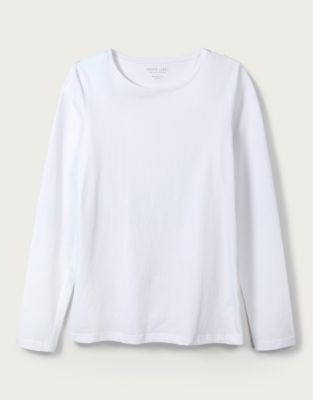
- **Fabric Physics:** The source garment is a lightweight cotton jersey or cotton-modal blend. It is matte with low reflectivity and high flexibility. It should exhibit "soft body" dynamics, meaning it will drape fluidly rather than holding a rigid shape. Light absorption should be high, with no specular highlights.
- **Key Features:** The round crew neckline must be preserved. The long sleeves are the critical differentiator from the user's current attire and must be generated fully. The subtle hem stitching at the cuffs and waistline must be retained. The interior brand label text visible in the source image must be virtually removed as it occupies the inside of the neck.
PHASE 2: FIT & DRAPE SIMULATION
- **Body Mapping:**
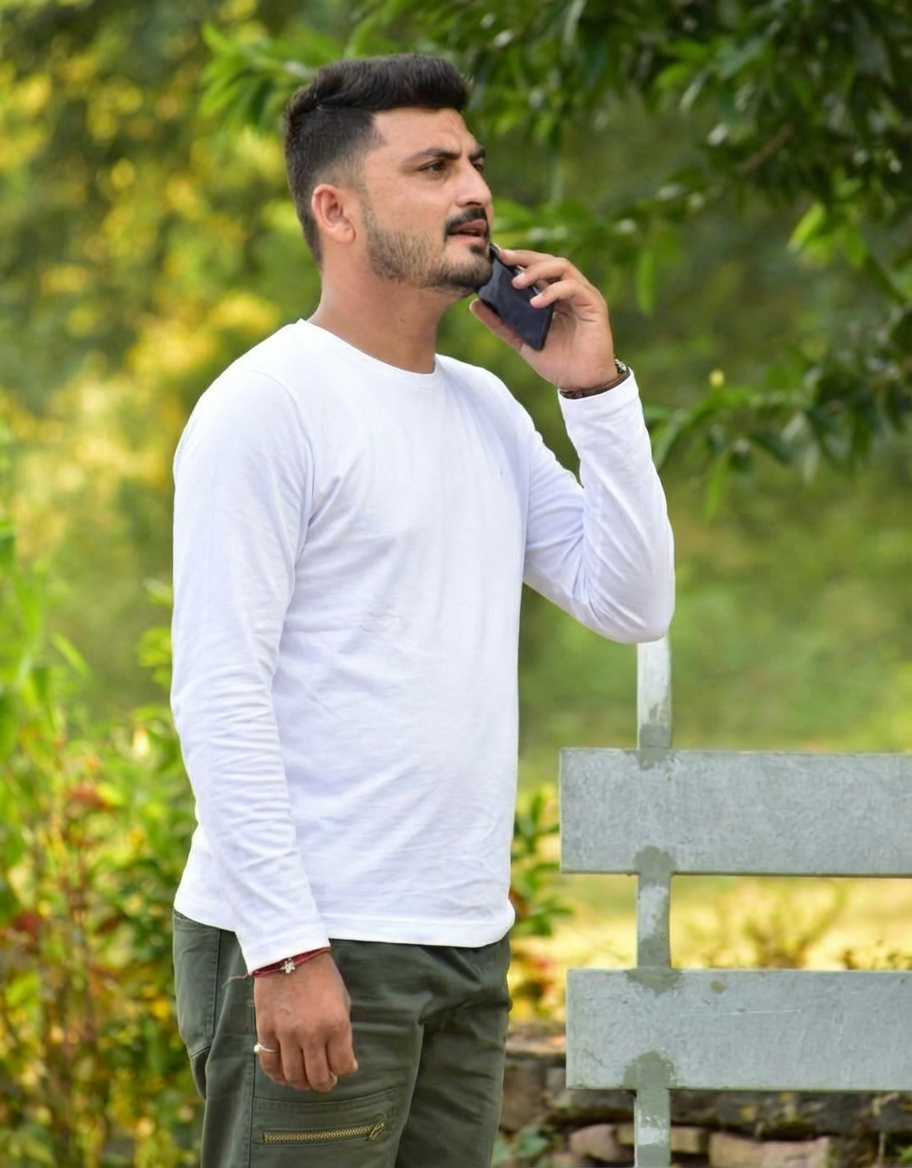
- **Torso:** The garment must follow the user's semi-profile rotation. Gravity will pull the fabric vertically, causing slight diagonal tension wrinkles stretching from the right shoulder toward the left hip due to the torso twist.
- **Right Arm (Bent):** This is a high-deformation zone. The long sleeve physics must generate compression folds (bunching) at the inner elbow (cubital fossa) and tension stretching across the outer elbow (olecranon). The cuff must settle near the wrist, interacting with the hand holding the phone.
- **Left Arm (Straight):** The sleeve should hang relatively straight with minor vertical fluting caused by gravity.
- **Occlusion Handling:**
- The user's **right hand and fingers** holding the phone are the primary occlusion layer; the sleeve cuff must tuck *behind* the hand or terminate just before it.
- The **olive green trousers** act as the bottom boundary; the shirt should naturally overhang the waistband, casting a shadow onto the pants.
- The **red wrist threads** on the left hand will likely be covered by the new long sleeves; however, if the sleeve length rides up, they must be masked *over* the fabric.
PHASE 3: ENVIRONMENT & LIGHTING
- **Light Match:** The scene utilizes outdoor natural daylight, likely dappled sunlight filtering through trees. The primary light source is overhead and soft. The new garment requires diffuse shading. Shadows should be soft-edged, with deeper occlusion shadows occurring under the armpits and where the fabric folds at the bent elbow.
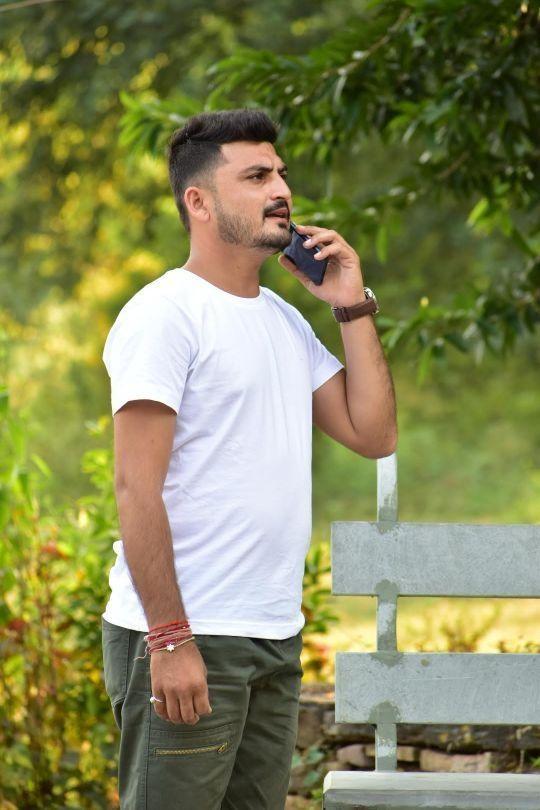
- **Color Calibration:** The source image is a cool, sterile studio white. The target environment is warm with significant green ambient bounce from the foliage. The white of the new shirt must be graded to match the user's current t-shirt tone (warmer white) and accept subtle green color spill (radiosity) in the shadowed areas to ground it in the environment.
PHASE 4: IDENTITY PROTECTION
- **Facial Lock:** The user's entire head, including hair, beard, ear, and neck structure, must remain frozen. The hand holding the phone and the phone itself must be preserved without alteration.
- **Body Integrity:** The user's torso volume and posture must remain unchanged. Do not apply slimming filters. The fabric simulation must conform to the user's actual bicep and chest dimensions, ensuring the long sleeves look filled by the user's arms, not empty or baggy.