Thinking Process
PHASE 1: VISUAL DECONSTRUCTION
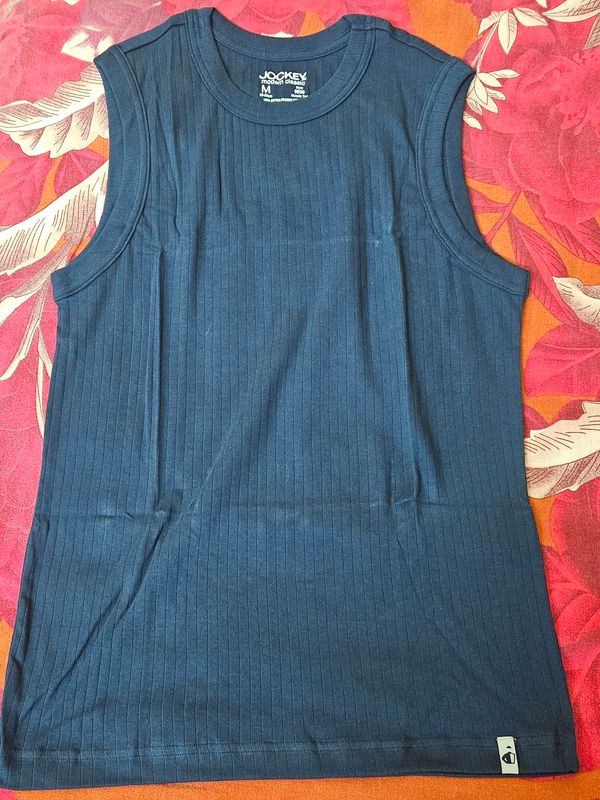
- **Fabric Physics:** The source garment is a ribbed knit cotton blend (vest/undershirt). It has high elasticity and a matte finish. Light should not specularly reflect but rather diffuse across the ribbed texture, creating micro-shadows within the vertical grooves. The fabric has a medium weight, meaning it will cling slightly to the body contours rather than hanging loosely like the current t-shirt.
- **Key Features:** The distinct vertical ribbing texture must be preserved and aligned vertically on the torso. The ribbed binding around the neck and armholes is thicker than the body fabric. The small white logo tag on the bottom hem (viewer's right) is a defining detail to maintain.
PHASE 2: FIT & DRAPE SIMULATION
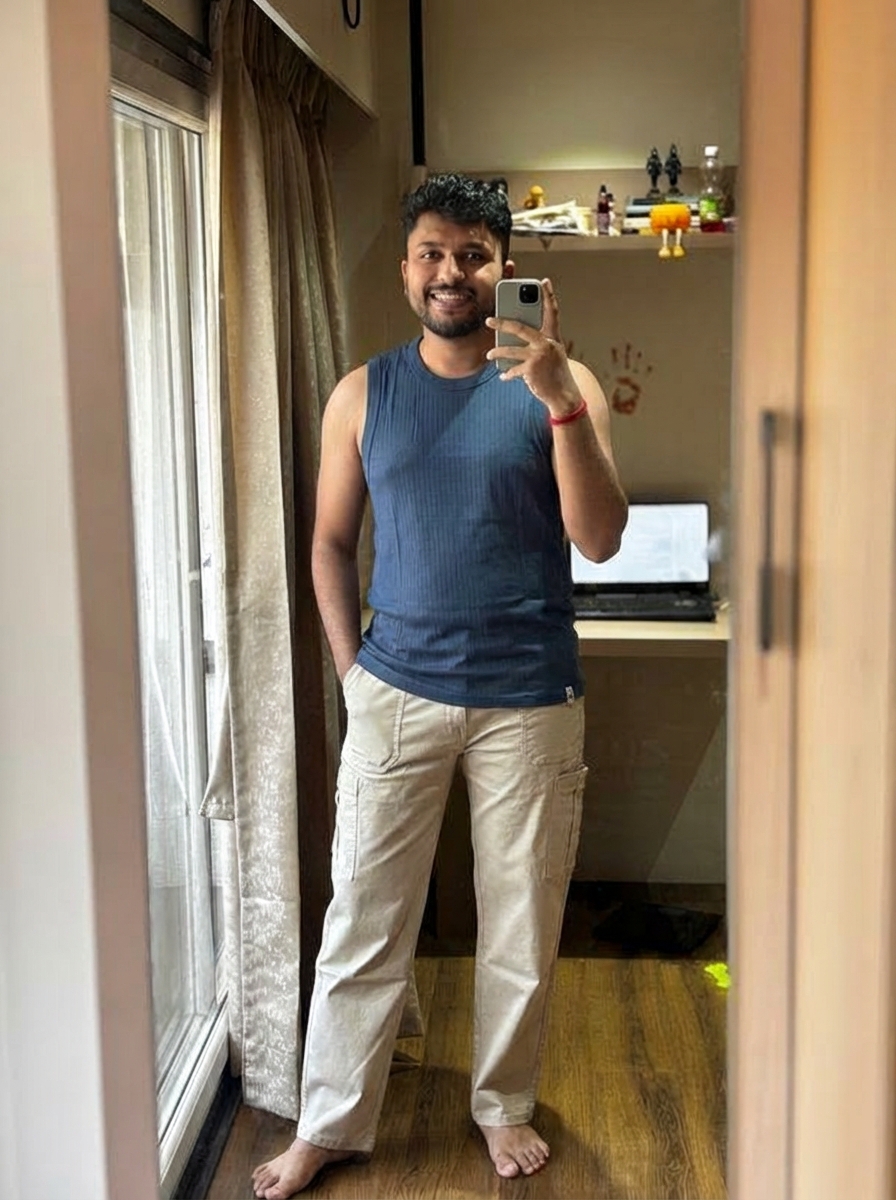
- **Body Mapping:** Unlike the current loose maroon t-shirt, this vest is sleeveless and fitted. The simulation must generate or reveal the user's upper arms (deltoids/biceps) which are currently covered. The fabric should sit flush against the chest and taper slightly at the waist. Gravity will pull the hem straight down, but the left side (pocketed hand) will cause slight bunching or riding up at the hip.
- **Occlusion Handling:** The most critical occlusion is the **smartphone and the user's right hand** held against the center/upper chest. The vest must be rendered *behind* the phone and hand. The user's left wrist (with the red band) is near the hemline and must remain the top layer.
PHASE 3: ENVIRONMENT & LIGHTING
- **Light Match:** The room features soft, diffused light, primarily coming from the large window on the left and overhead warm artificial sources. The new navy vest must show highlights on the user's left shoulder/side and graduate to deeper shadows on the right side and under the armpits.
- **Color Calibration:** The source image has flat, bright lighting. For the target environment, the navy blue levels must be deepened to match the room's exposure. A subtle warm color grade should be applied to the fabric to reflect the ambient bounce from the wooden floor and beige curtains.
PHASE 4: IDENTITY PROTECTION
- **Facial Lock:** The user's hair, forehead, visible eye area, nose, beard, and jawline must remain pixel-perfectly frozen. The phone masking the face must not be altered.
- **Body Integrity:** Strict prohibition on altering the user's shoulder width or torso volume. Despite the change from a loose shirt to a tighter vest, the underlying body mesh (waist width, chest breadth) must not be slimmed or artificially bulked. The skin tone generated for the exposed shoulders must match the existing skin tone of the face and forearms.