Thinking Process
PHASE 1: VISUAL DECONSTRUCTION
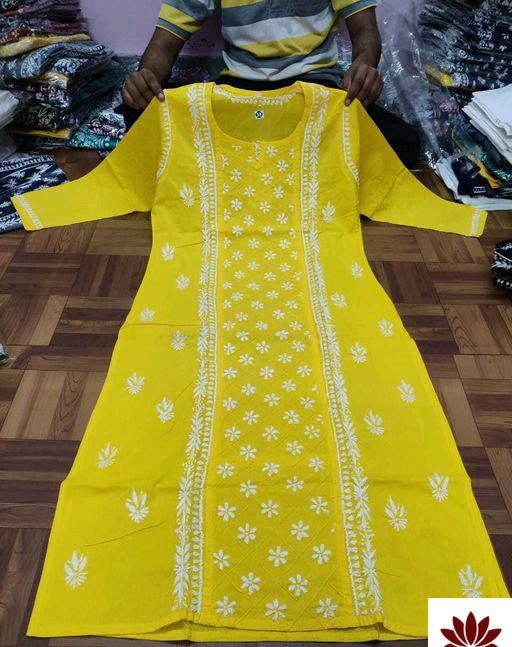
- **Fabric Physics:** The source garment is a long Kurti, likely composed of cotton or a cotton-blend commonly used for Chikankari work. It has a matte finish with low specularity (no shine). The physics simulation must treat this as a semi-structured lightweight fabric that holds its shape along the embroidered panels but drapes softly elsewhere. It is not as stiff as denim but heavier than chiffon.
- **Key Features:** The vertical white Chikankari embroidery panels running down the center and sides are critical and must not be distorted. The scattered floral motifs on the yellow background must remain distinct. The round neckline with embroidered edging and the specific "Chikan" texture (raised thread work) must be bump-mapped to retain depth.
PHASE 2: FIT & DRAPE SIMULATION
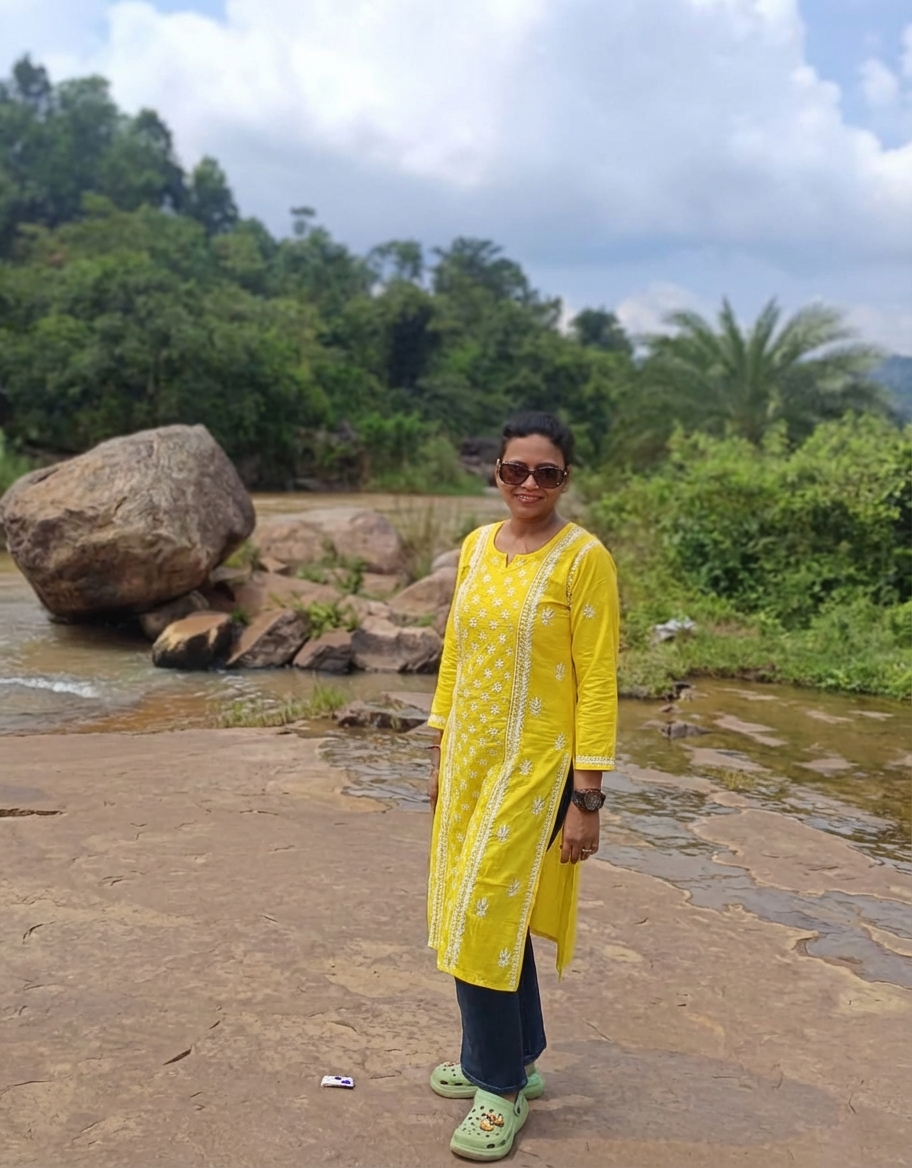
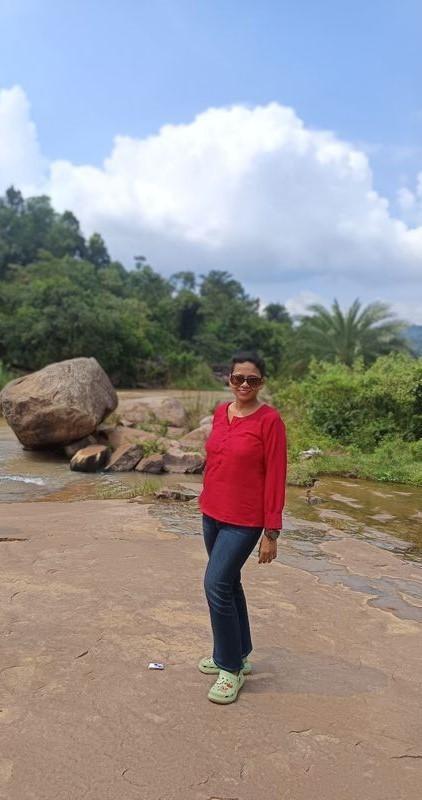
- **Body Mapping:** Unlike the user's current short red top, this Kurti is a tunic length (knee-length). The simulation must extend the fabric past the user's hips, covering the upper portion of the blue jeans. The fabric should drape relatively straight from the bust down (A-line silhouette) due to gravity, rather than clinging tight to the waist. The sleeves should follow the user's relaxed arm positions, creating natural compression folds at the inner elbow and armpits.
- **Occlusion Handling:** The user's left wrist has a watch; depending on the sleeve length of the generated Kurti, the watch must either be masked *over* the fabric (if sleeves are pushed up) or properly covered. The user's hands must remain visible and unobstructed. The hair is tied back, posing minimal occlusion risk, but the neckline must sit cleanly around the neck without intersecting the jawline.
PHASE 3: ENVIRONMENT & LIGHTING
- **Light Match:** The target environment is outdoor daylight with diffuse lighting from a cloudy sky. The source garment (photographed indoors with overhead artificial light) needs relighting. Shadows on the new garment must be soft and directional, consistent with the outdoor ambient light (likely overhead/slightly frontal). Self-shadowing must occur under the bust and inside the folds of the sleeves.
- **Color Calibration:** The source yellow is vibrant; however, it must be color-graded to match the outdoor white balance (cooler temperature compared to indoor warm light). The yellow intensity should be slightly desaturated or adjusted to reflect the "atmospheric haze" of the outdoor landscape so it doesn't look like a "sticker" pasted on top.
PHASE 4: IDENTITY PROTECTION
- **Facial Lock:** The user's entire head region, including the sunglasses, facial structure, skin tone, and tied-back hair, must be frozen and untouched.
- **Body Integrity:** The user's shoulder width, arm thickness, and stance must be preserved. Do not slim the user's waist or alter the hip width to fit the garment's flat-lay shape; the garment must be warped to fit the user's existing volume. The visible lower legs and shoes must remain original.