Thinking Process
PHASE 1: VISUAL DECONSTRUCTION
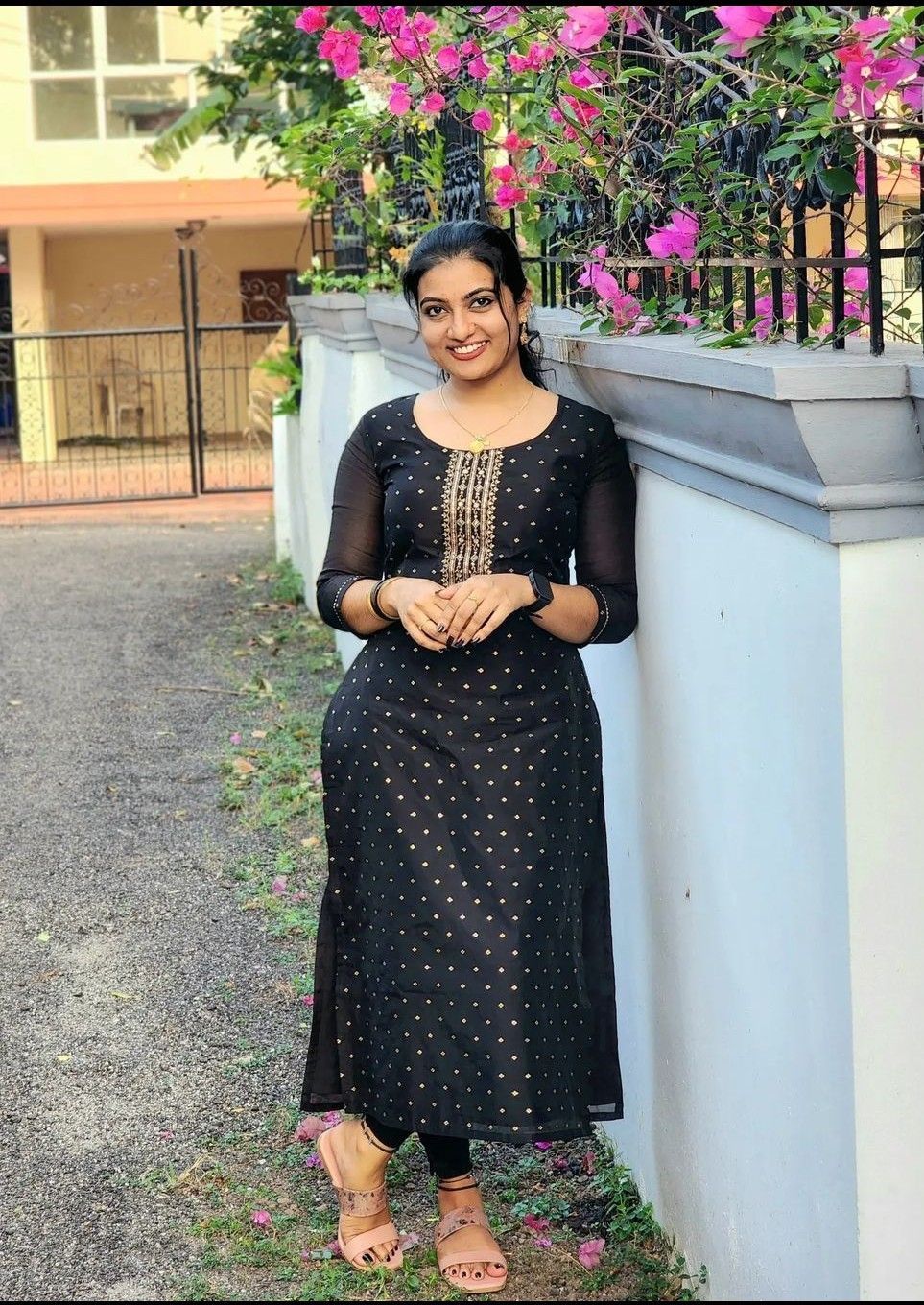
- **Fabric Physics:** The source garment appears to be a Rayon or Georgette blend with a medium weight. It possesses a semi-matte finish but the gold foil print and embroidery provide distinct specular highlights. The simulation must treat the fabric as having moderate shear resistance (it holds shape) but high drape flexibility. It is not stiff; it flows vertically.
- **Key Features:**
1. **Central Placket:** The vertical gold/bronze embroidery strip down the chest center must remain centered on the user's sternum.
2. **Gold Foil Motifs:** The geometric diamond/dot pattern needs to maintain texture (metallic reflection) without appearing like flat yellow pixels.
3. **Sleeve Borders:** The specific embroidered cuff detail at the 3/4 sleeve mark must be preserved.
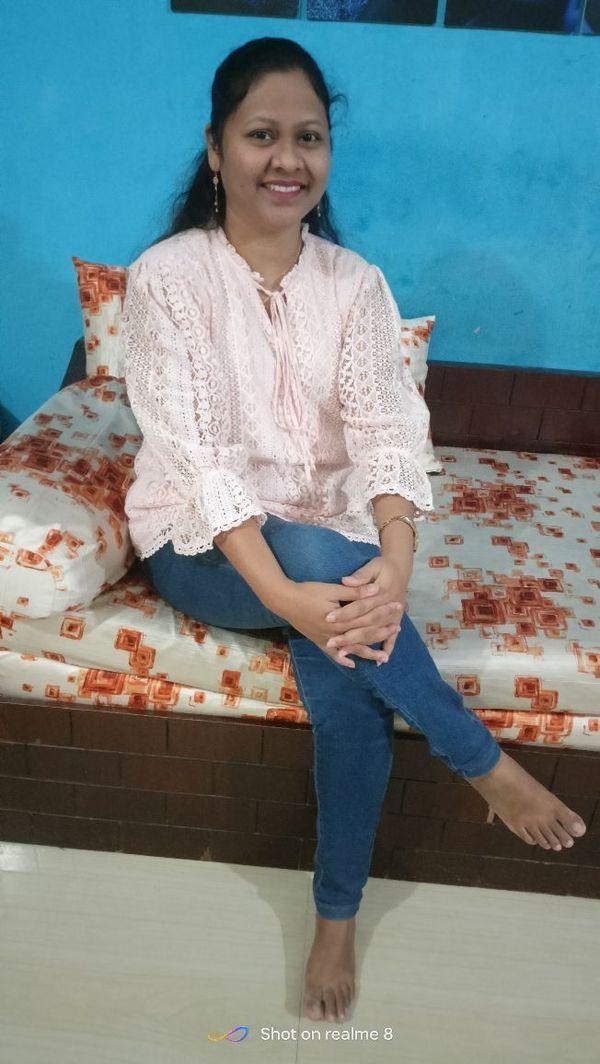
4. **Neckline:** The round/scoop neck shape must replace the user's current V-neck/tie-neck style.
PHASE 2: FIT & DRAPE SIMULATION
- **Body Mapping:**
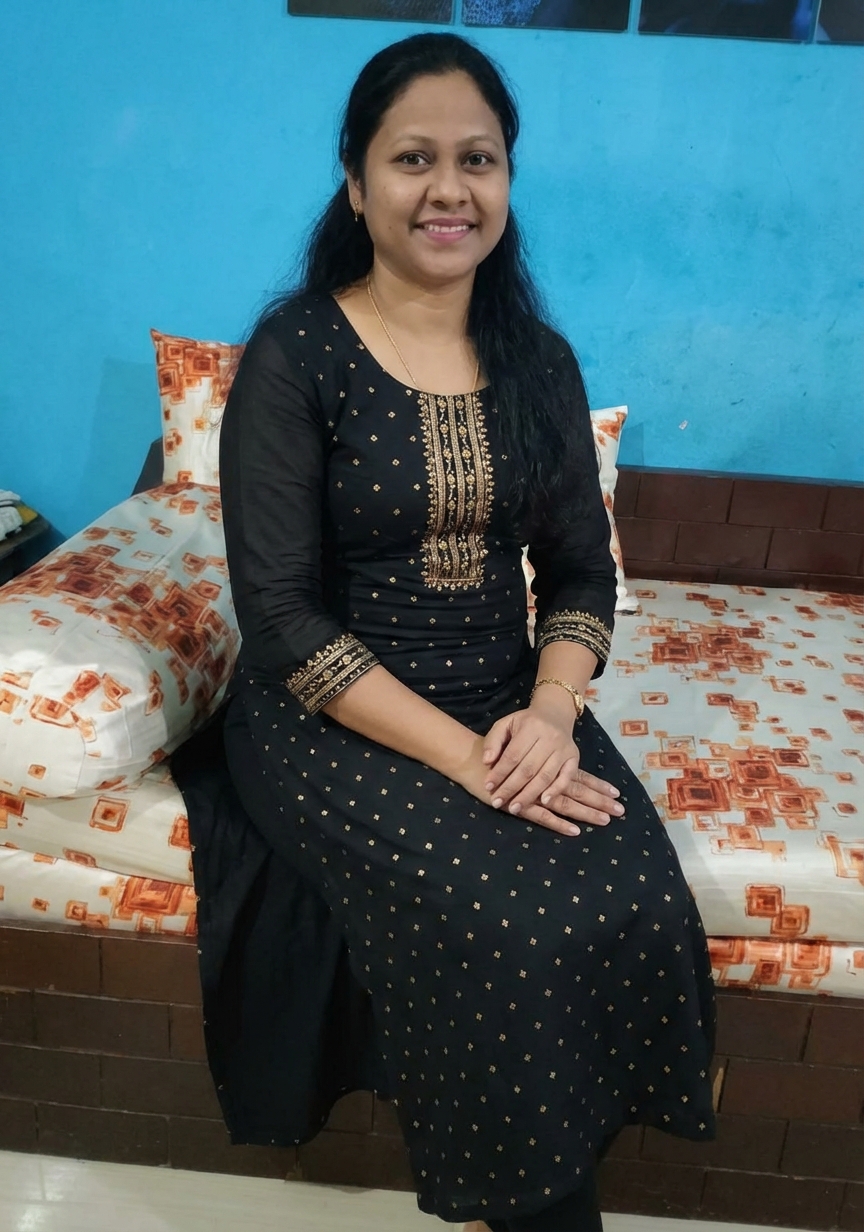
- **Torso:** The user is seated with a slight forward lean. The fabric must show compression folds (horizontal rippling) across the stomach area, unlike the flat vertical fall in the source image.
- **Lower Body (Crucial):** Since the source is a long Kurti (knee-length) and the user is seated cross-legged: the lower half of the garment cannot hang straight. It must drape over the thighs and pool slightly on the bed surface around the hips/knees. The side slits of the Kurti should splay open near the hips to accommodate the seated spread.
- **Sleeves:** The user's elbows are bent at approx 90 degrees. The fabric requires tension wrinkles at the outer elbow and bunching at the inner elbow.
- **Occlusion Handling:**
- **Hands:** The user's hands are clasped in her lap. This is a HARD occlusion. The Kurti fabric must pass *under* the hands/forearms, or drape naturally around them. The hands must not be textured over.
- **Hair:** The strands of hair resting on the user's left and right shoulders must be masked and layered *on top* of the new black fabric.
PHASE 3: ENVIRONMENT & LIGHTING
- **Light Match:**
- **Source Correction:** The source image has high-contrast outdoor sunlight. This must be neutralized. Reduce the brightness of the gold highlights to match the diffuse, softer indoor lighting of the user's room.
- **Target Environment:** The user is in a room with cool/neutral artificial overhead light (likely fluorescent). Shadows on the garment should be soft and cast slightly downward, matching the shadows on the blue wall behind her.
- **Color Calibration:**
- **Black Levels:** The deep black of the Kurti must be lifted slightly to match the dynamic range of the user's photo (which has some ISO noise). It should not look "blacker" than the deepest shadow currently in the user's photo (e.g., the shadow under the bed frame).
PHASE 4: IDENTITY PROTECTION
- **Facial Lock:** Absolute pixel preservation of the user's face, neck skin tone, and ear structure. The jawline definition must remain untouched.
- **Body Integrity:** Do not morph the user's seated physique to match the standing source model's hourglass shape. The garment must expand to fit the user's natural seated width at the hips and waist. Maintain the existing volume of the arms.