Thinking Process
PHASE 1: VISUAL DECONSTRUCTION
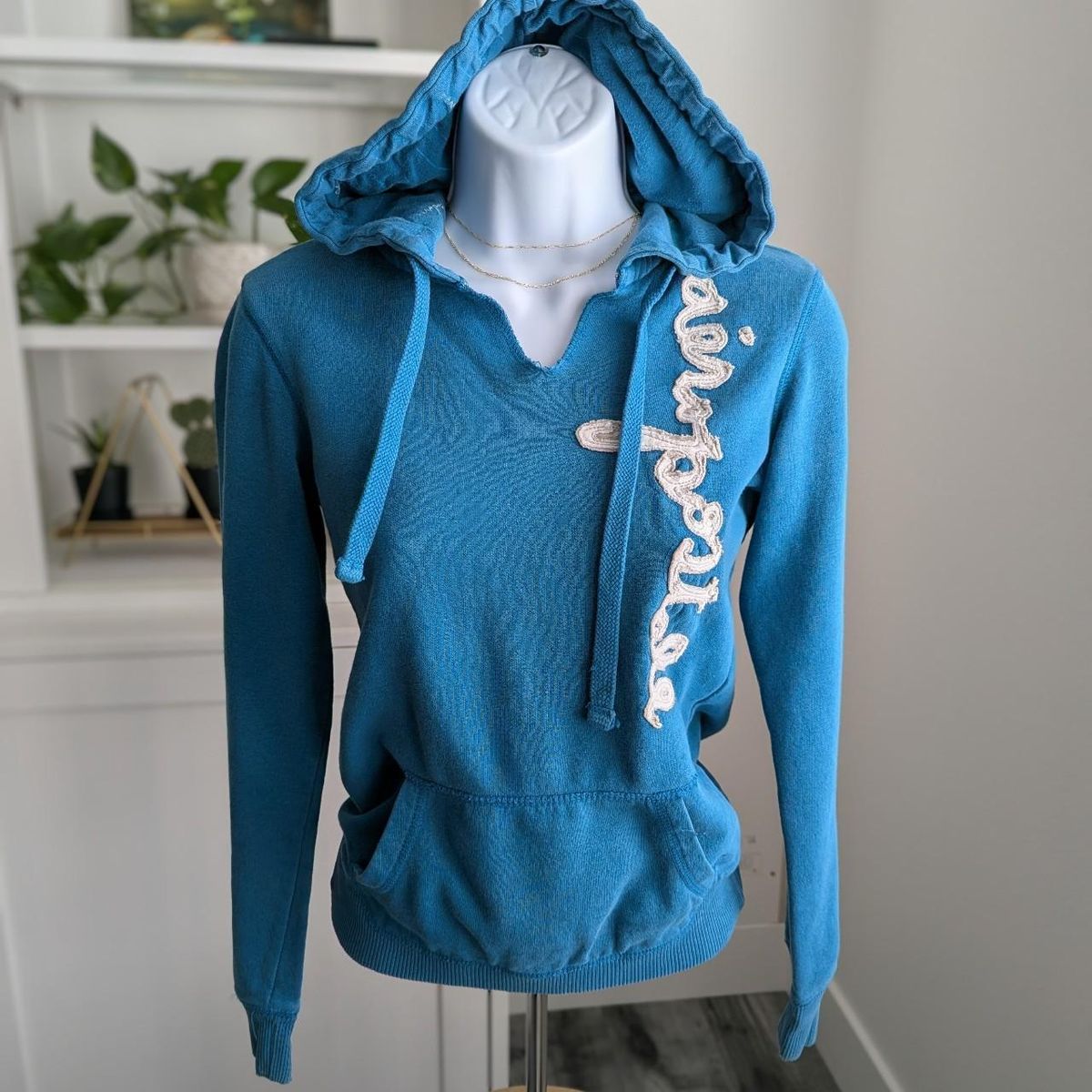
- **Fabric Physics:** The source garment is a cotton-blend fleece (sweatshirt material). It has significant thickness and weight, possessing a matte finish with low specularity. It should not reflect light sharply like the current red shirt; instead, it absorbs light with soft falloff. The material must exhibit "structural draping" rather than clinging to the skin, particularly around the midsection and arms.
- **Key Features:**
- The vertical white distinct appliqué/embroidery text ("Aeropostale") on the left side must remain 3D and textured, not flattened.
- The kangaroo pocket structure at the abdomen.
- The ribbed elasticity of the bottom hem and cuffs.
- The thick drawstrings and the V-split neckline.
- The hood volume (which must be simulated as resting down/collapsed on the back, or volumetrically around the neck, differing from the mannequin's "hood up" state).
PHASE 2: FIT & DRAPE SIMULATION
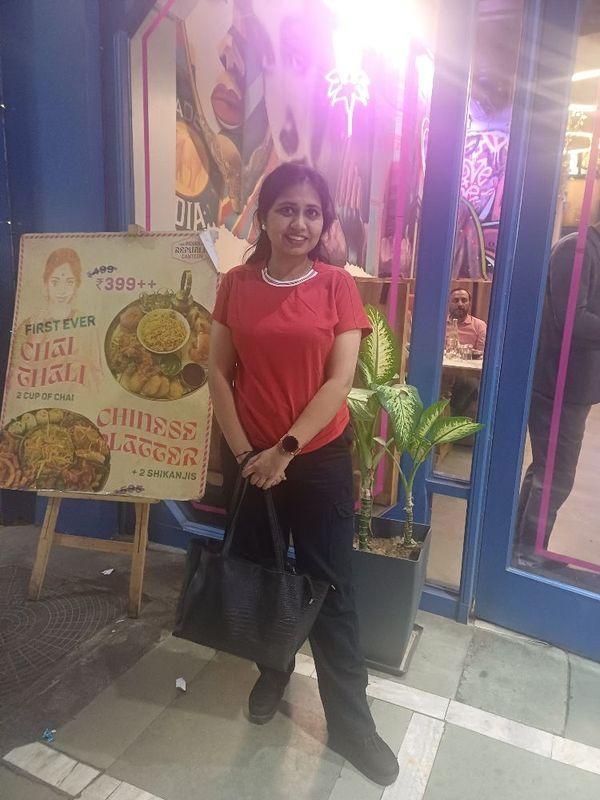
- **Body Mapping:** The hoodie is a relaxed/loose fit compared to the user's current fitted red t-shirt. The simulation must expand the silhouette slightly to account for the fleece's thickness. The ribbed hem should sit at the hip line, creating a slight "blousing" effect above the hips rather than hanging completely straight. The sleeves are long and should exhibit compression folds (stacking) near the wrists, interacting with the user's bent elbows.
- **Occlusion Handling:**
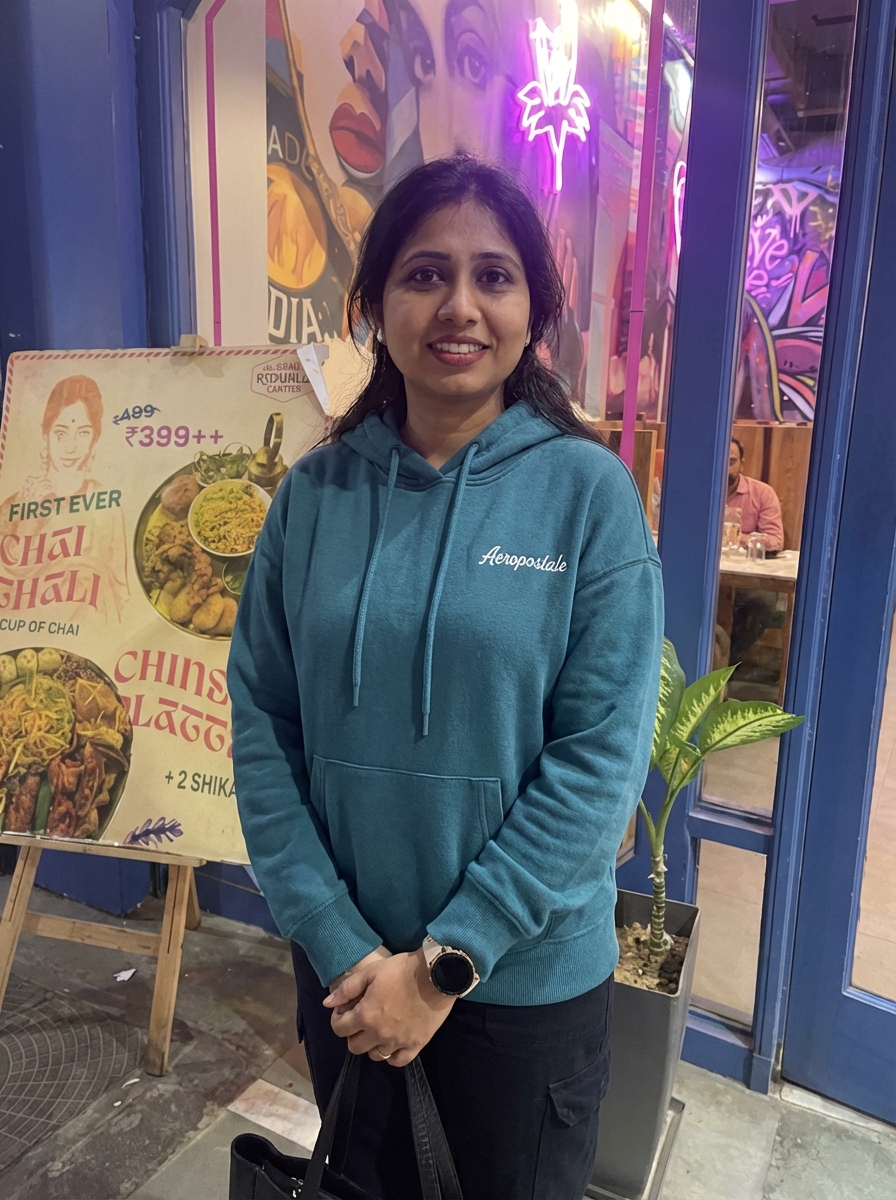
- **Wristwatch:** The user's watch on the left wrist is a hard occlusion. The hoodie sleeve must either stop just above it or drape slightly over it; it cannot clip through it.
- **Hands & Bag:** The user's hands are clasped low holding a tote bag. If the hoodie length extends to this area, the fabric must drape *behind* the hands/wrists, or crumple slightly where it contacts the forearms.
- **Hair:** The user's hair falls over the shoulders. The hoodie material (specifically the hood bulk around the neck) must be rendered *under* the hair, or the hair must be re-layered on top of the garment.
PHASE 3: ENVIRONMENT & LIGHTING
- **Light Match:** The user is in a complex lighting environment with a strong mix of cool outdoor/artificial light and a distinct magenta/purple neon cast from the background signage. The teal hoodie must not retain the neutral white studio lighting of the source. It must absorb the ambient purple hue from the "Chai Thali" sign environment on the highlights and rim lighting.
- **Color Calibration:** The teal color of the hoodie will appear darker and slightly desaturated in the user's evening/indoor setting compared to the bright mannequin photo. Shadows within the fabric folds (kangaroo pocket, hood neck) must be deep and soft to match the ambient occlusion of the scene.
PHASE 4: IDENTITY PROTECTION
- **Facial Lock:** The user's face, skin tone, neck area, and hair geometry must be completely frozen. The V-neck of the hoodie exposes the upper chest; the user's skin texture here must be preserved seamlessly.
- **Body Integrity:** Strict prohibition on body slimming. The user's hip width and shoulder breadth must remain constant. The goal is to layer the clothing *onto* the existing volume, creating a realistic bulkier silhouette appropriate for a sweatshirt, without altering the underlying biological proportions.