Thinking Process
PHASE 1: VISUAL DECONSTRUCTION
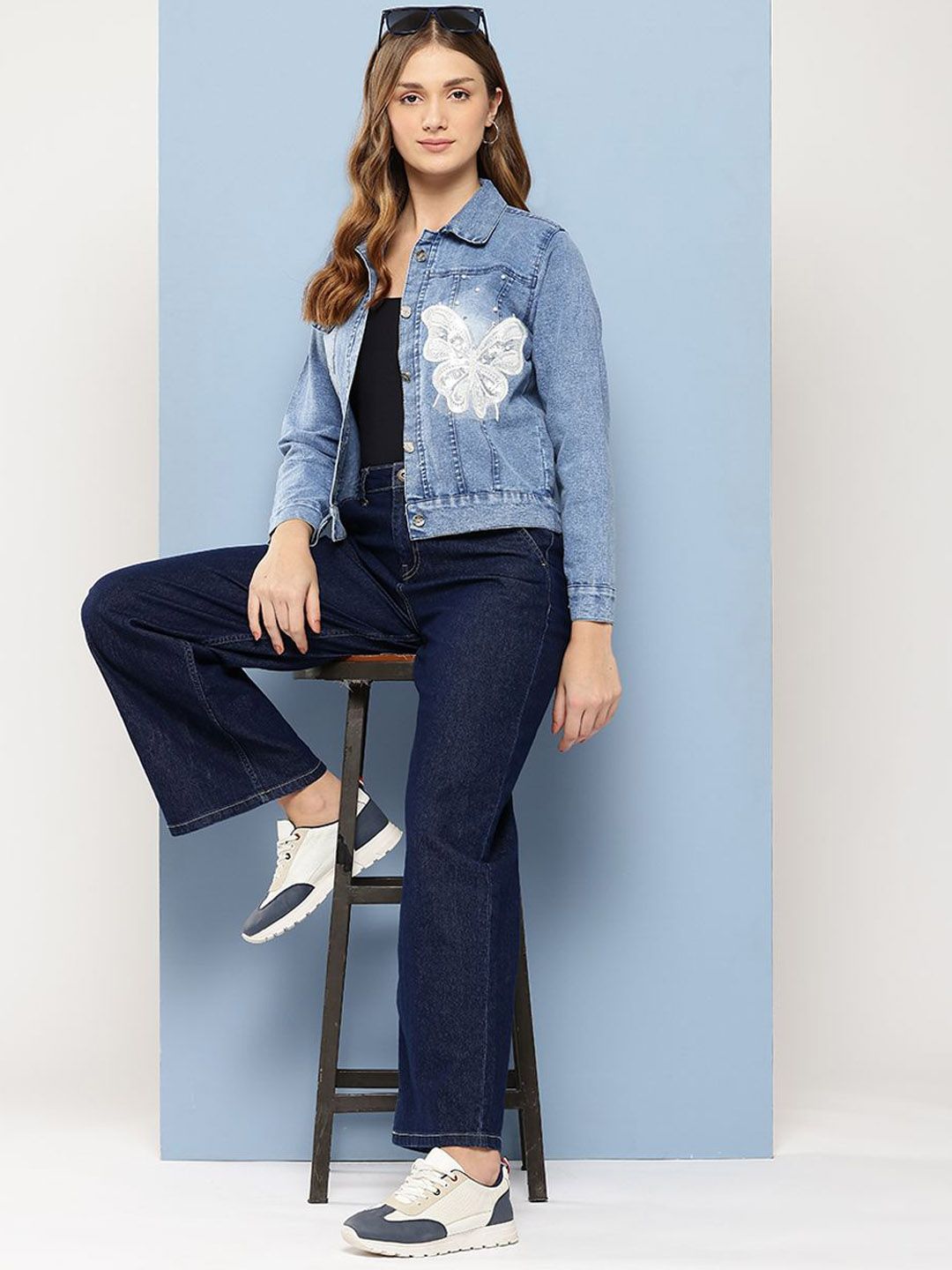
- **Fabric Physics:** The source garment is a medium-weight denim (cotton twill). It possesses high structural rigidity and low drape compared to the user's current soft woven top. Lighting physics must account for the matte texture of the indigo dye contrasted with the subtle specular highlights on the white warp threads and metal buttons. It will not cling to the skin; it will hold its own volume.
- **Key Features:** The specific acid-wash fading zones, copper/silver metal buttons, and the rigid collar construction must be preserved. Note: The prominent butterfly embroidery is on the garment's *left* panel; since the user is showing her *right* profile, this feature should logically be occluded or barely visible on the far side to maintain physical realism, unless mirrored for stylistic preference. The pearl accents on the yoke must reflect the environment.
PHASE 2: FIT & DRAPE SIMULATION
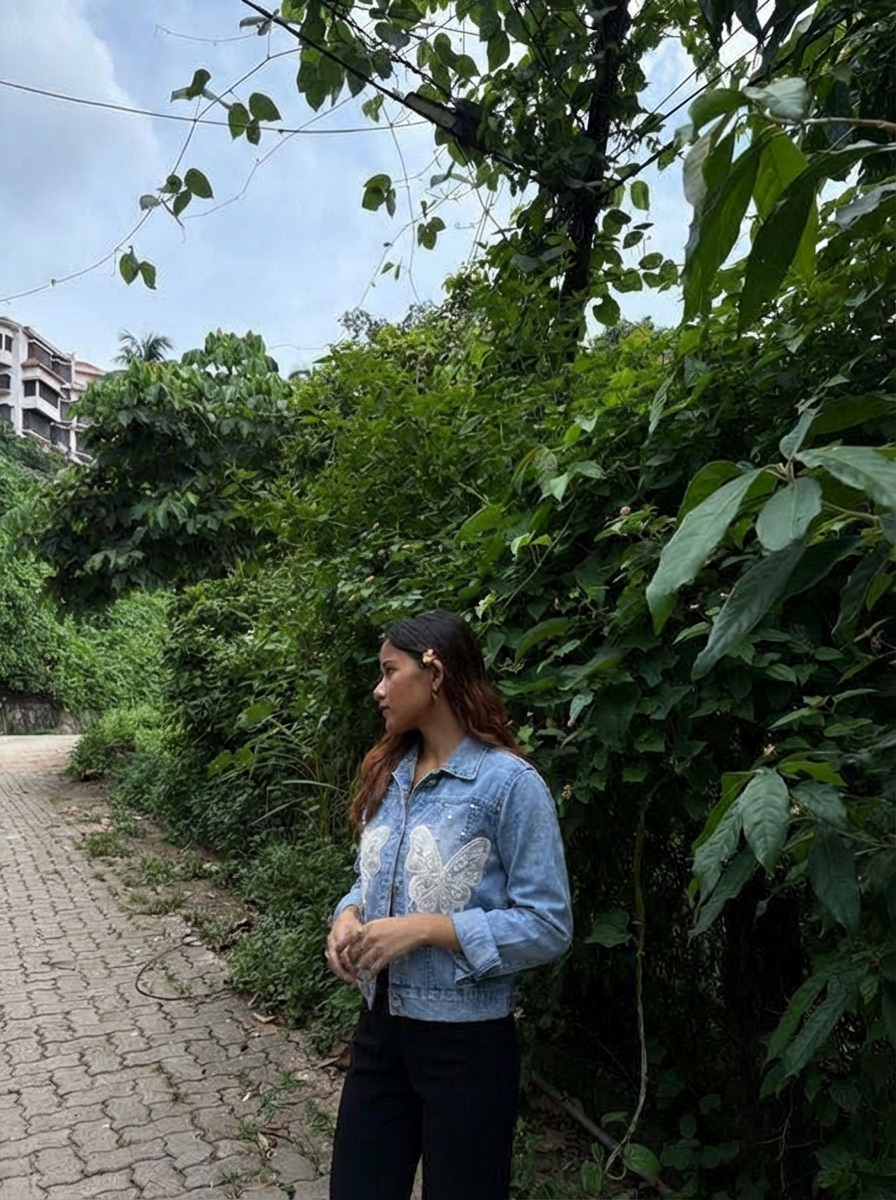
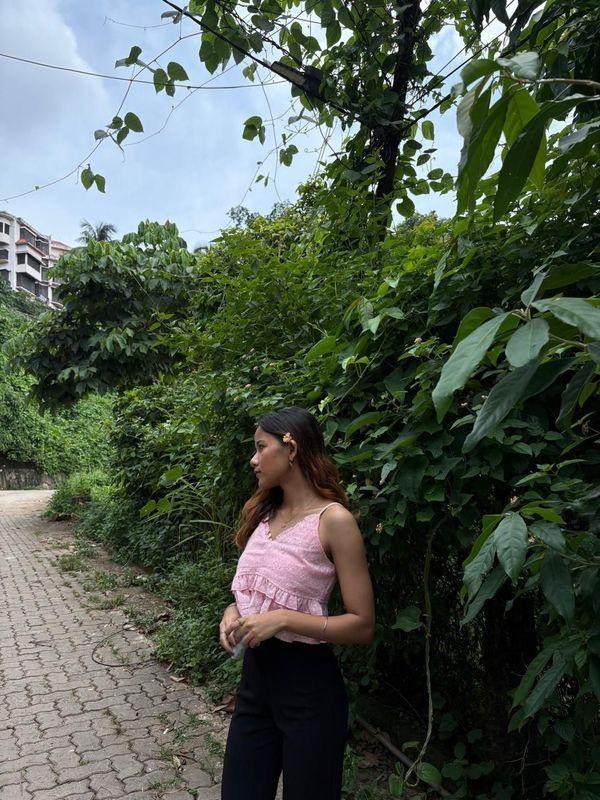
- **Body Mapping:** The user is in a side-profile stance. The denim jacket must be generated with volumetric offset to account for material thickness (approx. 2-3mm visual thickness). The sleeve must show distinct "honeycomb" creasing at the active right elbow bend (antecubital fossa) due to denim stiffness. The jacket hem should fall straight down from the lower back rather than curving in, creating a "tenting" effect typical of stiff jackets over a lordotic curve.
- **Occlusion Handling:**
1. **Hair:** The user's long dark hair falls over the right shoulder and back. This requires a high-fidelity segmentation mask to ensure the hair lies *over* the denim collar and yoke, casting appropriate shadows onto the jacket.
2. **Right Arm/Hand:** The forearm and hand holding the object must remain in the foreground. The cuff of the jacket sleeve must stop at the wrist bone, interacting with the hand/object without clipping.
PHASE 3: ENVIRONMENT & LIGHTING
- **Light Match:** The target environment is outdoor, overcast daylight (diffuse, cool-toned, top-down soft lighting). The source image's harsh, directional studio lighting (bright highlights) must be neutralized. We must generate soft ambient occlusion shadows under the collar, inside the sleeve cuff, and where the arm presses against the torso.
- **Color Calibration:** The source jacket has a warm studio tint. A color grade shift is required to introduce cooler, cyan/green undertones to the denim blue, matching the ambient light reflected from the overcast sky and the surrounding lush vegetation.
PHASE 4: IDENTITY PROTECTION
- **Facial Lock:** Absolute freeze on the user's facial profile (forehead, nose, lips, chin, jawline) and the visible ear/earring. The hairline interface must remain perfectly blended.
- **Body Integrity:** Do not slim the user's arm or waist. The silhouette must actually *expand* slightly to represent the bulk of the denim jacket over the existing body volume. The posture and the bend of the arm must remain exactly as shown in the User Image.