Thinking Process
PHASE 1: VISUAL DECONSTRUCTION
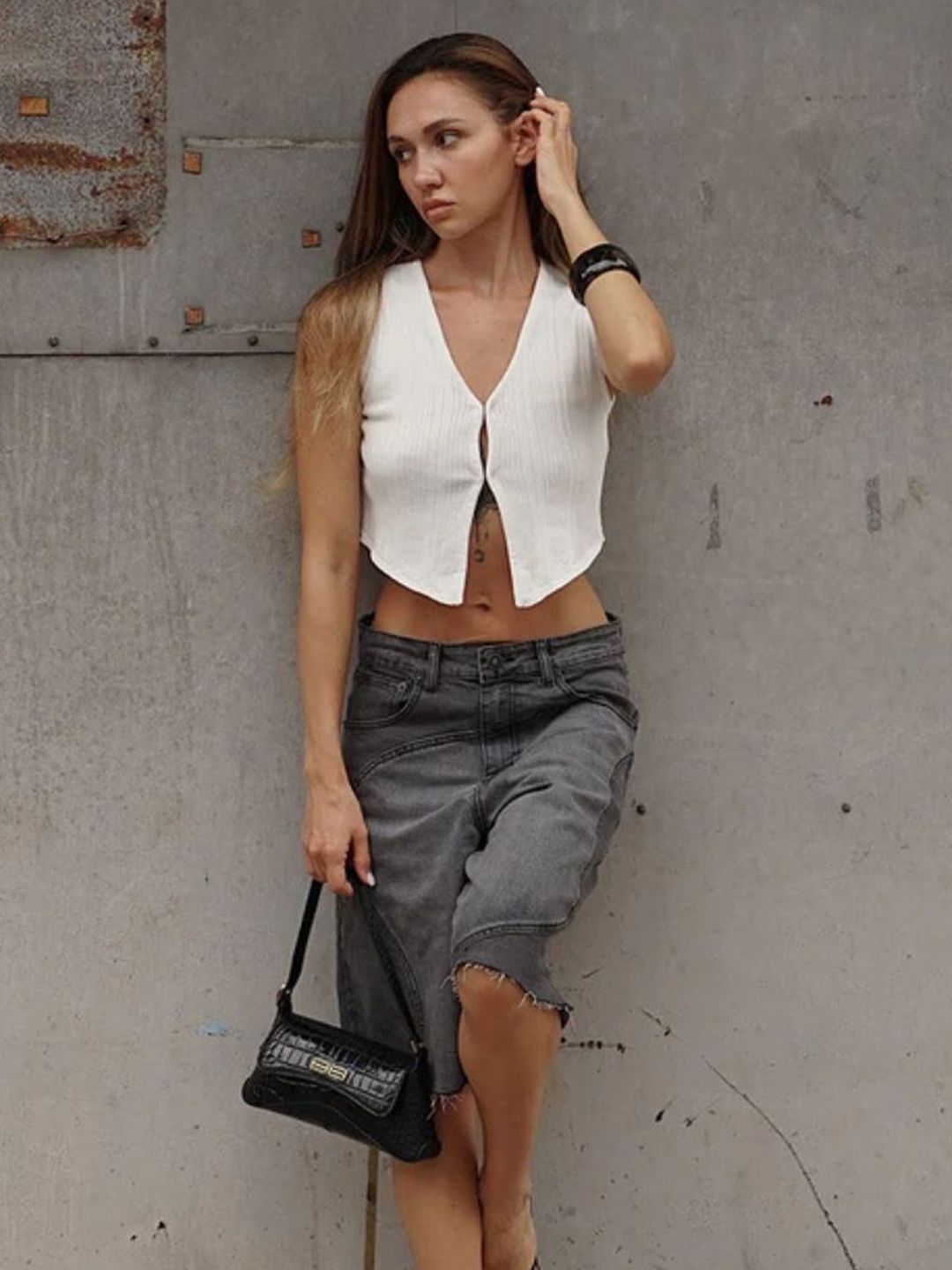
- **Fabric Physics:** The source garment is a fitted, ribbed knit vest (likely cotton-spandex blend). It has a matte finish with high friction, meaning it will cling to the torso rather than flow loosely. Light interaction should be diffuse with soft specular highlights on the ribbing ridges, avoiding any satin or silk-like sheen.
- **Key Features:**
- **Vertical Ribbing:** The texture consists of distinct vertical lines that must deform with the body's curvature.
- **Inverted-V Hemline:** The bottom hem forms a sharp upward angle at the center; this geometry must be preserved.
- **Central Closure:** The vertical center opening and the specific fastening point (hook-and-eye or hidden button) at the sternum level are critical design elements.
- **Deep V-Neck:** The neckline plunge depth must be maintained relative to the collarbone.
PHASE 2: FIT & DRAPE SIMULATION
- **Body Mapping:**
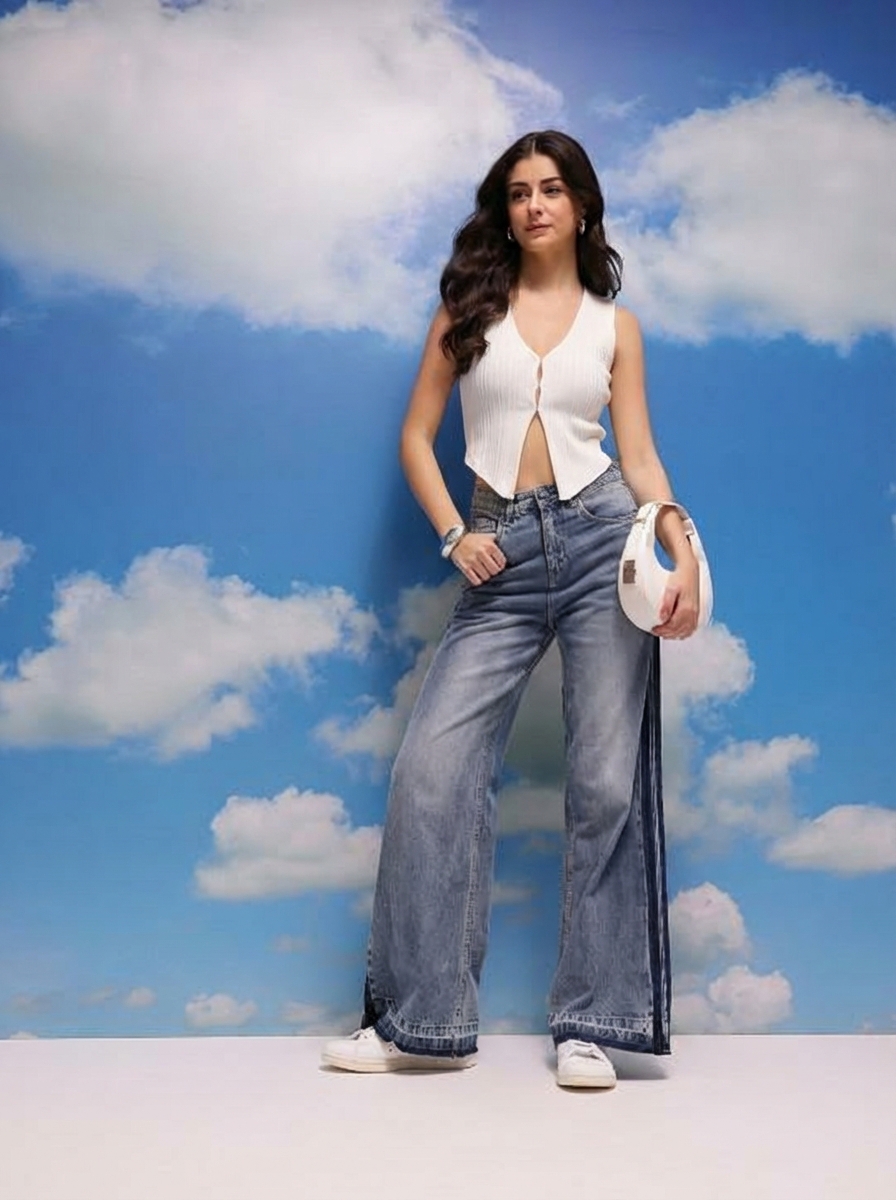
- **Torso Alignment:** The user is standing with a slight hip tilt (contrapposto). The garment must twist slightly to align with the torso's rotation.
- **Tension Points:** Simulation must show slight stretching across the bust area due to the tight fit of the ribbed material, relaxing slightly at the ribcage.
- **Hem Interaction:** The garment is cropped. The hem needs to hover above the navel, maintaining the gap between the shirt and the high-waisted jeans, consistent with the user's existing midriff exposure.
- **Occlusion Handling:**
- **Hair:** The user's long, wavy dark hair cascades over her right shoulder (viewer's left). This hair volume must be masked and composited as the top layer, strictly occluding the right strap and upper chest portion of the white vest.
- **Accessories:** The watch on the user's right wrist and the white handbag in the left hand are physically separated from the torso, but the user's right thumb interacts with the jean pocket; ensure the garment hem does not artificially clip through the wrist area.
PHASE 3: ENVIRONMENT & LIGHTING
- **Light Match:**
- **Source vs. Target:** The user is in bright, outdoor daylight (cool/blue sky ambient with warm direct sun). The source cloth is in flatter, indoor/shade lighting.
- **Simulation:** The white vest must be brightened to match the high-key exposure of the user's environment. Shadows must be cast downwards and slightly to the right to match the shadow under the user's chin.
- **Color Calibration:**
- **Ambient Bounce:** The white fabric must not remain purely desaturated gray in shadows; it needs to absorb a subtle blue tint in the shaded areas to reflect the "Sky Box" environment of the user image. The highlights should be a warm, sunlight white.
PHASE 4: IDENTITY PROTECTION
- **Facial Lock:** Absolute freeze on the user's face, neck, and jawline. The hair shape and volume must remain pixel-perfect.
- **Body Integrity:** The user's skin tone (midriff, arms, neck) is to be preserved exactly. Do not apply "slimming" filters or alter the width of the user's waist or shoulders to fit the source image's silhouette; the cloth must warp to the user, not the user to the cloth.