Thinking Process
PHASE 1: VISUAL DECONSTRUCTION
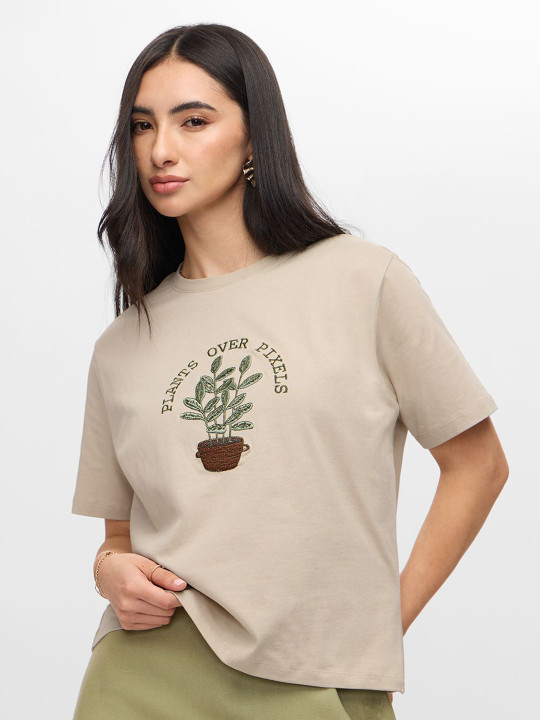
- **Fabric Physics:** The source garment is a medium-weight cotton jersey. It possesses a matte finish with low specularity (no shine). The physics simulation must treat this as a semi-structured material that creates soft, rounded folds rather than sharp creases. It has a slight stiffness typical of high-quality cotton, meaning it will hold its "boxy" shape rather than clinging tightly to the skin.
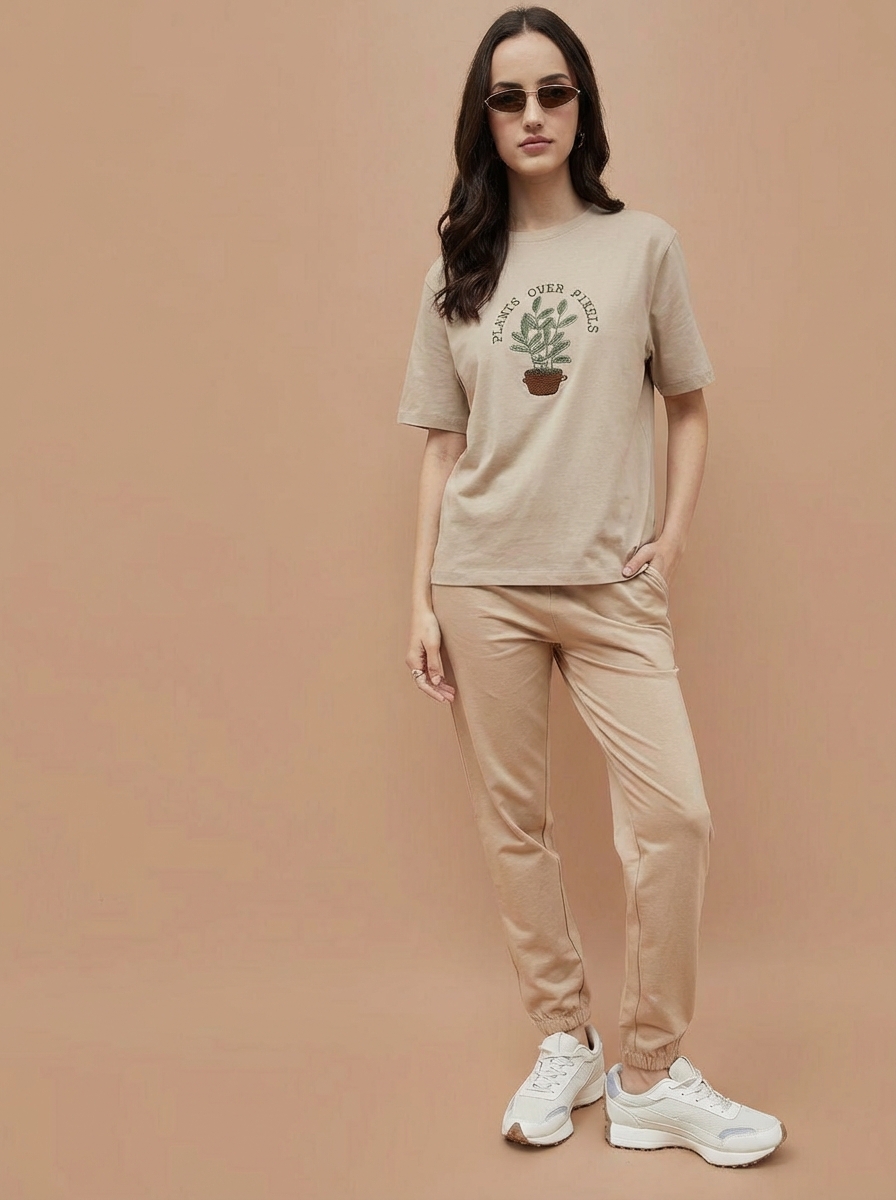
- **Key Features:** The central chest embroidery/print featuring the text "PLANTS OVER PIXELS" in an arc and the potted plant graphic must be preserved with high fidelity. The ribbing on the crew neckline and the stitching on the sleeve hems are essential structural details. The "heathered" or solid beige/sand color consistency must be maintained.
PHASE 2: FIT & DRAPE SIMULATION
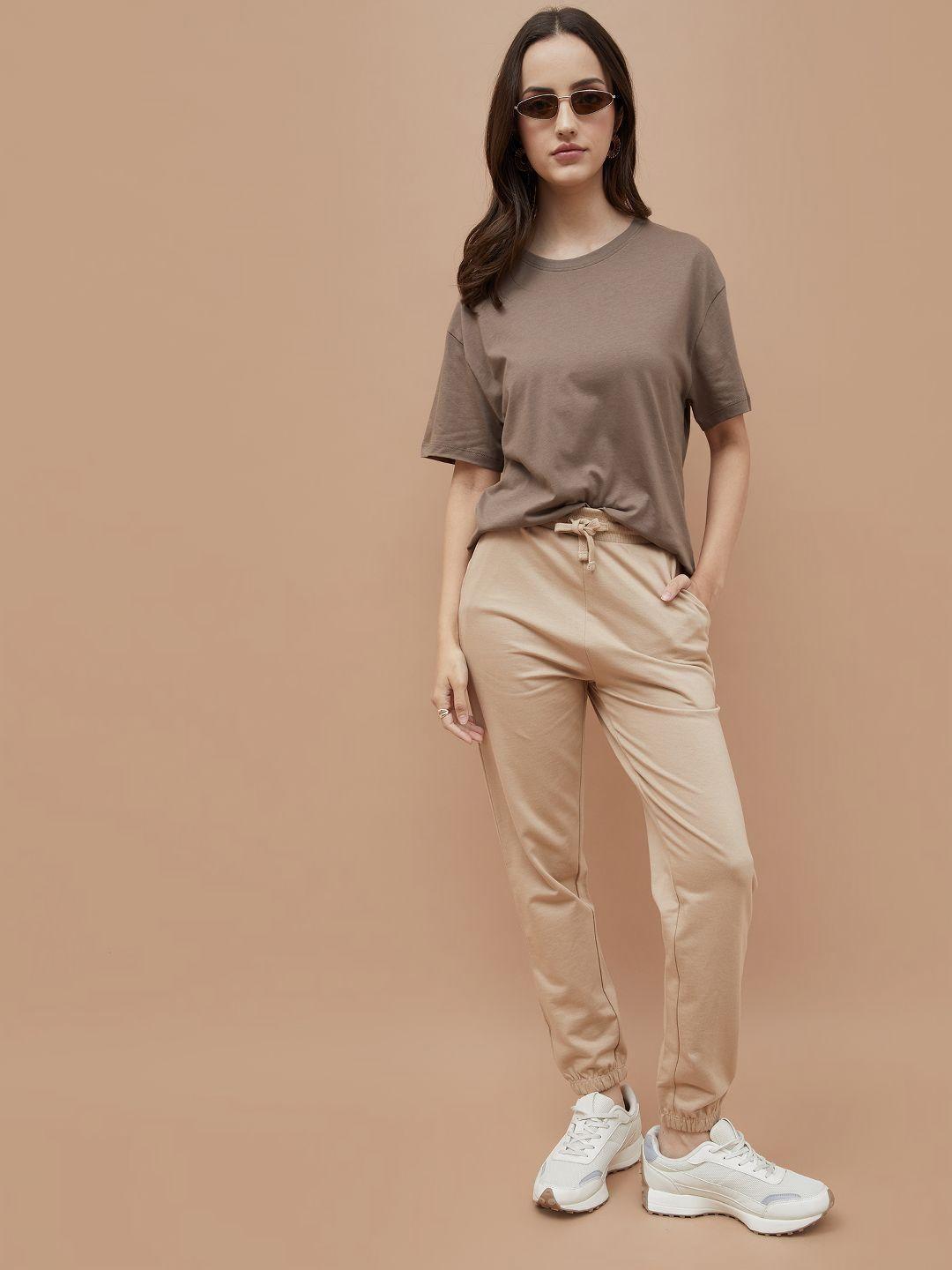
- **Body Mapping:** On the target user, the garment should drape loosely given its boxy cut. On the user's right side (arm straight down), the sleeve should hang naturally with vertical gravity folds. On the user's left side (hand in pocket), the fabric tension must pull slightly across the torso towards the elbow, and the hemline must bunch or drape naturally around the wrist/forearm area where the hand enters the pant pocket. The text graphic must warp subtly to follow the curvature of the user's chest volume.
- **Occlusion Handling:** The user has long, dark wavy hair resting on both shoulders and the upper chest. This is a critical occlusion layer; the new garment must be rendered *underneath* these hair strands. The user's left hand enters the pocket; the garment hem must interact physically with this obstruction, either draping over the wrist or bunching behind it, but not clipping through the hand.
PHASE 3: ENVIRONMENT & LIGHTING
- **Light Match:** The target environment utilizes soft, warm studio lighting coming primarily from the front-left, casting soft shadows to the right and behind the subject. The source garment (currently in cooler, flatter light) must be re-lit to accept this warm bias. Shadows within the new shirt's folds must be consistent with the depth of the shadows in the user's joggers.
- **Color Calibration:** The source shirt is a neutral beige/sand. In the target image, the overall tone is warm/sepia. The new shirt's albedo must be color-graded to reflect the ambient warm light of the target scene so it doesn't appear artificially desaturated or "cool" against the beige background.
PHASE 4: IDENTITY PROTECTION
- **Facial Lock:** The user's face, skin tone, jawline, and the sunglasses she is wearing are strictly frozen regions. The hair shape and volume must remain pixel-perfect.
- **Body Integrity:** The simulation must respect the user's standing posture. Do not warp the user's waist or hips to match the source model's silhouette. The visible portions of the user's arms and neck must remain untouched, ensuring no "slimming" or distortion of the target body type occurs during the cloth transfer.