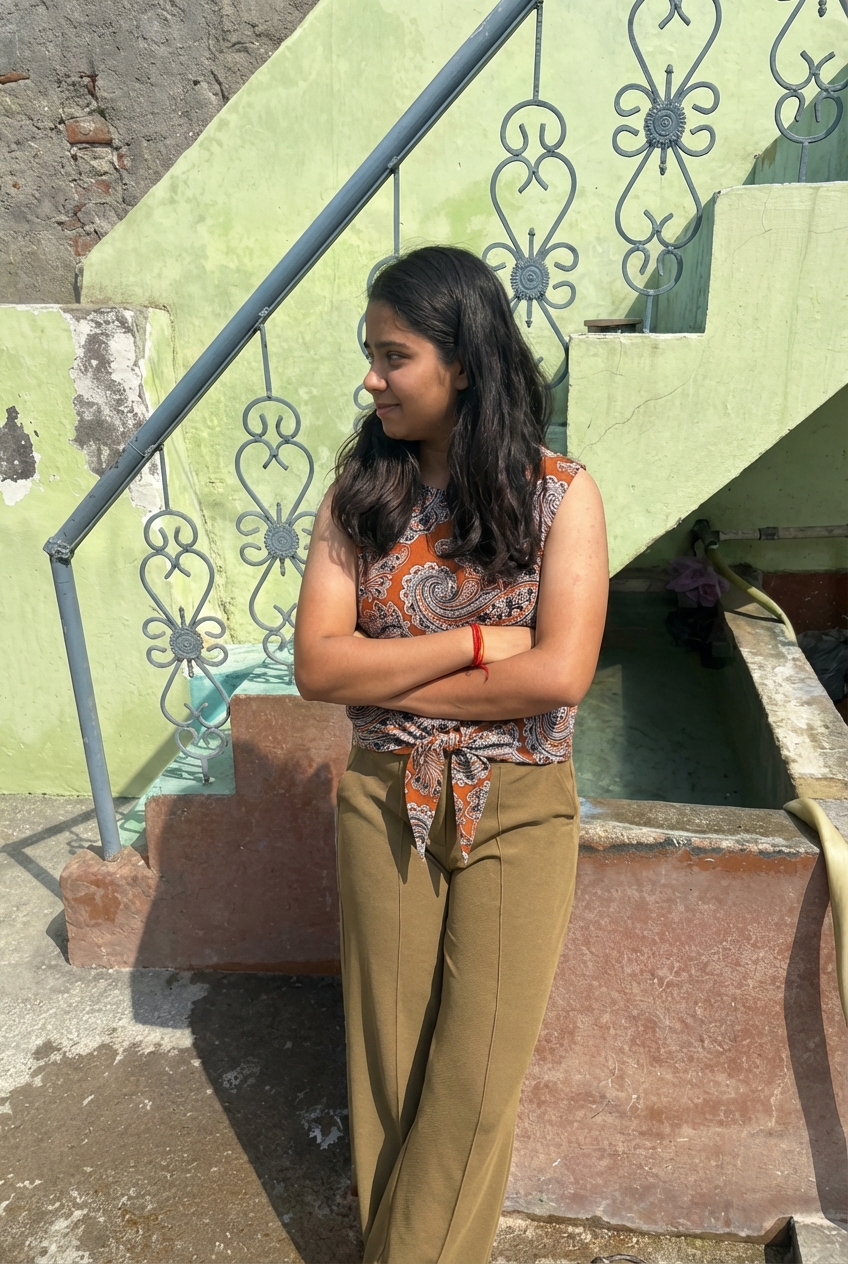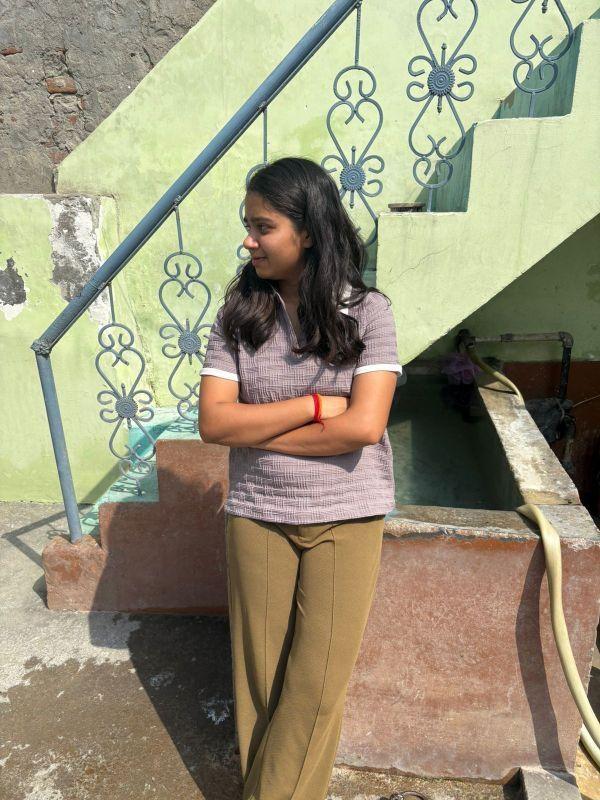
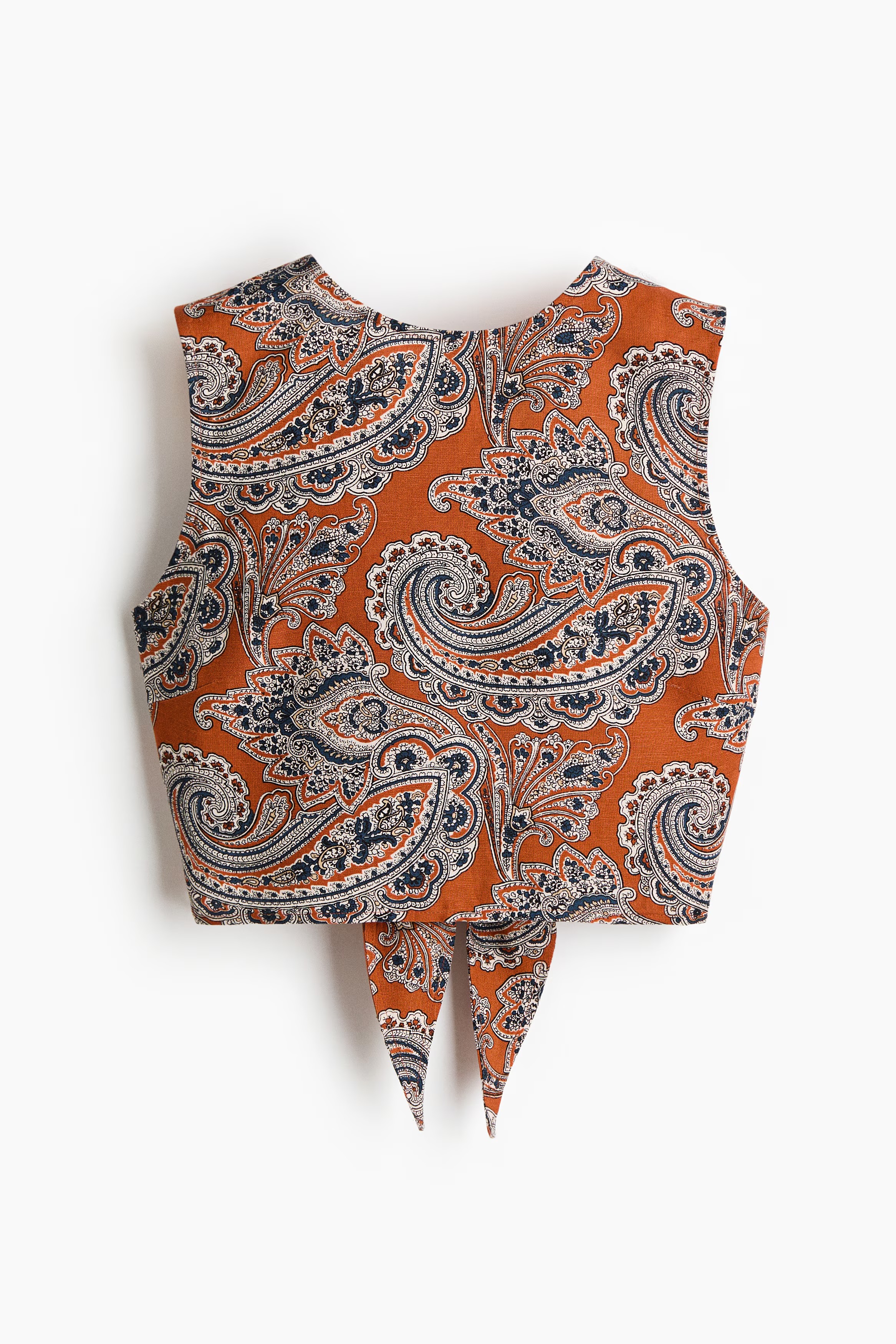
Thinking Process
PHASE 1: VISUAL DECONSTRUCTION
- **Fabric Physics:** The source garment appears to be a printed cotton or cotton-blend poplin. It has a matte finish with low specularity (no shine). It implies a "dry" friction, meaning it holds its shape well and creates crisp, sharp folds rather than fluid, liquid draping.
- **Key Features:** The rust-orange paisley pattern is complex and non-repeating; texture alignment is critical. The defining feature is the **center-front tie knot** at the hemline. The neckline is a high crew neck, and the silhouette is sleeveless (tank style).
PHASE 2: FIT & DRAPE SIMULATION
- **Body Mapping:** This is a high-difficulty transfer due to the crossed-arms pose. The garment physics engine must simulate compression where the forearms press against the torso. The fabric should appear taut across the upper back and chest but slightly bunched/compressed underneath the user's crossed arms. The tie-knot detail usually sits at the natural waist; depending on the user's torso length, this knot may sit just below the crossed arms or be partially obscured by the forearms.
- **Occlusion Handling:**
1. **Crossed Arms (CRITICAL):** The user's arms are folded over the chest/stomach. The garment must be rendered *behind* the arms.
2. **Hair:** The user's dark wavy hair falls over both shoulders and down the back. The garment shoulder straps must be layered *under* the hair.
3. **Sleeve Inpainting:** The source is sleeveless, but the target wears a short-sleeve t-shirt. The system must generate realistic skin texture for the user's upper arms and shoulders where the grey sleeves currently exist.
PHASE 3: ENVIRONMENT & LIGHTING
- **Light Match:** The user is in harsh, direct outdoor sunlight coming from the upper-left (casting strong shadows to the right). The new garment must exhibit high-contrast shading. Specifically, the user's crossed arms must cast a distinct, hard shadow onto the fabric of the new top underneath them.
- **Color Calibration:** The studio-lit "rust orange" of the source garment must be adjusted for the warm, outdoor color temperature. The brightness of the white/cream elements in the paisley print should match the exposure levels of the white paint on the staircase railing to ensure integration.
PHASE 4: IDENTITY PROTECTION
- **Facial Lock:** The user's side profile, jawline, nose shape, and glasses (if present, though not visible here) are strictly frozen. The hair volume and frizz texture must remain pixel-perfect.
- **Body Integrity:** DO NOT slim the arms or torso. Maintain the exact volume of the user's arms. The generation of new skin on the shoulders (due to the sleeveless switch) must match the user's existing skin tone on the forearms and face exactly, preserving natural skin texture without excessive smoothing.