Thinking Process
PHASE 1: VISUAL DECONSTRUCTION
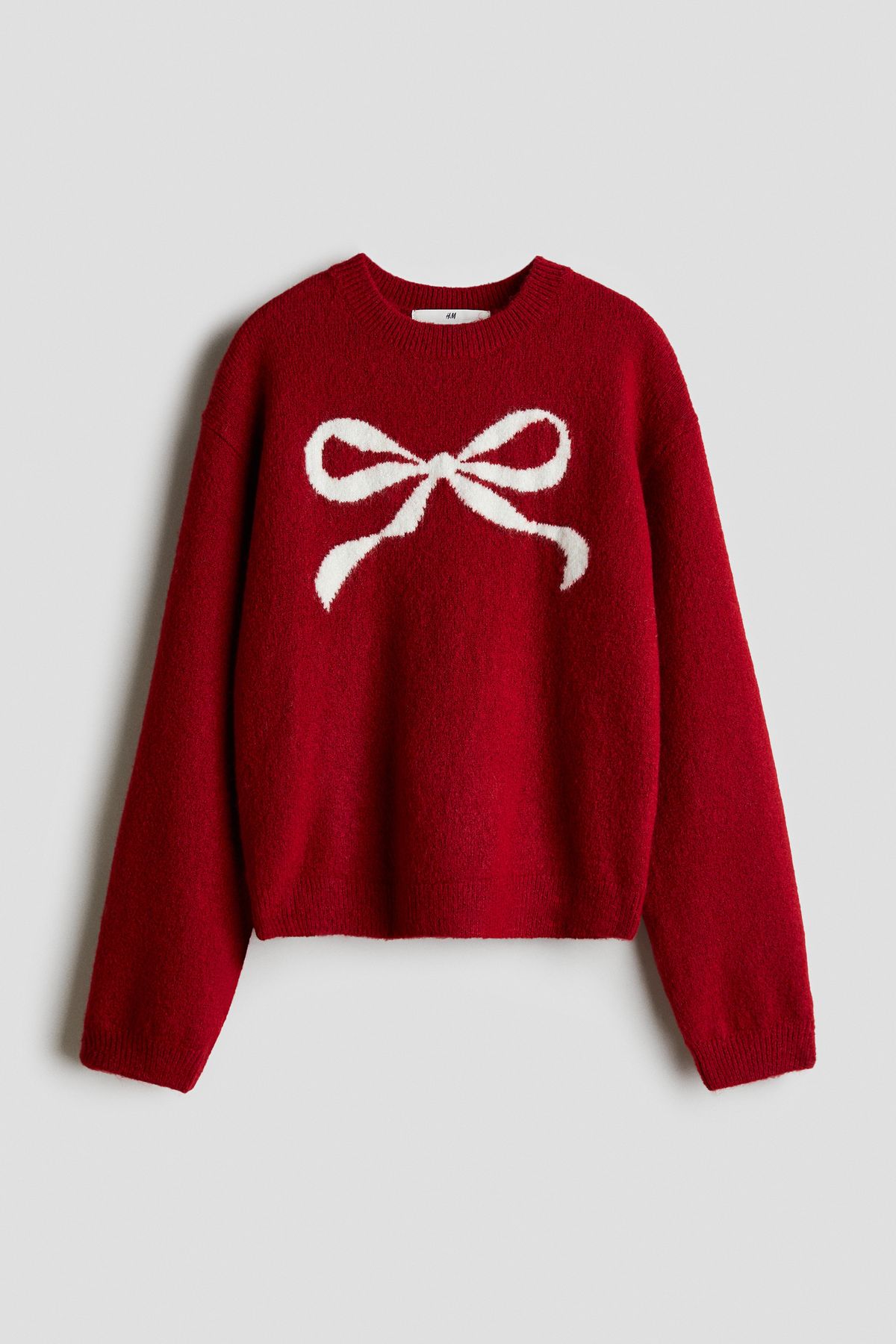
- **Fabric Physics:** The source garment is a medium-weight knit (likely acrylic or wool blend) with a visible "fuzzy" surface texture (halo effect). Unlike the user's current thin cotton/silk tunic, this fabric has high internal friction and stiffness. It will not flutter; it will fold softly and absorb light rather than reflect it. The texture must appear matte with soft edge scattering.
- **Key Features:**
1. **The White Bow:** The intarsia bow graphic on the chest is the focal point. It must warp accurately over the curvature of the user's chest and the seated posture without pixelating.
2. **Ribbing:** The ribbed texture on the crew neck collar, cuffs, and bottom hem must be preserved to show the garment's structure.
3. **Shoulder Seams:** The drop-shoulder construction of the sweater must be maintained, hanging lower than the user's natural shoulder line.
PHASE 2: FIT & DRAPE SIMULATION
- **Body Mapping:**
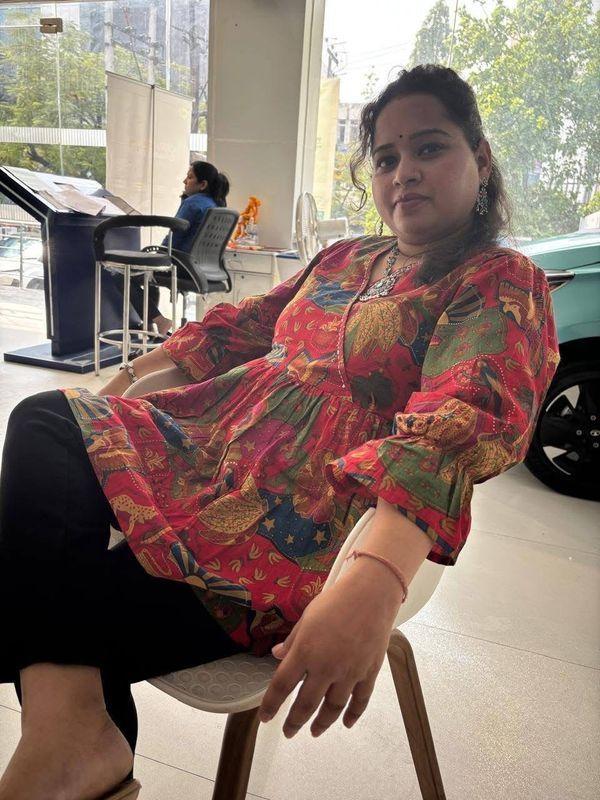
- **Torso:** As the user is seated and leaning back, the sweater must show transverse folds (bunching) across the stomach area due to the compression of the torso in the seated pose. It should not hang straight like the flat lay.
- **Shoulders/Chest:** The fabric must stretch tightest across the bust, potentially slightly distorting the center knot of the bow design.
- **Sleeves:** The user's left arm is bent resting on her lap. The sweater sleeve must exhibit compression wrinkles at the inner elbow and bunching above the wrist cuff. The right arm is obscured; the sleeve should follow the visible shoulder line and fade naturally into the shadow/chair.
- **Occlusion Handling:**
- **Left Hand:** The user's left hand rests on her thigh. Depending on the sweater's length, the hemline may interact with the wrist. The hand must be masked *over* the garment if the sleeve extends that far, or the garment must sit naturally behind the hand if the hem is shorter.
- **Hair:** The loose strands of hair on the right side of her neck (viewer's left) and near the shoulders must be segmented and layered *over* the new sweater collar.
- **Necklace:** The sweater has a high crew neck. The current visible necklace must be fully occluded (covered) by the new garment physics, as it would sit underneath the knitwear.
PHASE 3: ENVIRONMENT & LIGHTING
- **Light Match:** The scene is backlit/side-lit by a large window on the left (viewer's left).
- **Highlights:** The left shoulder and left sleeve of the sweater must catch the cool daylight rim light.
- **Shadows:** The torso front and right side (viewer's right) are in shadow. The red of the sweater must darken significantly in these areas to match the contrast of the user's current black pants.
- **Cast Shadows:** The sweater must cast a soft shadow onto the user's lap/thighs where the hem ends.
- **Color Calibration:** The source image is studio-lit (neutral/white). The target environment has a mix of cool window light and warm interior reflections. The red tone needs to be slightly desaturated and shifted cooler on the left (window side) and warmer in the shadows to integrate with the room's ambient occlusion.
PHASE 4: IDENTITY PROTECTION
- **Facial Lock:** The user's entire head, including face shape, skin tone, makeup, and hairstyle, must remain absolutely frozen. The mask for the new garment must stop precisely at the base of the neck.
- **Body Integrity:** STRICTLY PROHIBITED to slim the user's figure. The sweater adds bulk compared to the current tunic; the simulation must respect the user's volumetric measurements. The silhouette should expand slightly to account for the thickness of the knit fabric, preserving the user's authentic seated shape.