Thinking Process
PHASE 1: VISUAL DECONSTRUCTION
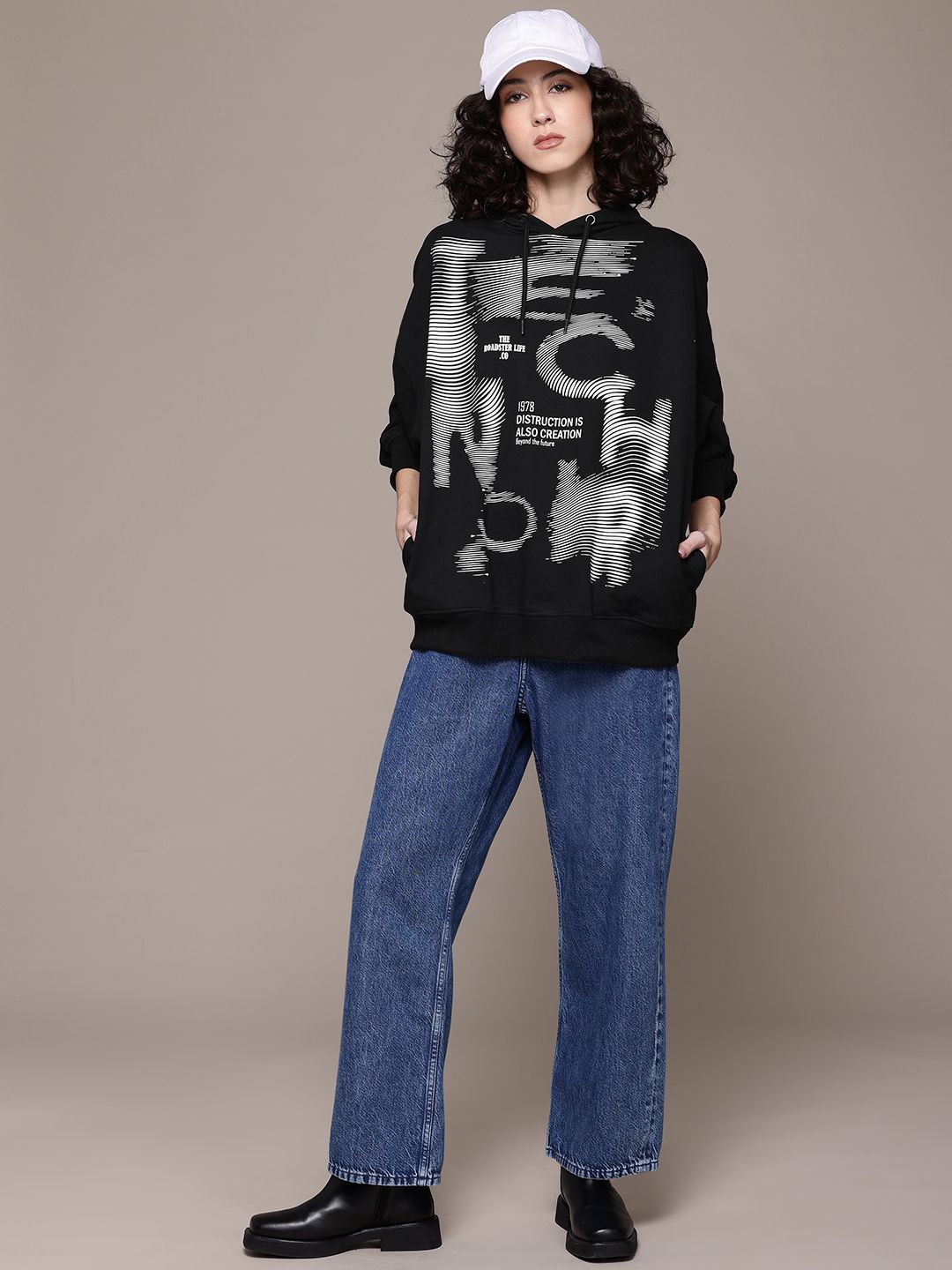
- **Fabric Physics:** The source garment is a heavy-weight cotton fleece or terry blend hoodie. It possesses low specularity (matte finish) and high structural stiffness compared to the user's current top. It creates soft, thick folds rather than sharp creases. The material absorbs light, meaning highlights should be diffuse and broad, not sharp.
- **Key Features:**
- **Graphic Print:** The white abstract "face/text" graphic ("THE ROADSTER LIFE", "1978 DISTRUCTION") must be preserved and warped correctly across the chest curvature.
- **Structural Elements:** The hood bulk around the neck, the two hanging drawstrings, the kangaroo pocket on the lower abdomen, and the ribbed elastic cuffs at the wrists and waist.
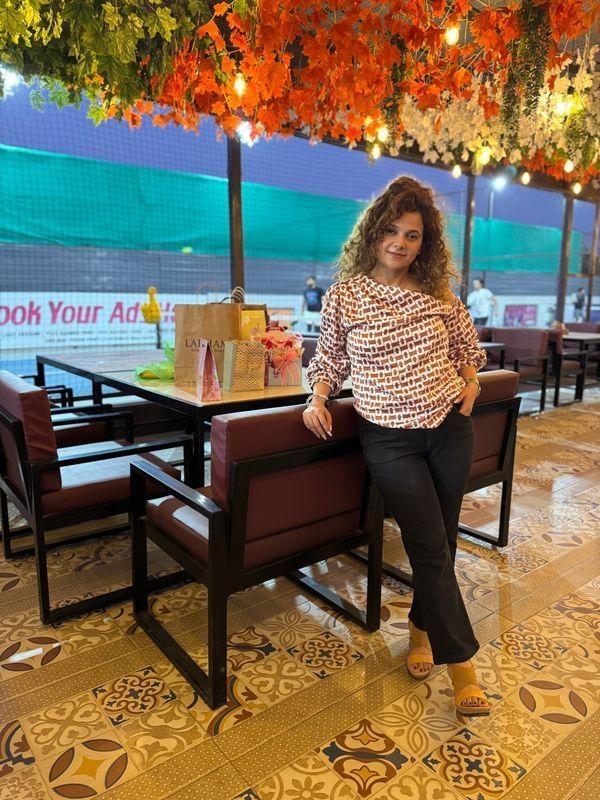
- **Silhouette:** This is a relaxed/oversized fit, distinct from the fitted bodice of the source image.
PHASE 2: FIT & DRAPE SIMULATION
- **Body Mapping:**
- **Shoulders & Neck:** The hoodie must sit higher on the neck than the current off-shoulder top. The hood will add bulk behind the neck/shoulders.
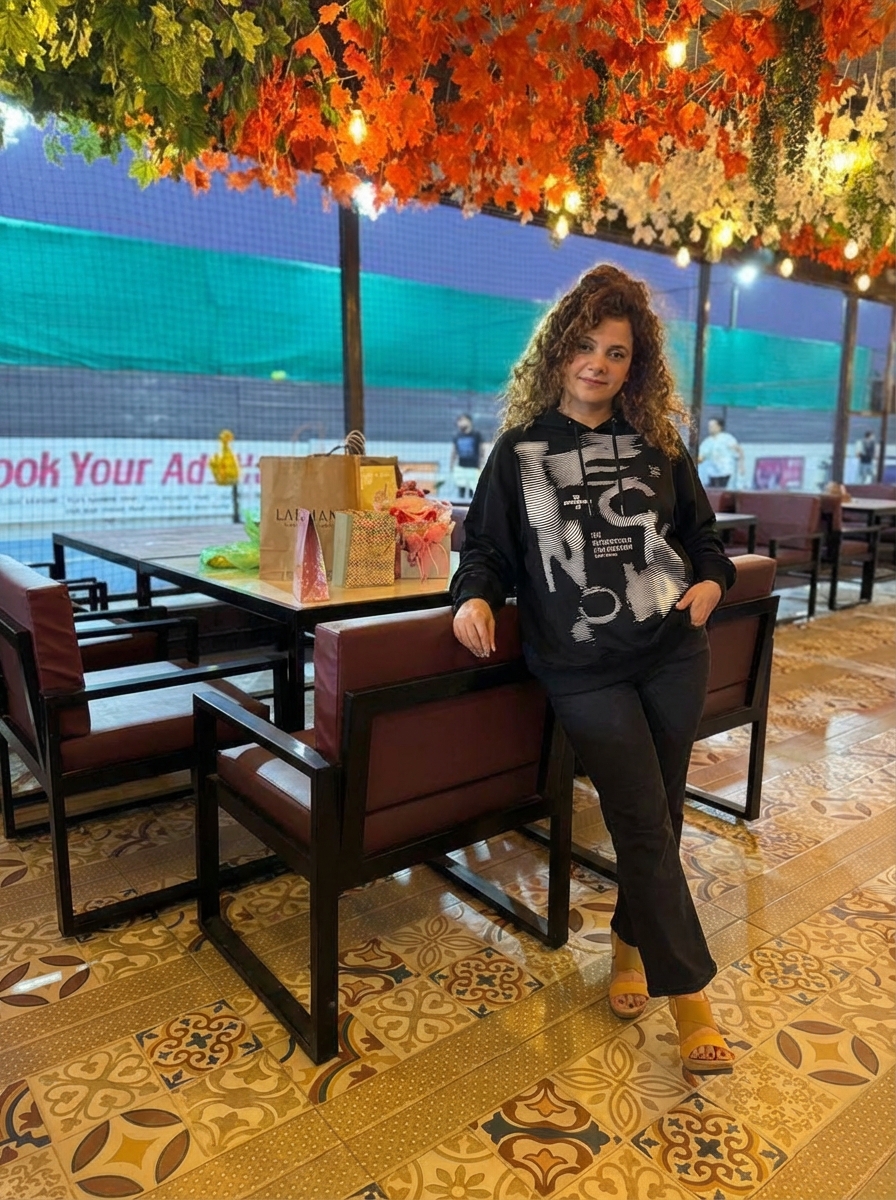
- **Torso:** Due to the user leaning back against the chair, the back of the hoodie must appear compressed or flattened against the chair back. The front fabric should drape vertically subject to gravity, bulging slightly outward at the kangaroo pocket area.
- **Right Arm (Resting on chair):** The sleeve must exhibit compression wrinkles at the inner elbow due to the bent arm. The cuff should rest at the wrist bone.
- **Left Arm (Hand in pocket):** The sleeve will encounter resistance at the hip. The fabric must bunch significantly at the forearm/wrist area as the hand inside the pant pocket pushes the sleeve upward/outward.
- **Occlusion Handling:**
- **Hair:** The user's voluminous curly hair is the primary occlusion layer. It must be segmented and composited *over* the hood and shoulder area of the new garment to maintain realism.
- **Right Hand:** The hand resting on the chair must remain visible; the sleeve cuff must end before covering the fingers.
- **Chair Back:** The visible parts of the chair back must remain behind the user, but the hoodie adds width, potentially obscuring more of the chair than the current top.
PHASE 3: ENVIRONMENT & LIGHTING
- **Light Match:**
- **Lighting Direction:** The user is in a warm, ambient environment (cafe) with overhead string lights (yellow/orange cast) and diffuse daylight from the background.
- **Shadows:** Soft shadows should form under the bust and inside the hood area. Highlight intensity on the black fabric should be low.
- **Color Calibration:**
- **White Balance Shift:** The source hoodie has cool studio lighting (white graphics are stark white). These graphics must be color-graded to a warmer, slightly yellow/cream tone to match the cafe's ambient light.
- **Black Levels:** The black of the hoodie must match the black point of the user's existing trousers to ensure they look like they belong in the same physical space.
PHASE 4: IDENTITY PROTECTION
- **Facial Lock:** The user's entire face, neck skin tone, and specifically the complex volume and texture of the curly hair must remain pixel-perfect and frozen.
- **Body Integrity:** DO NOT slim the user. The hoodie is an oversized garment; the final render must reflect the added volume of the fabric on top of the user's natural frame. The posture (leaning back, legs crossed) must not be altered.