Thinking Process
PHASE 1: VISUAL DECONSTRUCTION
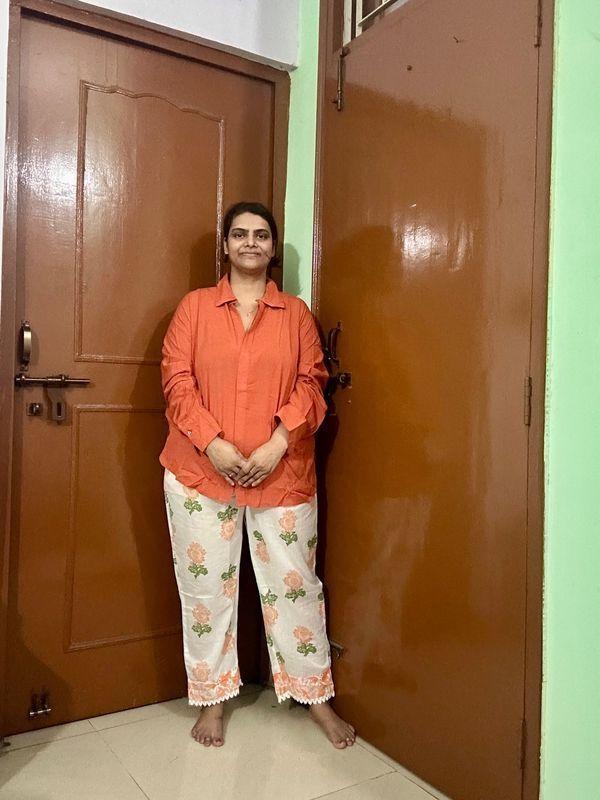
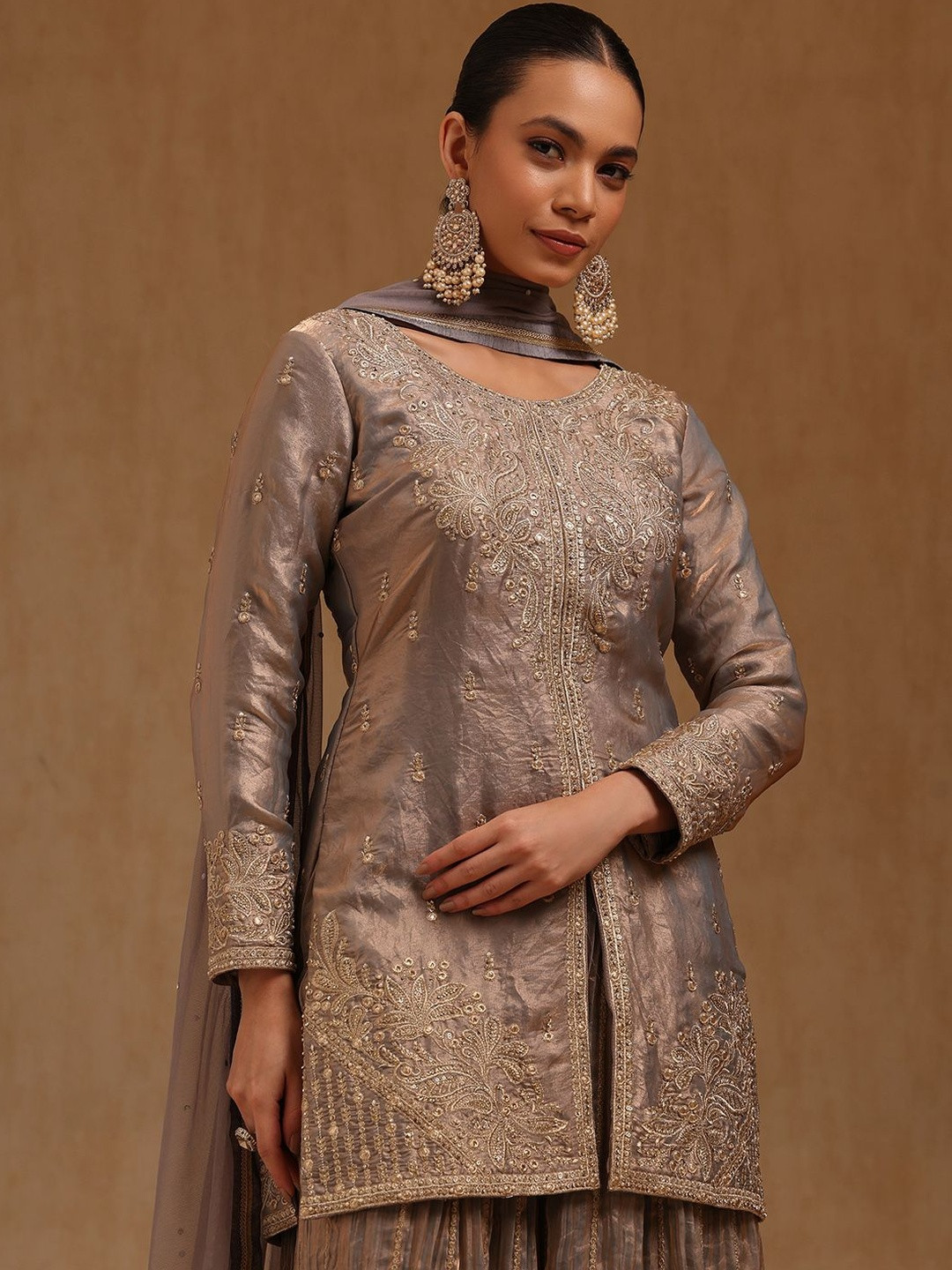
- **Fabric Physics:** The source garment is a metallic Silk Tissue or Brocade with high specularity and stiffness. Unlike the user's current soft cotton shirt, this fabric possesses high bending resistance and structural memory. It requires anisotropic reflection simulation to capture the metallic sheen correctly. The sheer dupatta (scarf) is a lightweight net/tulle that behaves as a soft body with high transparency.
- **Key Features:**
1. **Intricate Zari/Embroidery:** The vertical central embroidery panel and the heavy floral motifs at the sleeve cuffs must be preserved with high-frequency detail.
2. **Metallic Sheen:** The bronze/grey luster is essential; it must react to the new environment's lighting.
3. **Hemline Split:** The central vertical split in the lower half of the kurta (if visible above the hands) needs to be rendered.
4. **Sheer Layering:** If the dupatta is transferred, its transparency alpha mask must be maintained to show the kurta underneath it.
PHASE 2: FIT & DRAPE SIMULATION
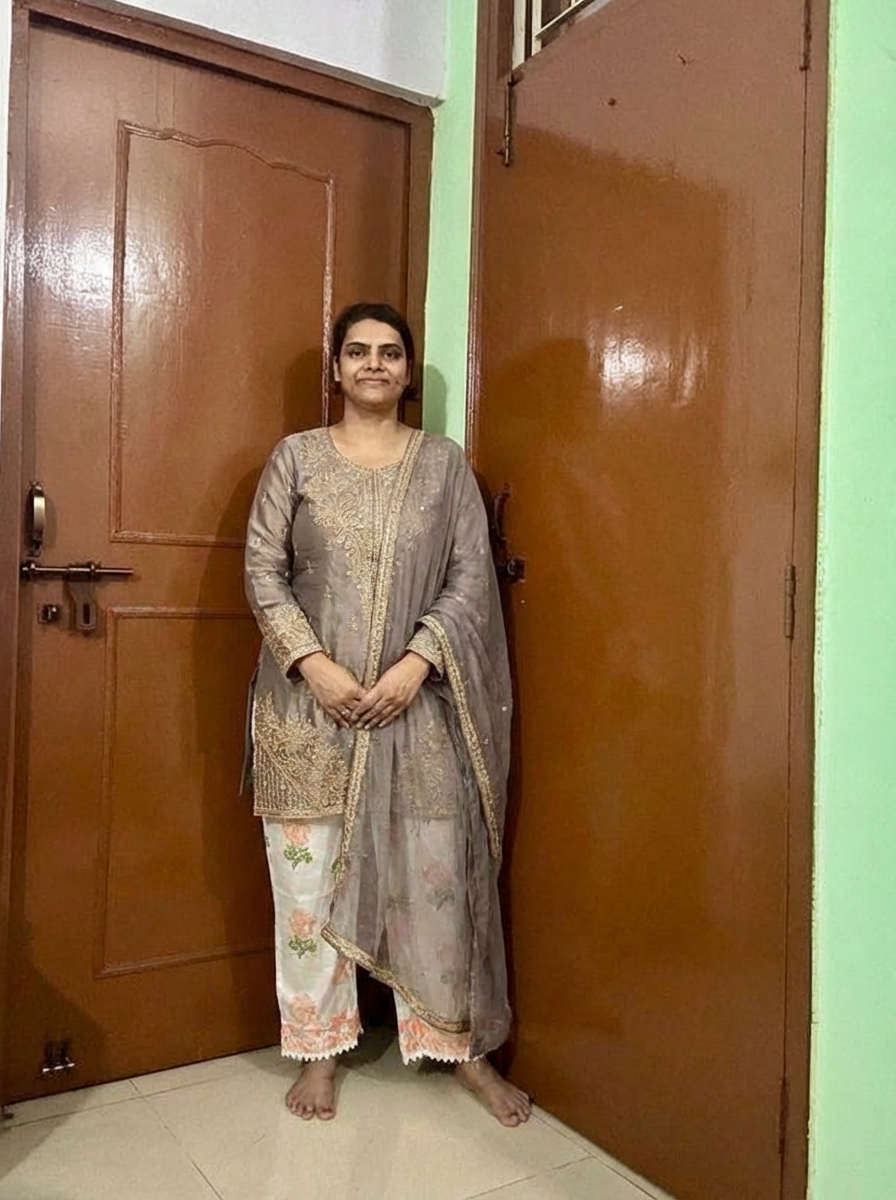
- **Body Mapping:** The source garment is a long tunic (Kurta). On the user, it will extend past the hips, significantly lower than the current orange shirt.
1. **Shoulder Alignment:** The structured shoulders of the kurta must settle on the user's slightly rounded shoulders without appearing boxy.
2. **Sleeve Physics:** The user's arms are extended downwards with a slight bend. The stiff fabric of the kurta sleeves should maintain a tubular shape, bunching minimally only at the inner elbow, unlike the current shirt which wrinkles heavily.
3. **Torso Flow:** Due to fabric stiffness, the garment should bridge the gap between the chest and hips rather than clinging to the waist.
- **Occlusion Handling:**
1. **Hands (CRITICAL):** The user's hands are clasped at the lower torso/crotch level. The new garment is long; therefore, the fabric simulation must render the kurta *behind* the hands/wrists. The hands must mask out the garment, creating a depth layer where the kurta flows behind the clasped fingers.
2. **Neck:** The user's neck is visible; the high round neck of the kurta must replace the current collar without altering the user's neck width.
PHASE 3: ENVIRONMENT & LIGHTING
- **Light Match:** The user is in a room with warm, overhead artificial lighting (likely tungsten), casting hard shadows onto the brown door behind her. The source garment was shot in soft, neutral studio light.
1. **Reflection Mapping:** The metallic fabric of the kurta must reflect the warm yellow/orange tones of the user's room, not the cool studio lights.
2. **Shadow Casting:** The new garment must cast a consistent shadow on the brown door behind the user, matching the angle of the shadow cast by the user's current left arm.
- **Color Calibration:** The source garment is cool grey/bronze. To blend, a warm temperature filter (+15% yellow/red) must be applied to the garment's diffuse map to match the ambient room tone. Noise/grain matching must be applied to the high-resolution garment to match the lower-fidelity mobile phone camera quality of the user image.
PHASE 4: IDENTITY PROTECTION
- **Facial Lock:** The user's entire head, including hair, hairline, ears, and neck skin tone, must remain pixel-perfectly frozen. The "bindi" (if present) or facial features must not be smoothed.
- **Body Integrity:** Strict prohibition on warping the user's body mesh to match the model's silhouette. The user's shoulder width, arm thickness, and hip width must dictate the garment's size, not the other way around. Do not elongate the user's torso or legs.