
Thinking Process
PHASE 1: VISUAL DECONSTRUCTION
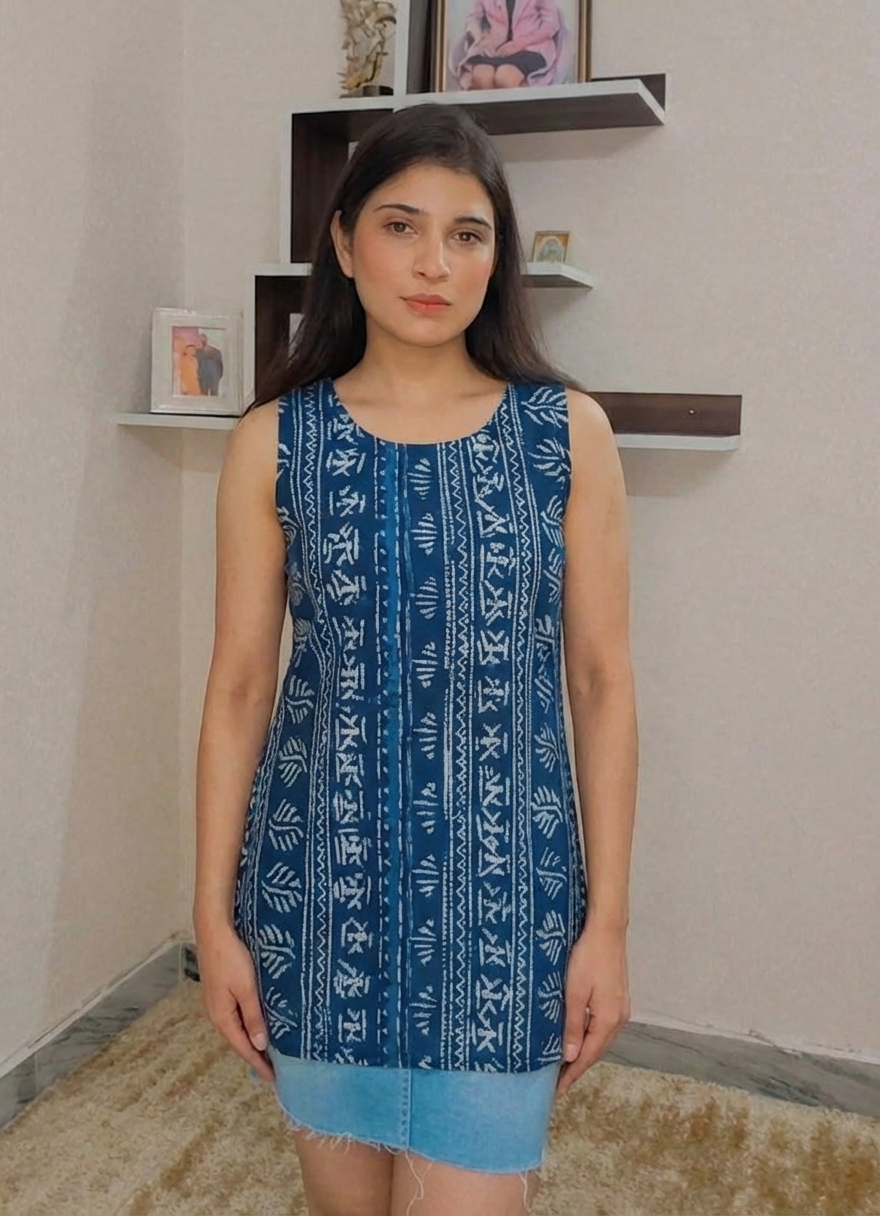
- **Fabric Physics:** The source garment is a medium-weight cotton or linen blend with a matte finish. It exhibits low elasticity and moderate stiffness, meaning it should hold a structured shape rather than clinging tightly to the body. Light reflection should be diffuse with no specular highlights.
- **Key Features:** The vertical white tribal/geometric prints must remain aligned relative to the garment's center axis. The round neckline and the specific sleeveless cut (armhole shape) are critical. The hemline is straight with small side slits, which must be preserved. The central vertical pattern line acts as the visual anchor.
PHASE 2: FIT & DRAPE SIMULATION
- **Body Mapping:**
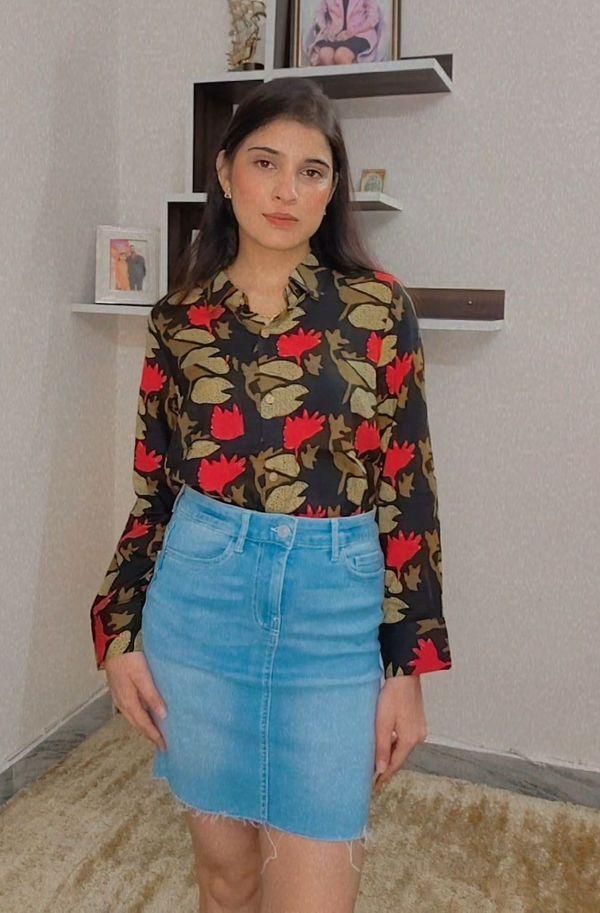
1. **Transition to Sleeveless:** The target user is currently wearing long sleeves. The simulation must replace the black sleeves with synthesized skin that perfectly matches the user's facial skin tone, maintaining the exact volume and muscle definition of the user's arms.
2. **Tuck vs. Untuck:** The target is wearing a tucked-in shirt, but the source tunic is designed to be worn untucked. The virtual garment must flow *over* the waistband of the denim skirt, creating a natural shadow drop onto the upper thighs/hips, effectively masking the current waist tuck.
3. **Gravity:** The fabric should hang vertically from the bust and shoulders, skimming the waist without cinching, creating a relaxed, straight silhouette typical of a Kurti/tunic.
- **Occlusion Handling:** The user's long dark hair rests on both shoulders and the upper chest. The new garment must be rendered *behind* these hair strands. The user's hands are positioned at the hips; the tunic's hemline will fall near the wrists, so depth masking is required to ensure the hands remain in the foreground, potentially interacting with the hem.
PHASE 3: ENVIRONMENT & LIGHTING
- **Light Match:** The user environment features soft, diffuse indoor lighting with a slightly warm, tungsten cast, likely coming from the upper right. The generated bare arms and the blue fabric must accept shadows from the hair and chin consistent with this ambient light.
- **Color Calibration:** The source image is cool-toned studio lighting. The blue of the tunic must be color-graded to be slightly warmer and less saturated to match the lower-contrast, "lived-in" aesthetic of the user's room.
PHASE 4: IDENTITY PROTECTION
- **Facial Lock:** Absolute preservation of the user's face, jawline, ears, and makeup is required. The hair strands framing the face must not be blurred or altered.
- **Body Integrity:** Strict prohibition on body slimming. The width of the shoulders and the volume of the arms (despite changing from cloth to skin) must match the user's original silhouette pixel-for-pixel to ensure anatomical plausibility.