Thinking Process
PHASE 1: VISUAL DECONSTRUCTION
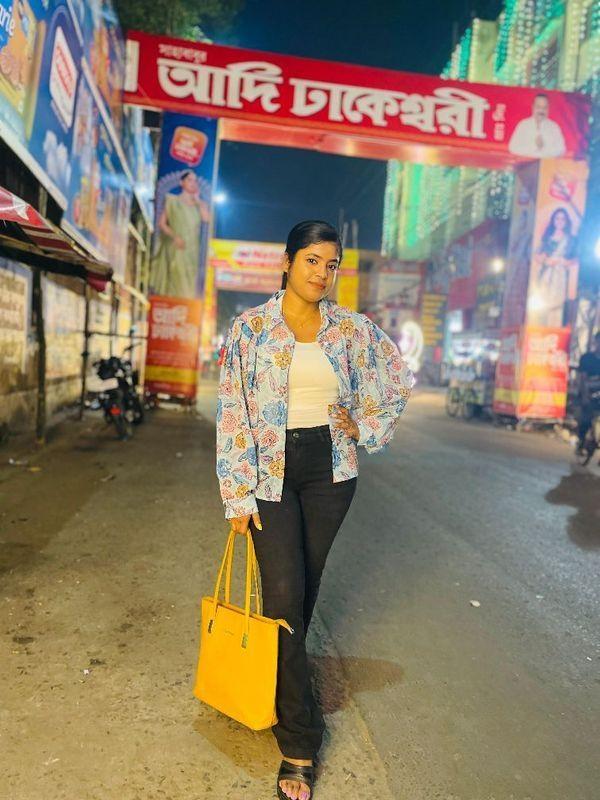
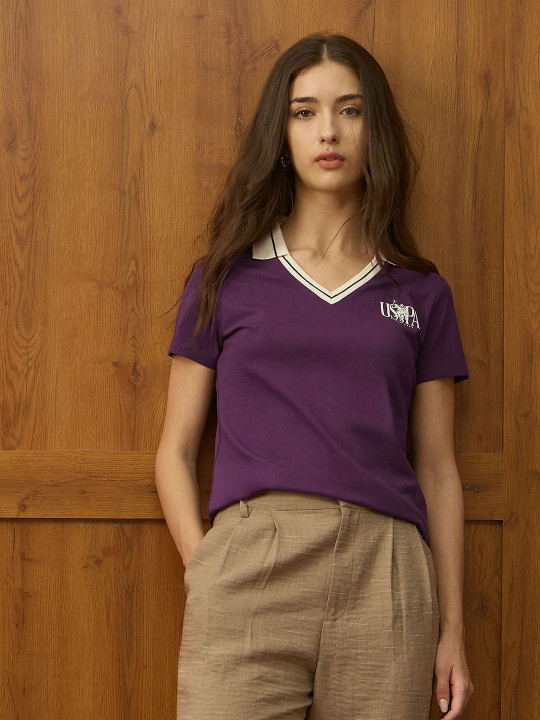
- **Fabric Physics:** The source garment is a cotton jersey or pique knit blend typical of polo shirts. It has a matte finish with low light reflectivity and medium weight. It features a soft structural drape that follows body contours without clinging excessively, unlike the stiff patterned shirt currently worn by the user.
- **Key Features:** The contrasting white collar and V-neck with dual-stripe piping are critical anchor points. The white "USPA" style logo on the left chest must be preserved without distortion. The short sleeves and the specific shade of deep purple/grape must remain consistent, distinguishing it from the current multi-colored outfit.
PHASE 2: FIT & DRAPE SIMULATION
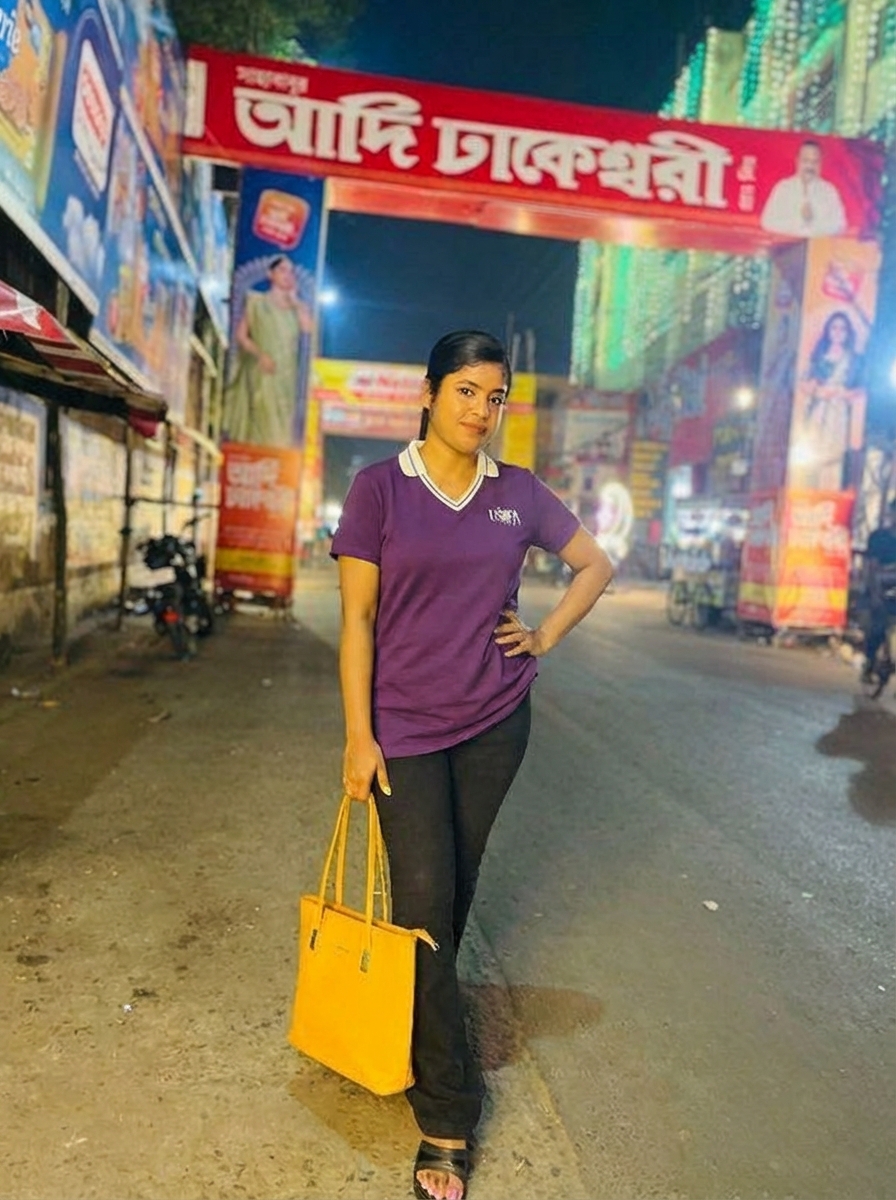
- **Body Mapping:** The target user has their left hand on their hip, creating an asymmetric tension in the torso. The new garment must exhibit tension wrinkles radiating from the left armpit across the chest toward the right hip. The right side should hang straighter due to gravity. Since the source is short-sleeved and the target is currently wearing long sleeves, the simulation must generate realistic skin texture for the user's forearms where the new sleeves end.
- **Occlusion Handling:** The user's left hand (fingers and wrist) rests on the waist area; the new garment's hemline must pass *behind* this hand. The long hair is pulled back, but any loose strands at the nape of the neck must be layered *over* the new collar. The yellow tote bag straps in the right hand must remain distinct and not merge with the garment hem.
PHASE 3: ENVIRONMENT & LIGHTING
- **Light Match:** The target environment is a night scene with mixed artificial street lighting (overhead and ambient signage). The source garment's studio lighting is too flat and warm. The new render must adopt a higher contrast, darker exposure to match the night setting. Shadows should be soft but distinct, cast downward and slightly to the user's left based on the street shadows.
- **Color Calibration:** The vibrant purple of the source must be desaturated slightly and tinted to match the ambient temperature of the street scene (likely cooler with neon/red spill from the overhead sign). Noise and grain must be added to the garment texture to match the low-light ISO characteristics of the user image.
PHASE 4: IDENTITY PROTECTION
- **Facial Lock:** The user's entire head, including facial expression, makeup, earrings, and current hairstyle, must be completely frozen and unaltered.
- **Body Integrity:** The user's natural shoulder width, waist circumference, and hip alignment must be preserved. Do not slim the waist or alter the arm volume when generating the new skin for the exposed forearms. The pose must remain exactly as is.