Thinking Process
PHASE 1: VISUAL DECONSTRUCTION
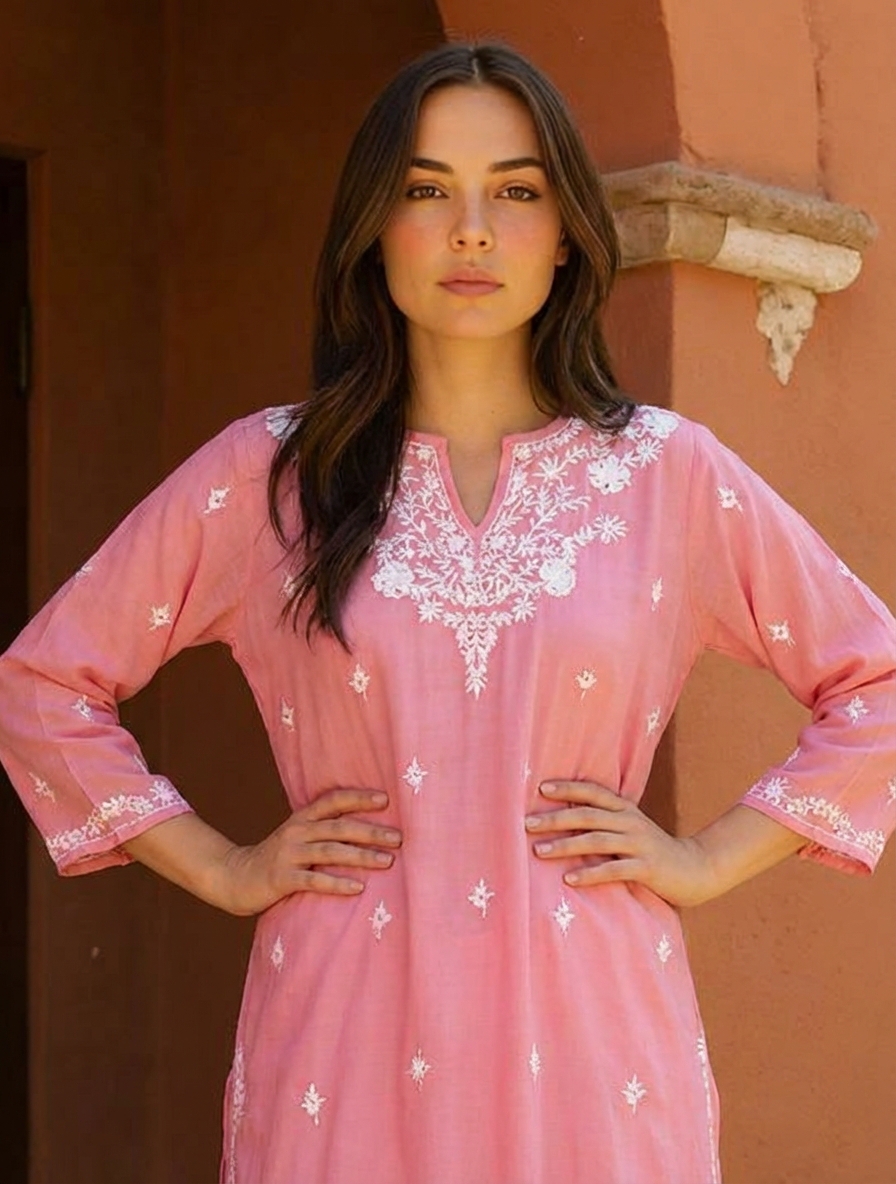
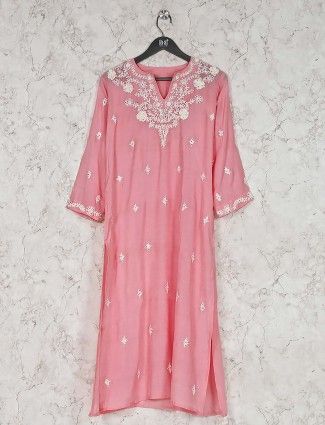
- **Fabric Physics:** The source garment appears to be a lightweight Georgette or soft Chiffon blend with significant drape and flow. Unlike the stiff structure of the user's current bodice, the target simulation must exhibit fluid dynamics, allowing for soft folding and a semi-sheer quality. The material has a matte finish but requires subsurface scattering simulations to capture the depth of the embroidery.
- **Key Features:** The intricate white Chikankari (embroidery) work around the neckline and the scattered 'buttis' (motifs) across the torso are critical high-frequency details. The split-V neckline shape, the 3/4 length sleeve hem, and the side slits (characteristic of a Kurta) must be preserved. The textural contrast between the smooth base fabric and the raised thread work must be maintained.
PHASE 2: FIT & DRAPE SIMULATION
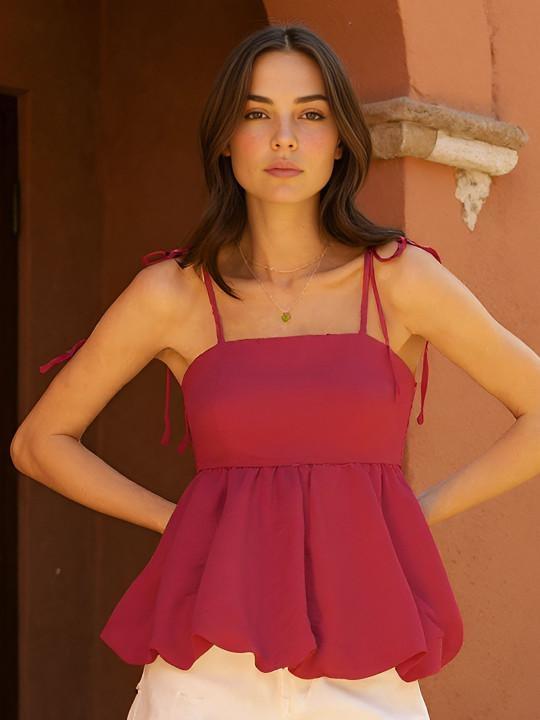
- **Body Mapping:** The source garment is a loose-fitting tunic, contrasting with the user's current tight-fitting bodice. The simulation must generate new geometry for the sleeves, which do not exist in the user image. The fabric must drape vertically from the shoulders, skimming the bust and flaring slightly over the hips. Crucially, the fabric must bunch and crease realistically at the inner elbows due to the user's "akimbo" (hands-on-hips) pose. The sleeves should end roughly at the forearm, reacting to the bend of the arm.
- **Occlusion Handling:**
1. **Hair:** The user's dark hair cascades over the shoulders; this must be segmented and layered *over* the new garment shoulders to avoid a "cut-out" look.
2. **Hands/Wrists:** The user's hands are placed on the hips. The lower torso of the Kurta must pass *behind* the hands and wrists, respecting the depth plane.
3. **Necklaces:** The current necklaces are low-hanging. Since the Kurta has a higher neckline, the fabric will likely cover the jewelry; however, if the V-neck exposes skin, the jewelry on that skin patch must be preserved.
PHASE 3: ENVIRONMENT & LIGHTING
- **Light Match:** The user is in a warm, outdoor environment with natural sunlight coming primarily from the upper-left (viewer's perspective), casting soft shadows on the right side of the face and body. The flat, cool studio lighting of the source cloth must be re-lit to match this warm ambient occlusion. The pink hue of the Kurta needs to absorb some of the terracotta/orange bounce light from the background walls to sit naturally in the scene.
- **Color Calibration:** Apply a warm color grading filter to the garment texture. Reduce the brightness of the white embroidery slightly to match the exposure levels of the user's skin, preventing the white threads from looking "blown out" or artificially bright against the outdoor setting.
PHASE 4: IDENTITY PROTECTION
- **Facial Lock:** Absolute pixel preservation required for the user's face (eyes, nose, mouth, jawline) and the hair geometry.
- **Body Integrity:** The user's skeletal structure, specifically shoulder width and arm volume, must remain unaltered. While the garment silhouette changes from a tight camisole to a loose Kurta, the underlying body mesh must not be slimmed or warped. The skin tone on the arms and neck must remain consistent with the original image.