
Thinking Process
PHASE 1: VISUAL DECONSTRUCTION
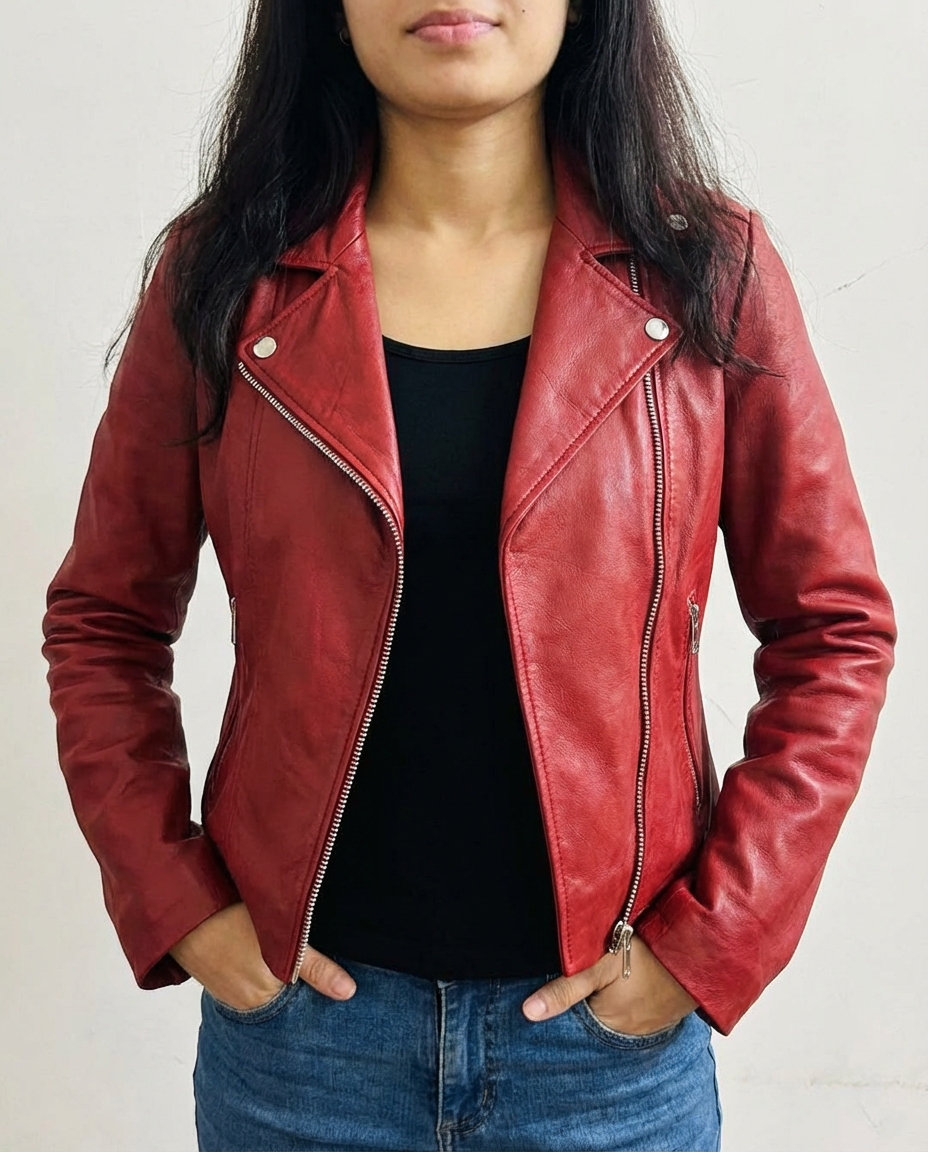
- **Fabric Physics:** The source is a structured leather (or faux leather) biker jacket. Unlike the user's current soft ribbed knit, this material has high structural rigidity and tensile strength. It yields high-frequency specular highlights (shine) on the shoulders and lapels. It creates sharp, angular creases rather than soft folds, particularly at flex points like the elbows.
- **Key Features:**
- **Hardware:** Silver-tone zippers (asymmetric front closure, cuffs) and snap buttons on the notched lapels must be rendered with metallic reflectivity.
- **Construction:** The distinct shoulder yokes, zippered cuffs, and the "open" drape of the jacket front.
- **Texture:** The grain of the red leather must be preserved, maintaining the vibrant red hue while adapting to new lighting.
PHASE 2: FIT & DRAPE SIMULATION
- **Body Mapping:**
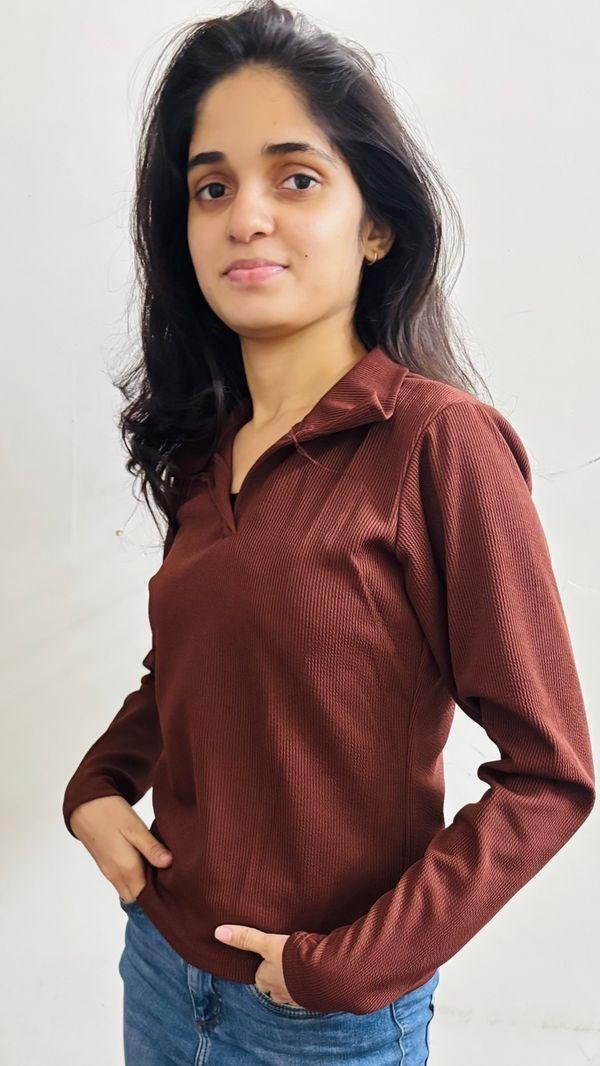
- **Shoulders:** The jacket has structured shoulders that will sit higher and wider than the user's current sloping natural shoulder line.
- **Elbow Flexion:** Due to the user's "hands-in-pockets" pose, the leather material must crinkle sharply at the inner elbow (cubital fossa). The stiff sleeves will create a tubular volume around the forearms, not clinging like the current top.
- **Hemline Interaction:** Because the hands are in the pockets, the jacket hem will be pushed backward or bunched slightly at the hip bone; it cannot hang perfectly straight down.
- **Occlusion Handling:**
- **Hair:** The user's voluminous dark hair cascades over her left shoulder (viewer's right). The red jacket collar and shoulder pad must be rendered *behind* these hair layers.
- **Hands/Wrists:** The user's thumbs and wrists enter the jean pockets. The jacket cuffs must terminate naturally at the wrist bone, ensuring the hands remain visible and are not covered by the sleeve geometry.
PHASE 3: ENVIRONMENT & LIGHTING
- **Light Match:** The user is in soft, diffuse indoor lighting (likely a white room) with a light source coming from the front/left. The source jacket has harsh outdoor forest lighting. We must remove the green environmental reflections from the leather and replace them with soft, white room reflections. Shadows should be cast gently to the viewer's right side of the torso.
- **Color Calibration:** The "Outdoor Red" needs to be color-graded to "Indoor Red." This requires slightly lowering the saturation and contrast of the jacket to match the lower-contrast tonal range of the user's photo, preventing the jacket from looking like a pasted sticker.
PHASE 4: IDENTITY PROTECTION
- **Facial Lock:** The user's facial structure, skin tone, and makeup are to be frozen. Specifically, the jawline shadow and the neck area above the collarbone must remain untouched.
- **Body Integrity:** The leather jacket adds physical bulk. The simulation must expand the silhouette slightly to account for the thickness of the leather. Do *not* slim the user's waist or arms to compensate for the bulky garment; the resulting image should show the user looking slightly broader due to the heavy fabric layering.