Thinking Process
PHASE 1: VISUAL DECONSTRUCTION
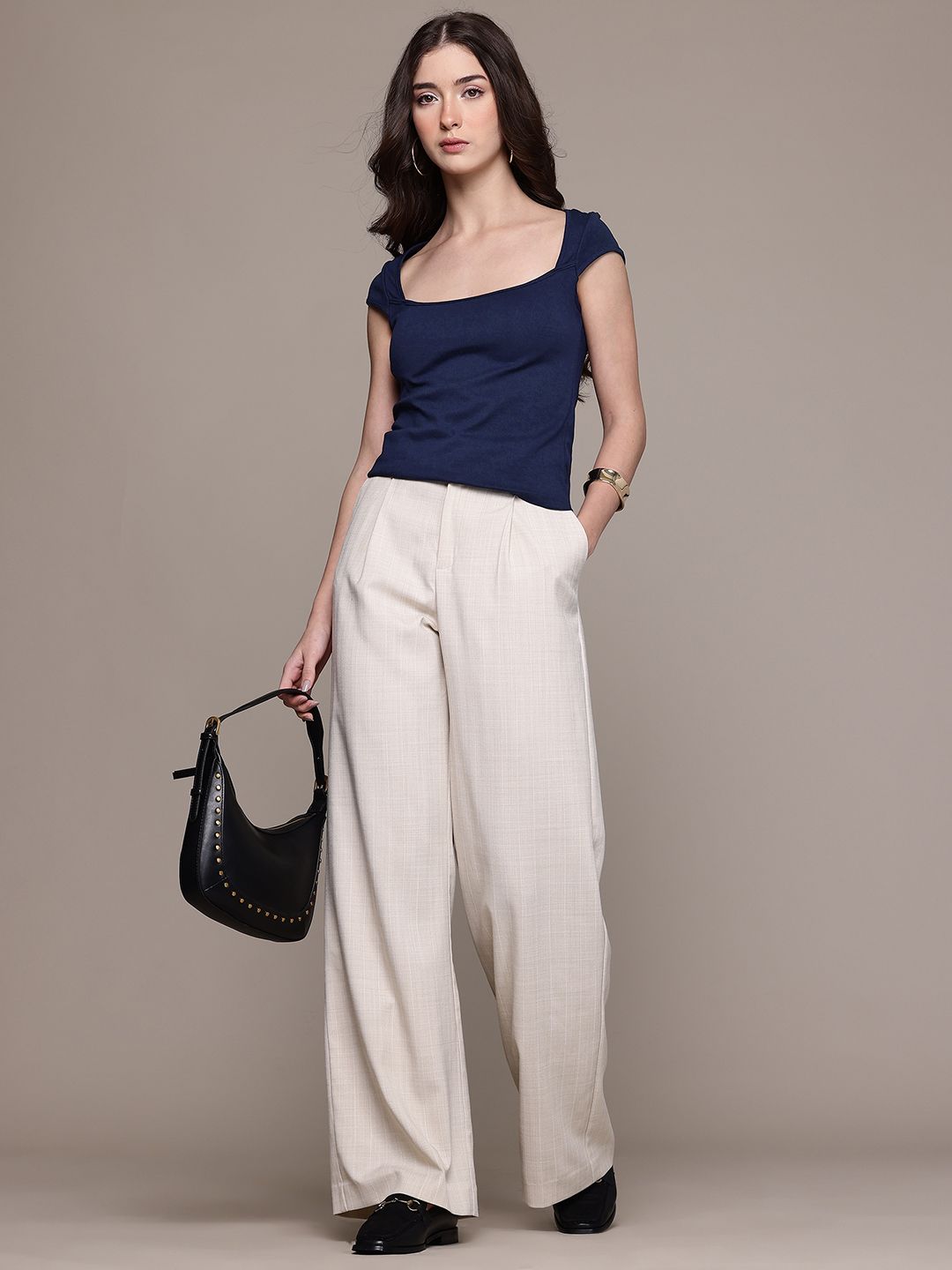
- **Fabric Physics:** The source garment appears to be a structured jersey knit or a cotton-elastane blend. It has a matte finish with low light reflectivity. The simulation must account for moderate elasticity (stretch) rather than a loose drape; it should cling to the body contours rather than hanging freely like the user's current oversized t-shirt.
- **Key Features:** The distinct wide square neckline is the primary design element that must be preserved. The cap sleeves are short and structured. The smooth, hardware-free bodice surface must be maintained without introducing artificial wrinkles not present in the original design. The deep navy blue color must be retained despite the lighting change.
PHASE 2: FIT & DRAPE SIMULATION
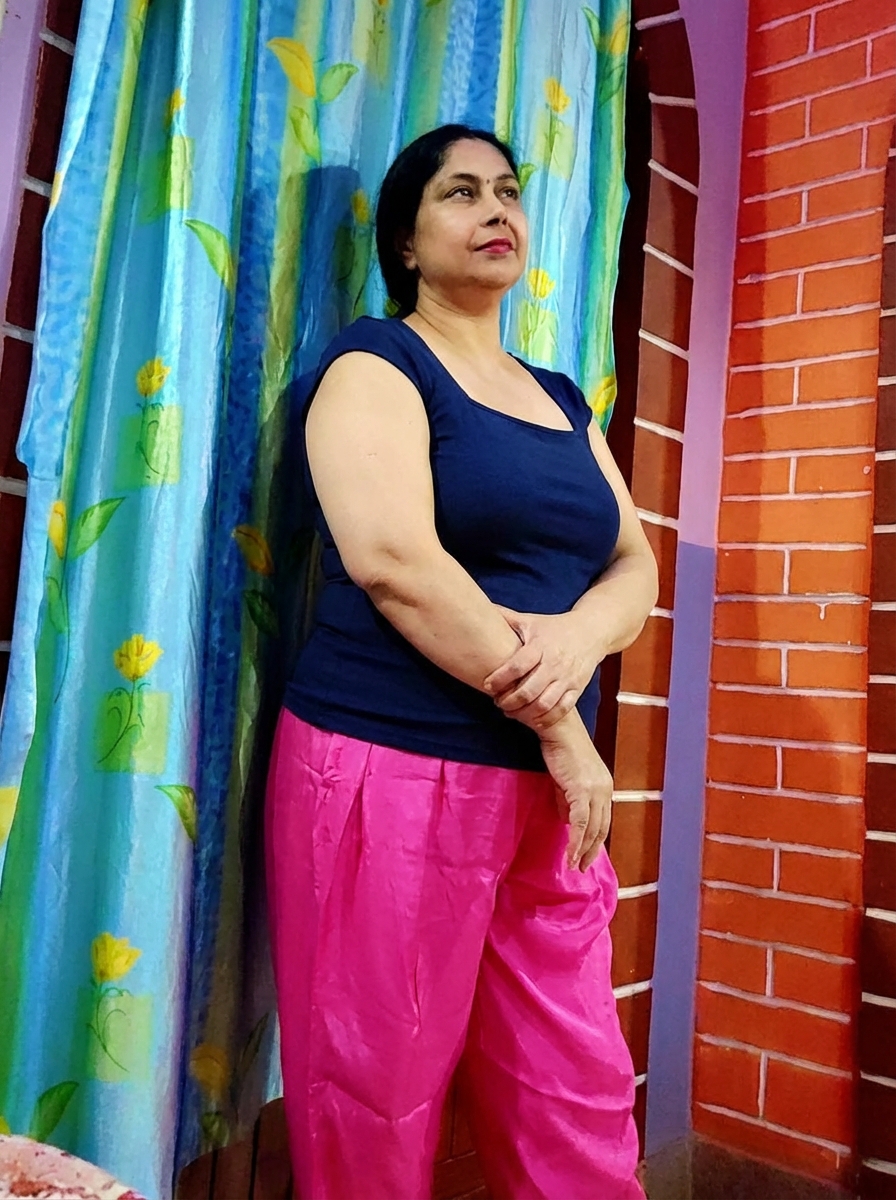
- **Body Mapping:** The target user has a fuller figure than the source model. The garment must undergo elastic deformation to fit the user's torso width without looking over-stretched or pixelated. Unlike the current red t-shirt which tents over the waist, the navy top must follow the curvature of the user's torso, tucked in or sitting at the hip line depending on the generated hem.
- **Occlusion Handling:** CRITICAL: The user's arms are crossed over the midsection. The new garment must be rendered *behind* the user's forearms and hands. The physics engine must calculate the compression of the fabric where the inner arms press against the chest and stomach. The user's current elbow-length red sleeves must be digitally removed and replaced with skin generation to accommodate the source garment's cap sleeves.
PHASE 3: ENVIRONMENT & LIGHTING
- **Light Match:** The user image features warm, diffuse indoor artificial lighting (likely tungsten), creating soft shadows. The source garment is cold studio-lit. The navy top must be color-graded to accept a warm yellow/orange cast. Shadows should be soft and fall naturally into the folds created by the arm compression and the under-bust area.
- **Color Calibration:** The deep navy of the source top risks crushing into pure black in the dimmer indoor lighting of the user photo. The exposure of the garment texture must be slightly elevated to ensure the blue hue and fabric grain remain visible against the lower-contrast background.
PHASE 4: IDENTITY PROTECTION
- **Facial Lock:** The user's face, neck, chin definition, and hairline must remain completely frozen. The transition from the new square neckline to the user's skin needs to be seamless without blurring the neck texture.
- **Body Integrity:** The simulation is strictly forbidden from slimming the user or altering her arm thickness. The "baggy" silhouette of the red shirt must be removed, but the underlying body volume (shoulders, bust, waist) must be preserved accurately to represent how the fitted top would look on her actual physique.