Thinking Process
PHASE 1: VISUAL DECONSTRUCTION
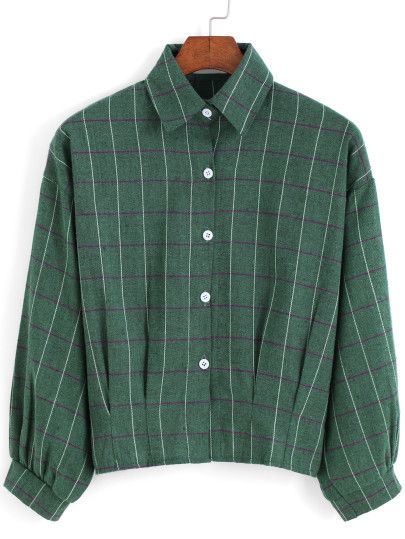
- **Fabric Physics:** The source garment appears to be a medium-weight flannel or brushed cotton blend with a matte finish. It possesses higher structural rigidity than the user's current thin, clinging top. The simulation must simulate a "heavier" drape that resists micro-wrinkling, reflecting light diffusely with zero specular highlights (no shine).
- **Key Features:**
- **Waist Pleating:** The vertical tucks/pleats at the bottom hem are critical design elements that structure the waistline and must be preserved; they cannot be flattened out.
- **Grid Alignment:** The white windowpane check pattern must follow the volumetric warp of the torso without distorting into a liquid-like appearance.
- **Hardware:** Five visible white buttons on the placket and the specific sharp geometry of the collar and cuffs.
- **Drop Shoulder:** The seam placement implies a relaxed fit, meaning the shoulder seam should sit slightly lower than the user's biological shoulder point.
PHASE 2: FIT & DRAPE SIMULATION
- **Body Mapping:**
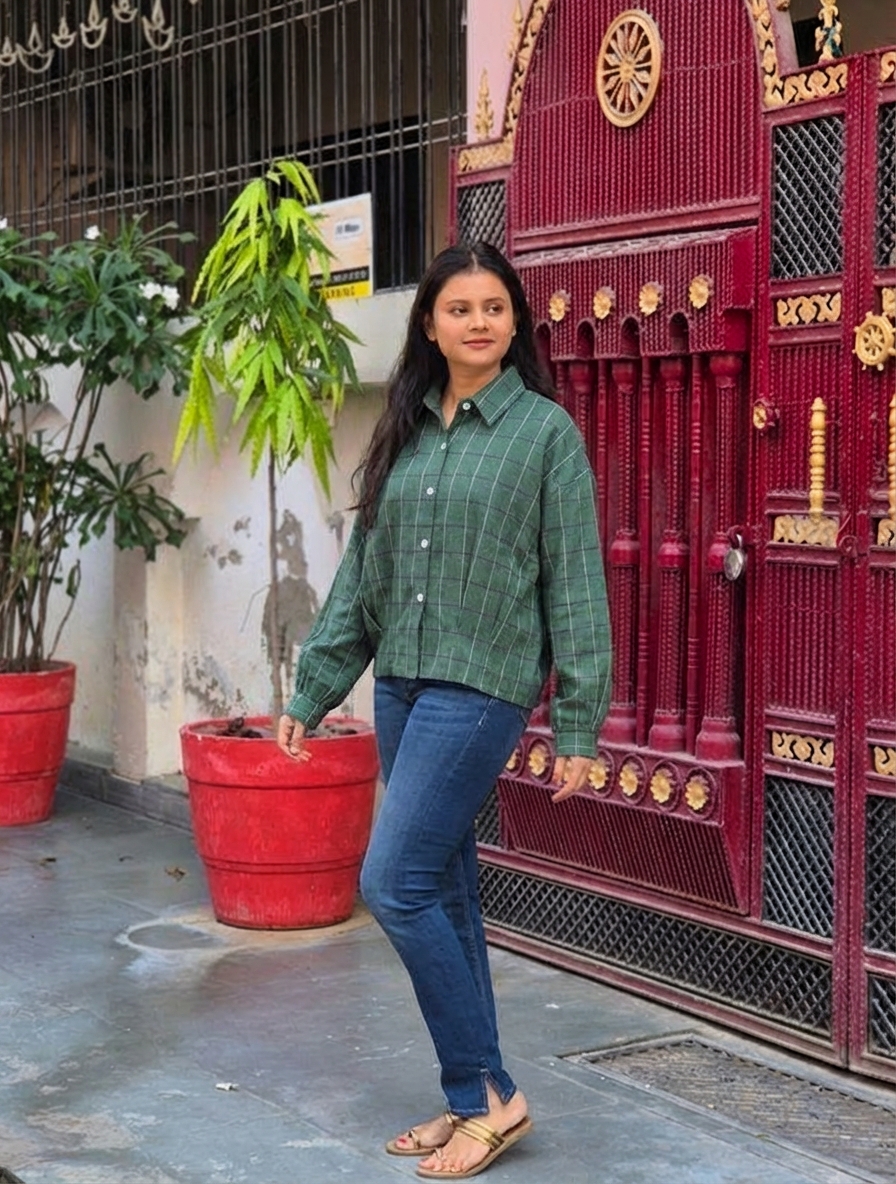
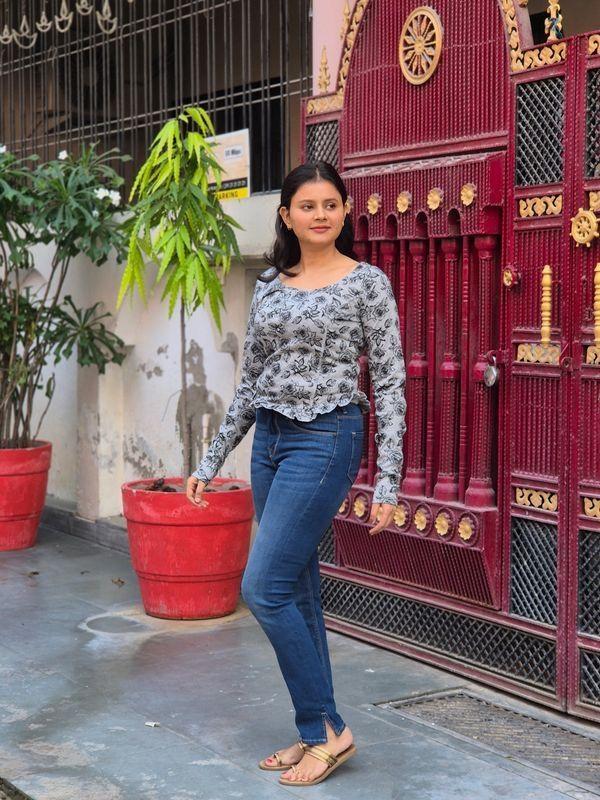
- **Silhouette Expansion:** The source garment is a boxy/blouson fit, whereas the user is wearing a form-fitting top. The generated image must add volume around the torso and waist, breaking the current silhouette of the user's hips. It should hang somewhat straight from the bust rather than curving in at the waist.
- **Arm Articulation:** The user's left arm is slightly bent. The flannel material must exhibit macroscopic buckling (large, soft folds) at the inner elbow, unlike the micro-folds of the current garment. The cuffs should rest loosely at the wrist, distinct from the skin.
- **Occlusion Handling:**
- **Hair:** The user has long dark hair draping over both shoulders. This is the primary occlusion layer. The hair mask must be segmented and composited *over* the new collar and shoulders of the flannel shirt to maintain realism.
- **Hands:** The fingertips and wrist areas must remain visible; the new sleeves should terminate naturally before obscuring the hands.
PHASE 3: ENVIRONMENT & LIGHTING
- **Light Match:** The target environment features soft, diffuse outdoor daylight (overcast or shaded), creating soft ambient occlusion rather than harsh directional shadows. The light source appears to be broadly overhead. The new garment must cast soft contact shadows onto the user's neck and the top of the jeans.
- **Color Calibration:** The source image is lit with neutral studio white light. The target scene has cooler, bluish tones typical of outdoor shade on a tiled surface. The green of the shirt needs to be slightly desaturated and shifted towards a cooler temperature to match the ambient light reflected from the grey floor and walls.
PHASE 4: IDENTITY PROTECTION
- **Facial Lock:** The user's entire head, including facial structure, skin texture, makeup, and the specific hairline, must be masked and frozen.
- **Body Integrity:** Strict prohibition on slimming or reshaping the underlying body mesh. The user's waist width and arm thickness must dictate the collision volume for the cloth simulation. The jeans and sandals remain untouched.