Thinking Process
PHASE 1: VISUAL DECONSTRUCTION
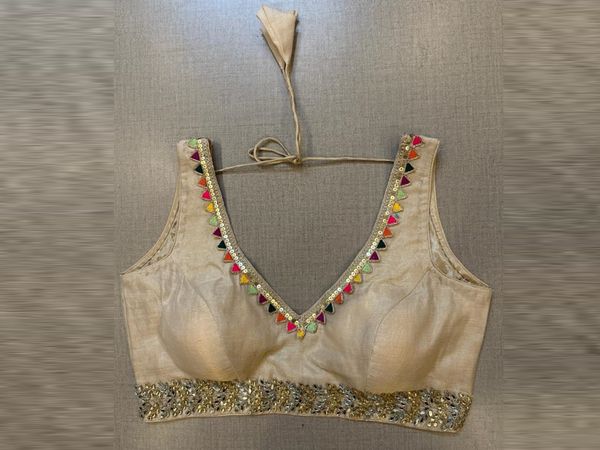
- **Fabric Physics:** The source garment is a structured, raw silk or silk-blend blouse with padded cups. Unlike the current soft knit tank top, this fabric has high stiffness and low elasticity. It will not cling to every skin crease but rather hold a molded shape around the bust. The material has a semi-gloss sheen that requires anisotropic specular highlights (reflecting light directionally). The heavy embellished hemline adds significant weight, preventing the bottom edge from curling or flapping in the wind.
- **Key Features:**
- The colorful triangular geometric embroidery (pink, green, yellow, mirror work) along the V-neckline must be preserved with high fidelity.
- The dense silver/gold sequin and mirror work band at the waist hem is a critical texture element.
- The structural "princess seams" or cup molding on the bust must be maintained to show the garment's tailored nature.
- The thin shoulder straps must replace the current thick black straps.
PHASE 2: FIT & DRAPE SIMULATION
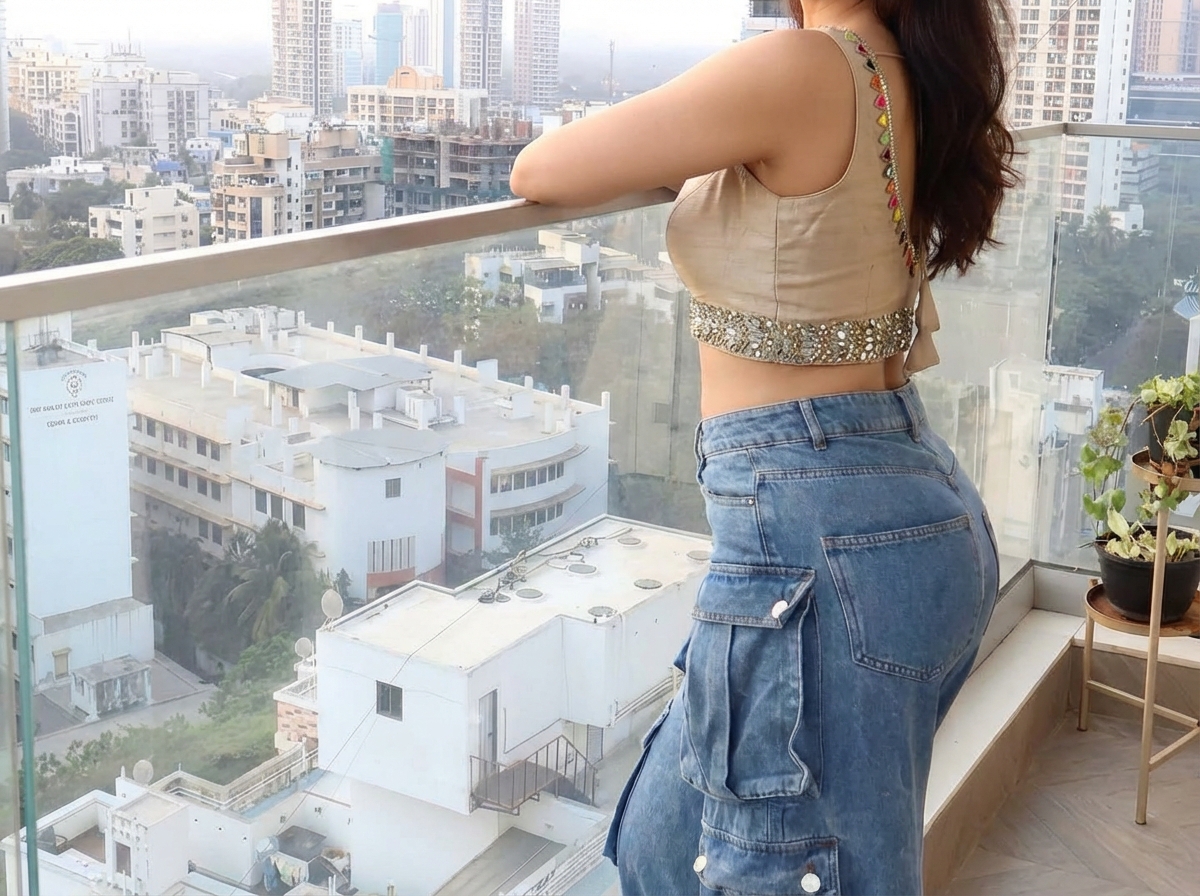
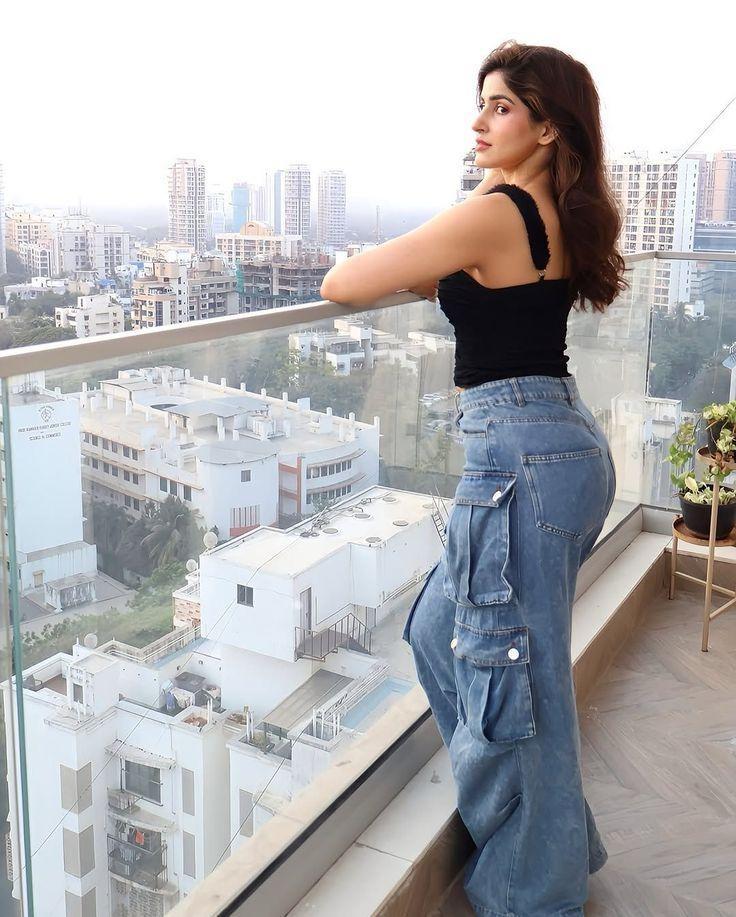
- **Body Mapping:** The user is in a side/quarter-back profile, while the garment is a front-facing flat lay. The simulation must warp the garment to wrap around the torso. The blouse is a crop top; it should terminate immediately above the high-waisted denim line, likely exposing a sliver of skin at the midriff depending on torso length. Because the user is leaning forward against the railing, the front of the blouse should press slightly against the railing interaction point, while the back should contour closely to the spine due to the tight fit of this specific garment style (choli).
- **Occlusion Handling:**
- **Hair:** The user's long dark hair falls over her right shoulder and back. This is the primary occlusion layer. The new blouse fabric must be rendered *underneath* these hair strands.
- **Railing:** The user's left arm and lower torso press against the glass railing. The garment must maintain realistic contact geometry here without clipping through the arm.
PHASE 3: ENVIRONMENT & LIGHTING
- **Light Match:** The user is in a high-key, outdoor urban environment with diffuse daylight coming from the left/front (city side). The source image has flat, warm studio lighting. The new garment must adopt cool, blue-tinted ambient occlusion to match the outdoor sky light. Specular reflections on the silk and the mirror work embellishments must align with the city light source, creating bright "pings" of light on the left side of the sequins while the back remains in self-shadow.
- **Color Calibration:** The source garment's warm beige/gold tone must be color-corrected to prevent it from looking artificial against the cool outdoor backdrop. A slight desaturation and shift towards a cooler hue are required to match the white balance of the user image.
PHASE 4: IDENTITY PROTECTION
- **Facial Lock:** Absolute freeze on the user's facial profile, jawline, ear, and neck structure. The hairline must remain exactly as is.
- **Body Integrity:** The user's arm volume, shoulder width, and waist curvature must remain unaltered. Do not apply "slimming" filters. The skin tone exposed at the midriff (if the blouse is shorter than the current tank top) must perfectly match the user's facial and arm skin tone. Preserve the visible fit of the jeans; do not warp the denim waistline.