Thinking Process
PHASE 1: VISUAL DECONSTRUCTION
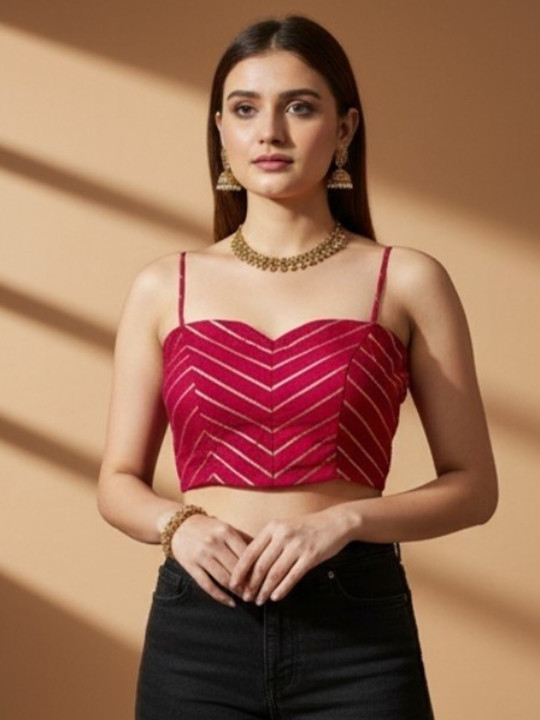
- **Fabric Physics:** The source garment is a structured, semi-rigid brocade or raw silk blend with metallic embroidery. Unlike the user's current cotton t-shirt, this material has high tensile strength and low drape; it will not conform to minor body contours but rather hold its own architectural shape (bodice/corset structure). The metallic gold chevron stripes require anisotropic specular highlighting—they must glint sharply under direct light, while the red/magenta base fabric should exhibit a softer, satin-like sheen.
- **Key Features:** The delicate spaghetti straps are structural anchors and must be rendered precisely without blurring. The "sweetheart" variance in the neckline and the precise alignment of the chevron pattern at the center seam are critical design signatures. The cropped hemline is straight and finished, unlike a tucked-in shirt.
PHASE 2: FIT & DRAPE SIMULATION
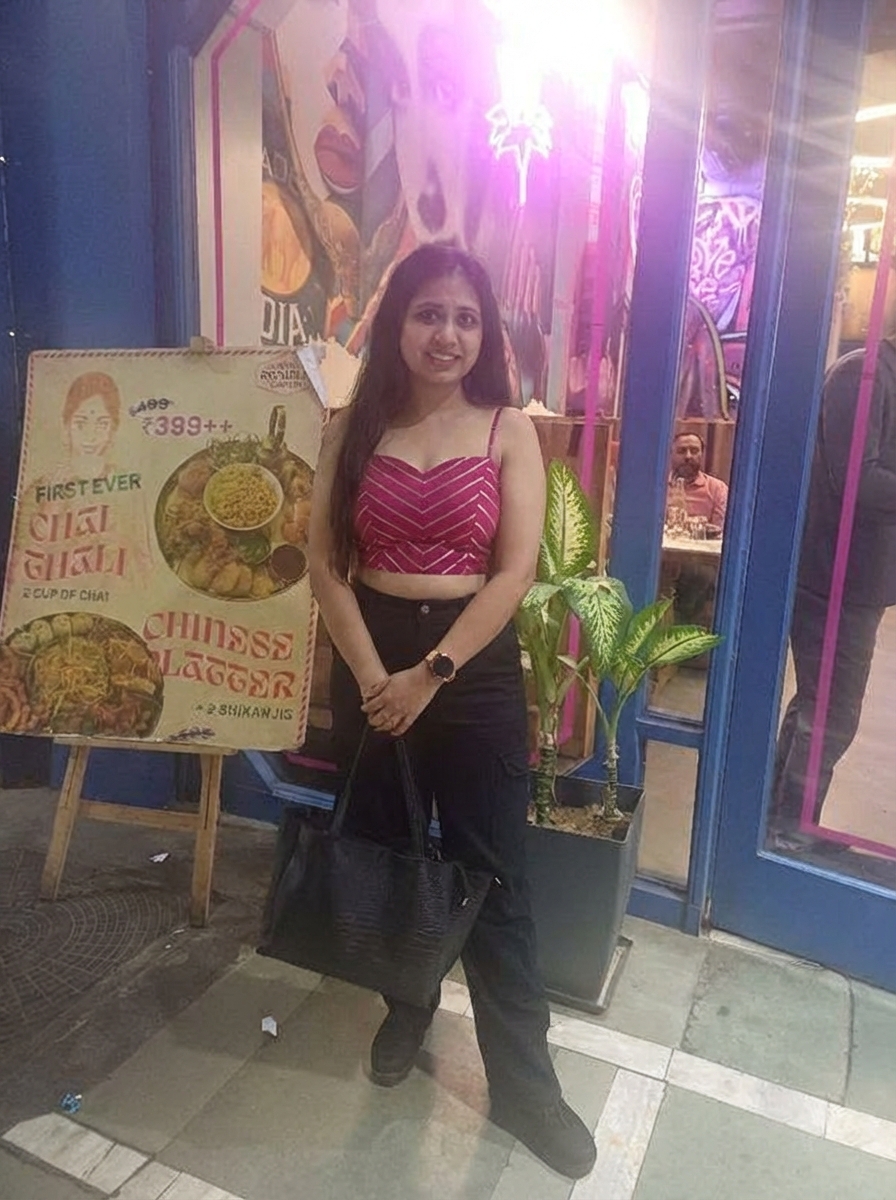
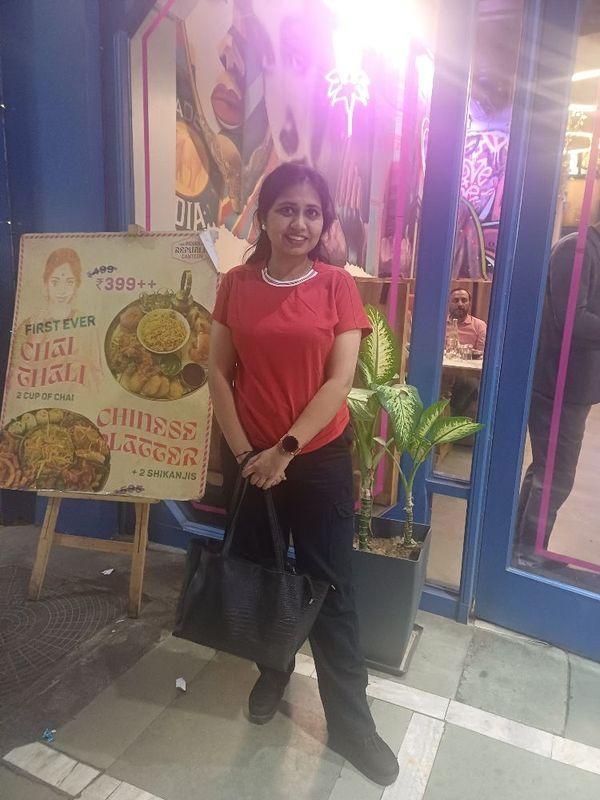
- **Body Mapping:** The target garment is a fitted crop top. The simulation must tighten the silhouette significantly compared to the loose red t-shirt currently worn. The garment must sit flush against the ribcage, ending just above the navel/natural waist. Since the user's current pose is upright with slight shoulder angling, the straps must maintain tension and not slide off the shoulders. The fabric will not "bunch" but may show slight creasing at the side seams due to the user's arm position.
- **Occlusion Handling:**
1. **Hair:** The user's long dark hair falls over both shoulders and down the back. A precise hair segmentation mask is required to layer the hair *over* the new spaghetti straps and the top ridge of the bodice.
2. **Arms/Watch:** The user's left arm (with the watch) crosses the body plane. The garment must render *behind* the forearm and wrist.
3. **Bag/Hands:** The large black tote bag handles interact with the lower abdomen. Depending on the crop length, the bag handles must remain in the foreground, obscuring the user's pants/midriff, but likely falling just below the new garment's hemline.
PHASE 3: ENVIRONMENT & LIGHTING
- **Light Match:** The user is in a mixed-lighting environment (cafe/restaurant) with a primary warm overhead source (creating highlights on her forehead/nose) and ambient violet/pink spill from the neon signage in the background. The new garment's metallic stripes must pick up the warm overhead light, while the shadowed areas of the magenta fabric should absorb subtle purple tones from the background to integrate the object into the scene.
- **Color Calibration:** The source image is high-key studio lighting. The target environment is lower contrast and dimmer. The albedo (base color) of the new top must be reduced in brightness to match the exposure of the user's black pants. The saturation of the magenta needs to be slightly desaturated and warmed to match the ambient "yellow" cast of the indoor lights.
PHASE 4: IDENTITY PROTECTION
- **Facial Lock:** The user's entire head, facial expression, jawline, and neck structure must be frozen pixel-perfect. The existing necklace should be preserved if it sits above the new neckline; if the neckline covers it, it should be masked out.
- **Body Integrity:** Strict preservation of the user's shoulder width and torso volume is mandatory. Do not warp the user's torso to match the slimmer waist of the source model. Since the new garment is a crop top and the user is currently wearing a full-length shirt, generative skin texture will be required for the midriff area; this skin generation must match the user's existing skin tone and lighting conditions without artificially slimming the waist.