Thinking Process
PHASE 1: VISUAL DECONSTRUCTION
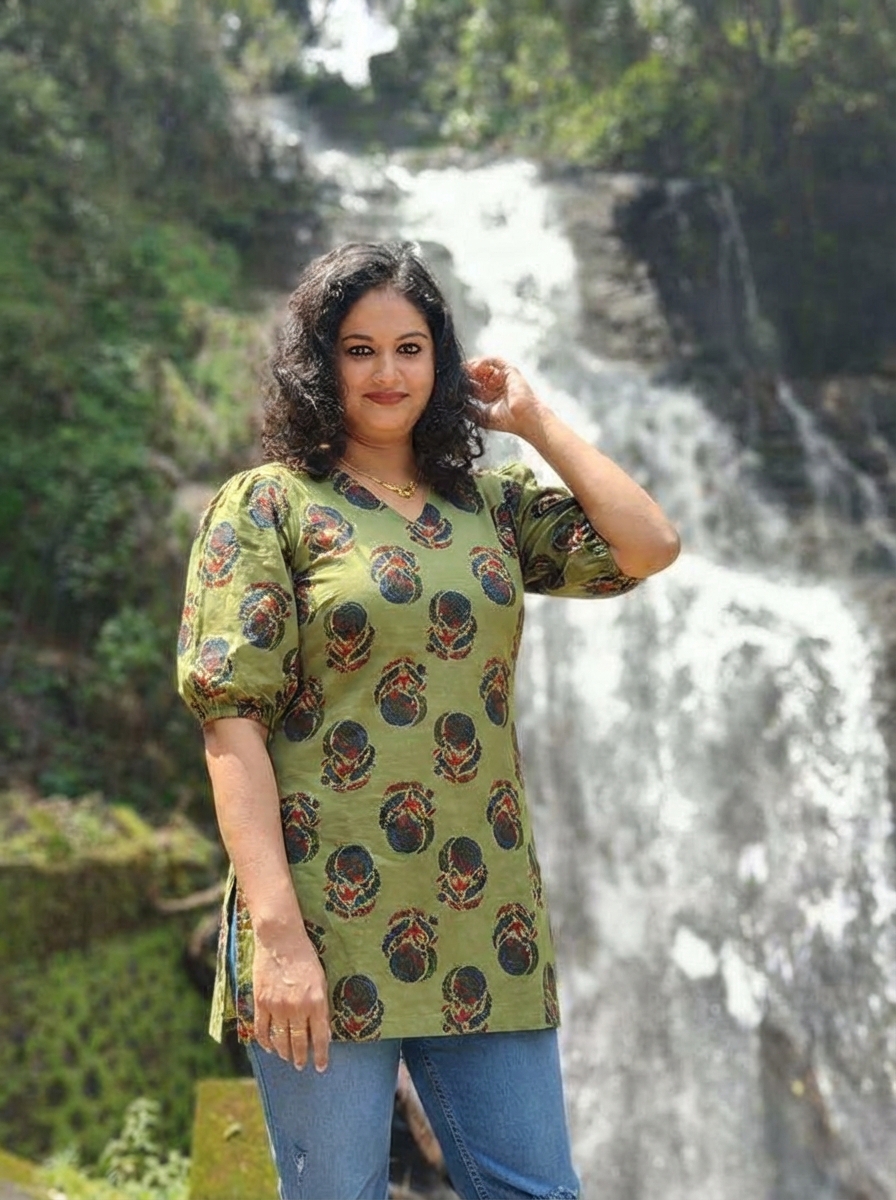
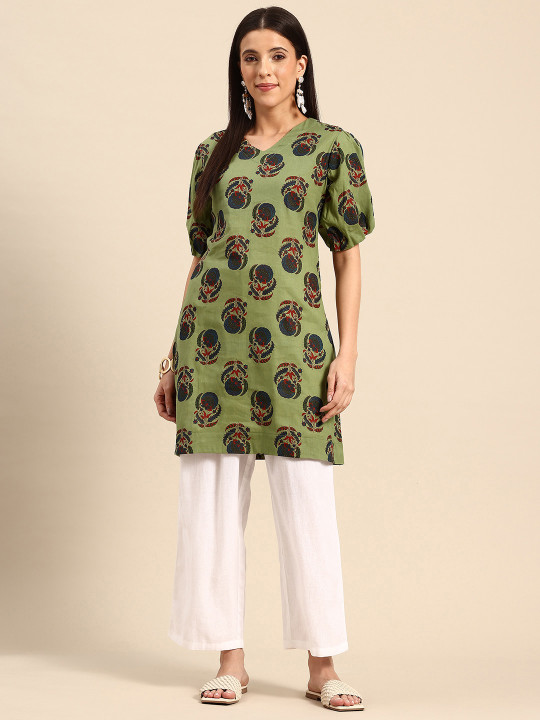
- **Fabric Physics:** The source garment is a woven cotton or cotton-blend kurti/tunic. It possesses a semi-structured drape with a matte finish (low specularity). It is not elastic; therefore, it should not cling tightly to the body like the current yellow knit top. The material has enough stiffness to maintain the volume of the puffed sleeves.
- **Key Features:** The block-print pattern (paisley/floral motifs in dark blue and red) must remain consistent in scale. The distinct V-neckline and the elbow-length puffed sleeves with elasticized cuffs are critical geometry. The straight-cut silhouette and side vents (slits) at the hemline must be preserved.
PHASE 2: FIT & DRAPE SIMULATION
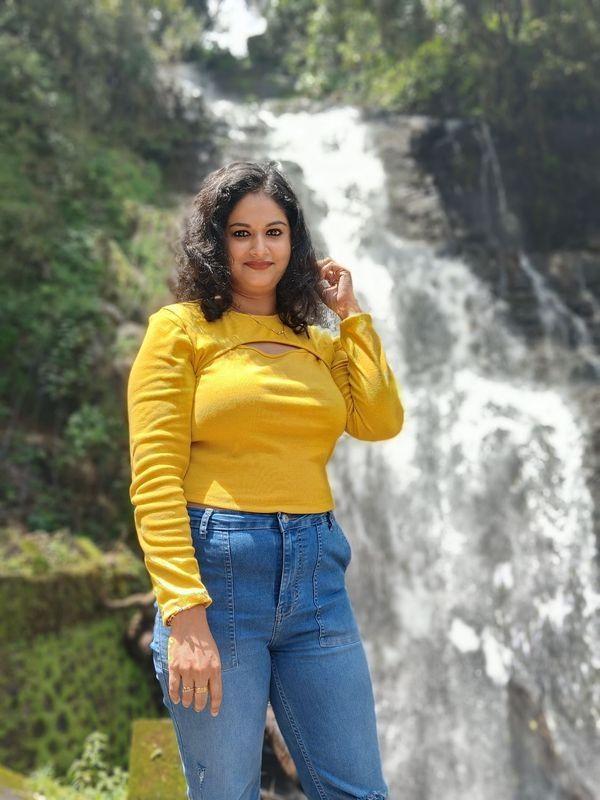
- **Body Mapping:** Unlike the current cropped top, the target kurti is a tunic length. It must drape over the waistband of the user's jeans, extending to the mid-thigh region.
- *Torso:* The fabric should fall relatively straight from the bust line, skimming the waist rather than hugging it.
- *Left Arm (Raised):* The fabric at the left shoulder must compress slightly towards the neck, and the armhole should lift. The puff sleeve on this side will sit higher, likely bunching near the elbow.
- *Right Arm (Relaxed):* The sleeve should hang naturally with full volume.
- *Forearms:* Since the source sleeves are shorter than the user's current long sleeves, the system must in-paint/reconstruct the user's skin on the forearms where the yellow fabric is removed.
- **Occlusion Handling:** The user's voluminous curly hair falls over both shoulders; the new garment must be rendered primarily *behind* the hair layers. The left hand interacts with the hair/head but is physically clear of the garment zone, though the forearm must be generated as skin. The gold necklace may be partially obscured by the new V-neck or lie atop the skin within the V; if it overlaps fabric, it must layer *over* the kurti.
PHASE 3: ENVIRONMENT & LIGHTING
- **Light Match:** The target environment features soft, diffused daylight (overcast/outdoor) with a high-key background (waterfall). The studio lighting of the source cloth (flat, warm, frontal) must be replaced with cool, ambient outdoor lighting. Shadows should be soft and contact-based (ambient occlusion) rather than harsh directional cast shadows.
- **Color Calibration:** The olive green of the kurti must be desaturated slightly to match the natural outdoor palette. It should reflect the cool tones of the waterfall mist in the shadows while maintaining the warm olive hue in the highlights to match the user's skin tone lighting context.
PHASE 4: IDENTITY PROTECTION
- **Facial Lock:** The user's entire facial region (eyes, nose, mouth), jawline, and unique curly hair texture must be strictly frozen and unaltered.
- **Body Integrity:** The simulation must respect the user's natural body curvature and volume. Do not warp the user's torso to match the source model's slimmer frame. The garment must expand to accommodate the user's bust and hip measurements while maintaining the intended loose fit of the tunic.