Thinking Process
PHASE 1: VISUAL DECONSTRUCTION
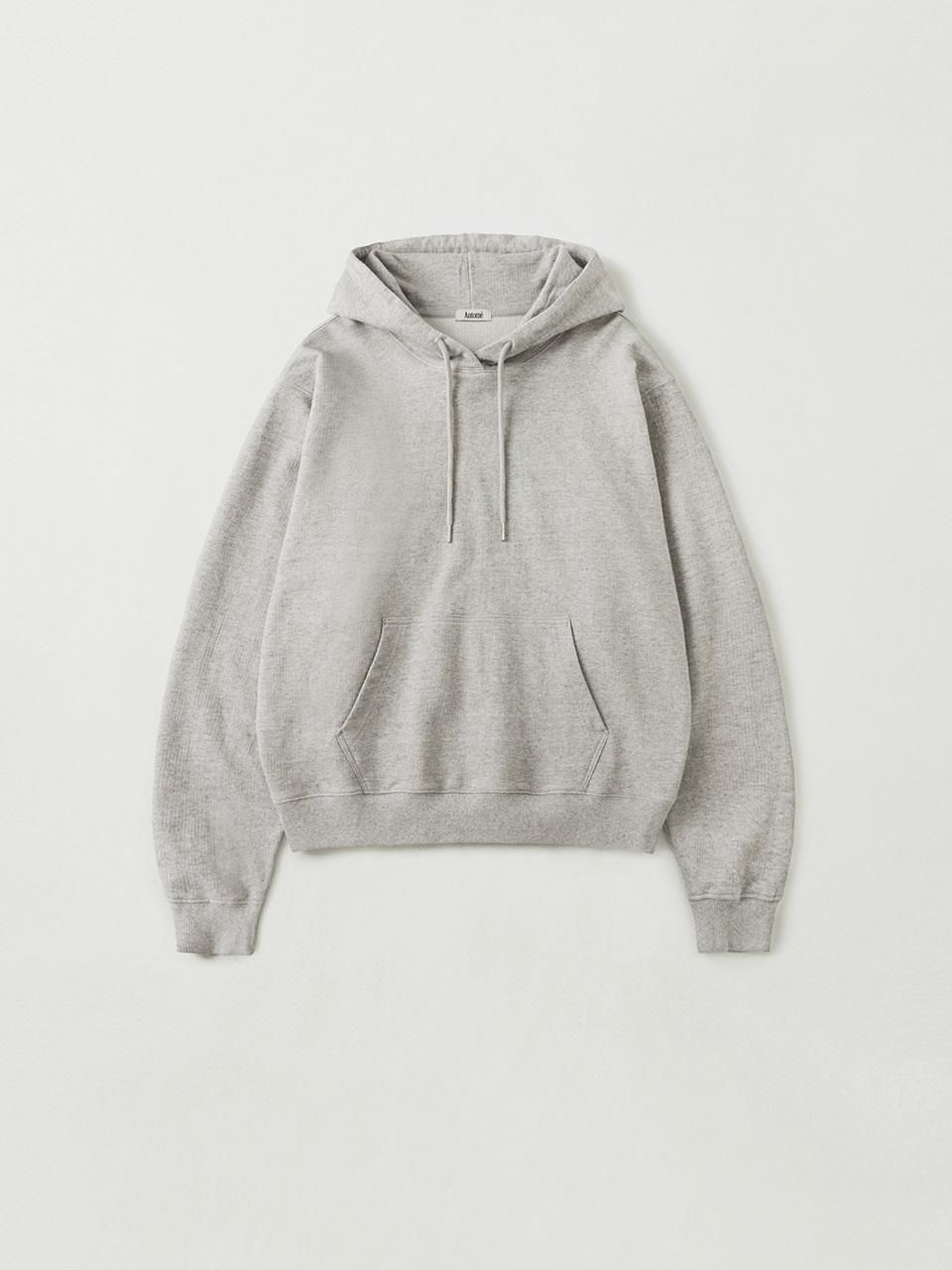
- **Fabric Physics:** The source garment is a heavyweight cotton fleece or french terry hoodie. It possesses high structural stiffness compared to the user's current thin t-shirt. It has a matte finish with a textured surface (heather grey) that diffuses light rather than reflecting it. The drape must exhibit "volume" and resistance to gravity, creating soft, rounded folds rather than sharp, thin creases.
- **Key Features:** The kangaroo pocket on the lower front, the drawstring hood mechanism at the collar, and the ribbed elastic cuffs and bottom hem are critical details. The heathered texture of the grey fabric must be preserved to maintain realism.
PHASE 2: FIT & DRAPE SIMULATION
- **Body Mapping:**
- **Shoulders/Neck:** The hoodie has a drop-shoulder cut; the seam should fall lower on the user's deltoid than the current t-shirt. The hood bulk will accumulate around the neck/trapezius area.
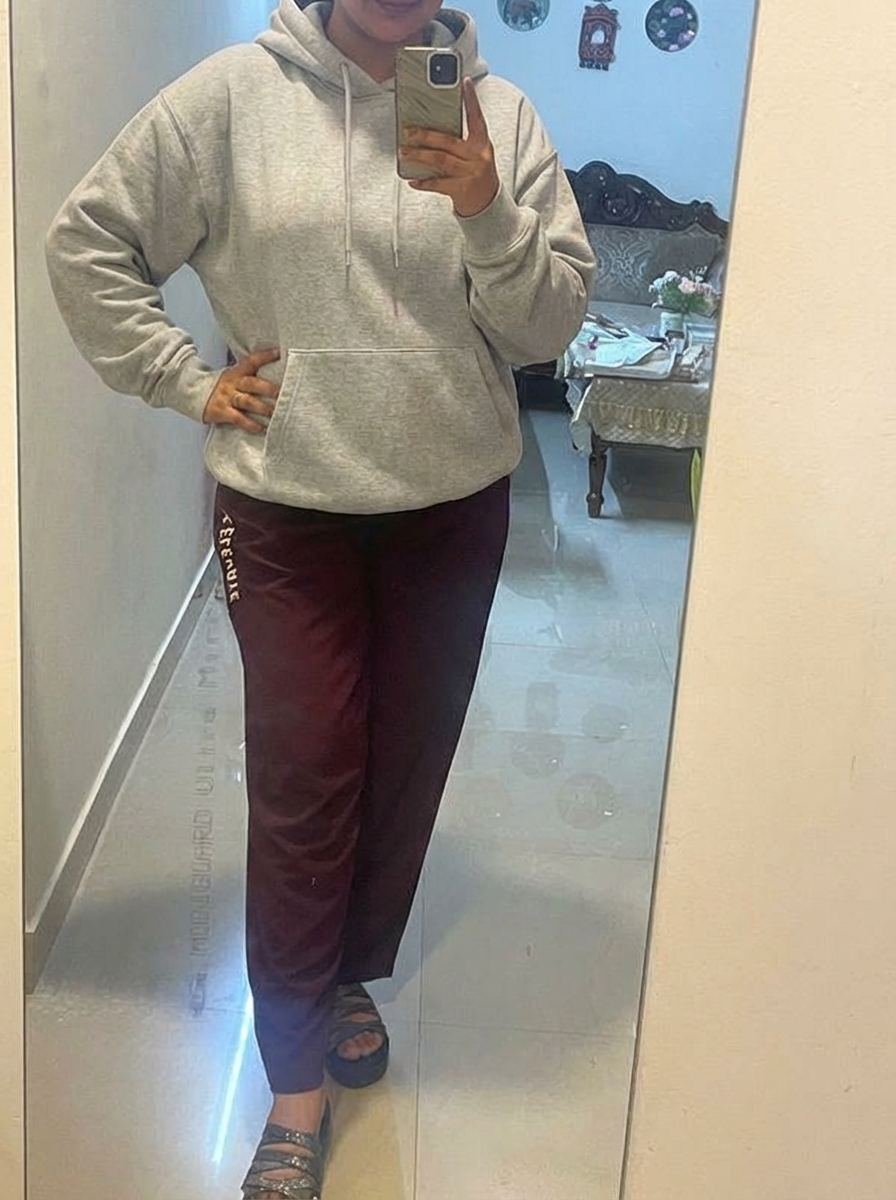
- **Right Arm (Hand on Hip):** Significant bunching and compression folds are required at the inner elbow and wrist due to the fabric thickness. The ribbed cuff should naturally grip the wrist or forearm depending on sleeve length.
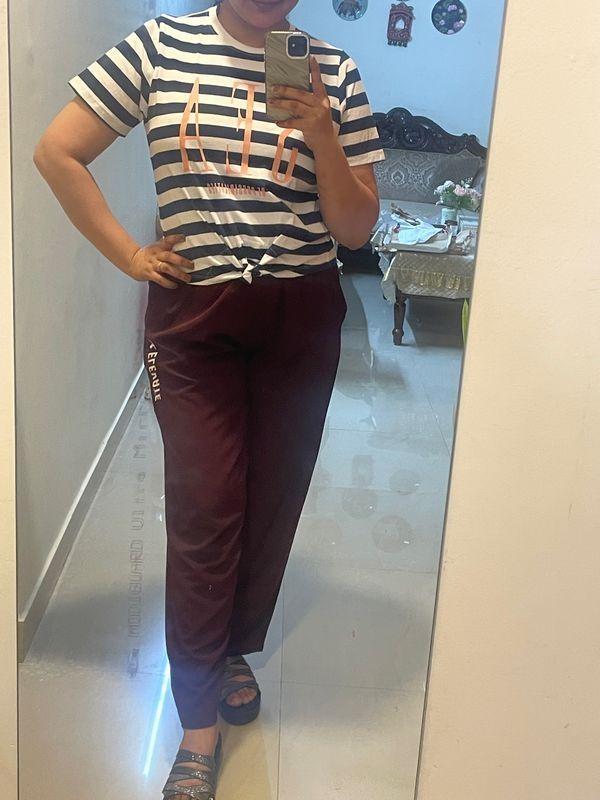
- **Torso:** The hoodie is a loose fit. Unlike the current fitted/knotted t-shirt, the hoodie should hang vertically with a boxy silhouette, overlapping the waistband of the maroon pants rather than being tucked in.
- **Occlusion Handling:**
- **Primary Occlusion:** The smartphone and the user's left hand (holding the phone) currently block the center chest. The hoodie simulation must be rendered *behind* the phone and hand entirely.
- **Secondary Occlusion:** The user's right hand rests on the hip. The hoodie's hemline needs to interact with this hand—either bunching above the wrist or draping slightly over the thumb, but the hand itself must remain the top layer.
PHASE 3: ENVIRONMENT & LIGHTING
- **Light Match:** The user's environment has soft, diffuse indoor lighting, likely from an overhead source, casting soft shadows behind the subject on the wall. The hoodie must render with self-shadowing (ambient occlusion) particularly under the hood area, inside the arm folds, and beneath the kangaroo pocket lip to match this ambient depth.
- **Color Calibration:** The source image is studio-lit with cool/neutral tones. The user image has a slightly warmer, indoor tungsten cast. The grey of the hoodie must be color-graded (slightly warmed and desaturated) to integrate seamlessly into the mirror selfie environment, avoiding a "bright sticker" effect.
PHASE 4: IDENTITY PROTECTION
- **Facial Lock:** The user's visible lower face (jawline, mouth, chin) and neck geometry must remain pixel-perfectly frozen. The pose of the head relative to the shoulders must not change.
- **Body Integrity:** Strict prohibition on body warping or slimming. The user's shoulder width and arm thickness must serve as the collision mesh for the cloth simulation. The final image must show a bulkier silhouette due to the thick fabric of the hoodie; do not artificially slim the waist to match the previous t-shirt's outline.