Thinking Process
PHASE 1: VISUAL DECONSTRUCTION
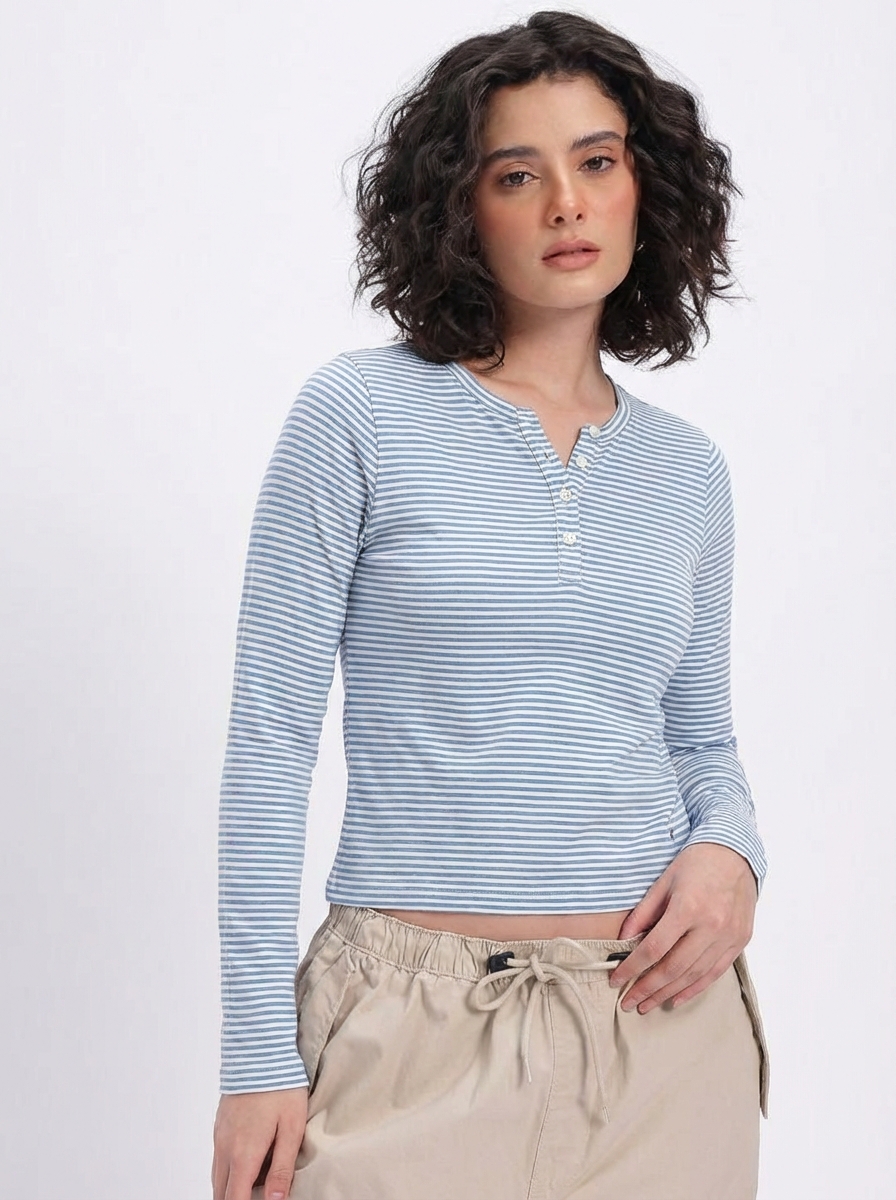
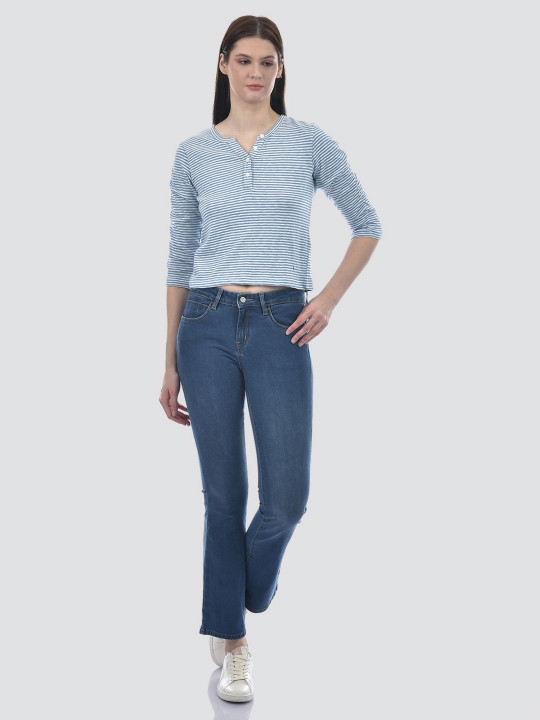
- **Fabric Physics:** The source garment is a lightweight cotton-jersey knit. It possesses high pliability and low stiffness, meaning it will conform closely to the body's contours rather than holding its own shape. The surface is matte, absorbing light with very minimal specular highlights. The horizontal elasticity is significant, implying the stripes will stretch across the bust area.
- **Key Features:**
- **Pattern:** Thin, horizontal blue and white stripes which must maintain alignment despite fabric curvature.
- **Neckline:** A scooped Henley style with a distinct three-button placket (buttons appear white). The placket structure is thicker than the surrounding fabric.
- **Sleeves:** Fitted long sleeves (appearing 3/4 length or pushed up in source).
- **Hemline:** A simple double-stitched hem that falls at the high-hip/waist level, slightly cropped relative to standard t-shirts.
PHASE 2: FIT & DRAPE SIMULATION
- **Body Mapping:**
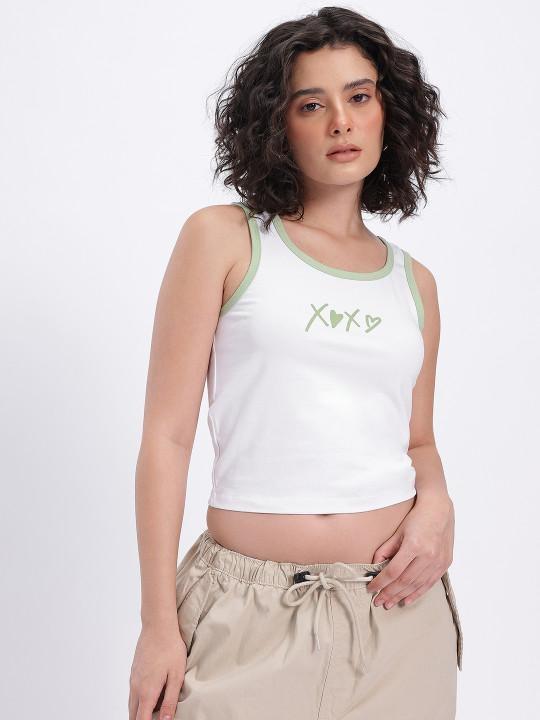
- **Shoulders/Arms:** The target user is currently sleeveless. The simulation must generate full fabric coverage over the arms. The fabric should drape vertically on the user's right arm (hanging straight). On the user's left arm (bent slightly to touch waist), the fabric must fold and crease at the inner elbow and bunch slightly near the wrist.
- **Torso:** The garment is looser than the target's current tank top. It should skim the waist rather than cling tight. The horizontal stripes must curve gently around the bust volume to simulate depth.
- **Occlusion Handling:**
- **Hair:** The user's dark, curly bob grazes the shoulders. The garment's shoulder seams and collar area must be rendered *behind* the hair tips to maintain depth.
- **Left Hand:** The user's left fingers are hooked into the waistband of the pants. The hem of the new garment will likely fall near this interaction point. The fingers must remain visible and overlap the new garment's hem, or the hem must naturally bunch above the hand to avoid clipping.
PHASE 3: ENVIRONMENT & LIGHTING
- **Light Match:** The target environment utilizes soft, diffuse studio lighting, predominantly from the front-left (viewer's perspective), casting soft shadows on the user's left side (image right) and under the jawline. The new garment must generate self-shadowing under the bust and creases in the sleeves consistent with this light source.
- **Color Calibration:** The "white" of the stripes in the source garment must be balanced to match the white point of the target image's background to ensure integration. The blue tone should remain vibrant but affected by the soft shadow falloff on the shadowed side of the body.
PHASE 4: IDENTITY PROTECTION
- **Facial Lock:** Absolute freeze on the user's face, neck structure, and the voluminous curly hair. The hairline and jawline boundaries must remain untouched by the texture transfer.
- **Body Integrity:** The underlying volumetric shape of the user's torso and arms must be preserved. The simulation must not slim the waist or alter the arm thickness to fit the source garment's original model; the garment meshes must expand to fit the target user's dimensions.