Thinking Process
PHASE 1: VISUAL DECONSTRUCTION
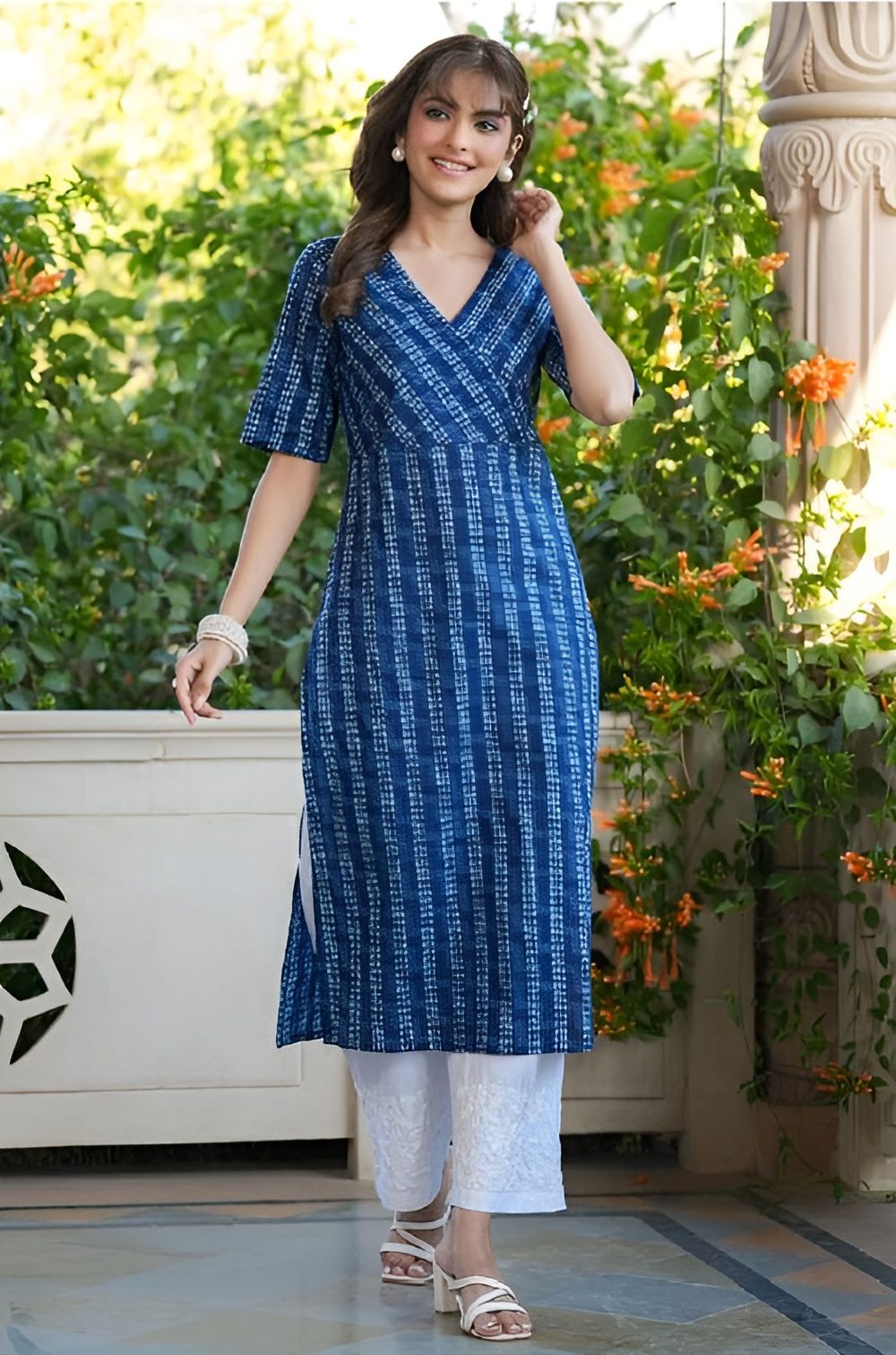
- **Fabric Physics:** The source garment is a cotton or cotton-linen blend Kurta with a matte finish. It possesses medium structural integrity—it holds its shape better than silk but is more pliable than canvas. It should exhibit low specularity (no shine) and absorb the indoor lighting rather than reflecting it. The drape should follow gravity vertically with slight stiffness, rather than clinging tightly to the skin.
- **Key Features:** The specific Shibori-style geometric pattern (diagonal stripes on the bodice, vertical stripes on the torso) must be preserved without distortion. The V-neck wrap design, the elbow-length sleeves (which are shorter than the user's current sleeves), and the side slits at the hip level are critical structural elements.
PHASE 2: FIT & DRAPE SIMULATION
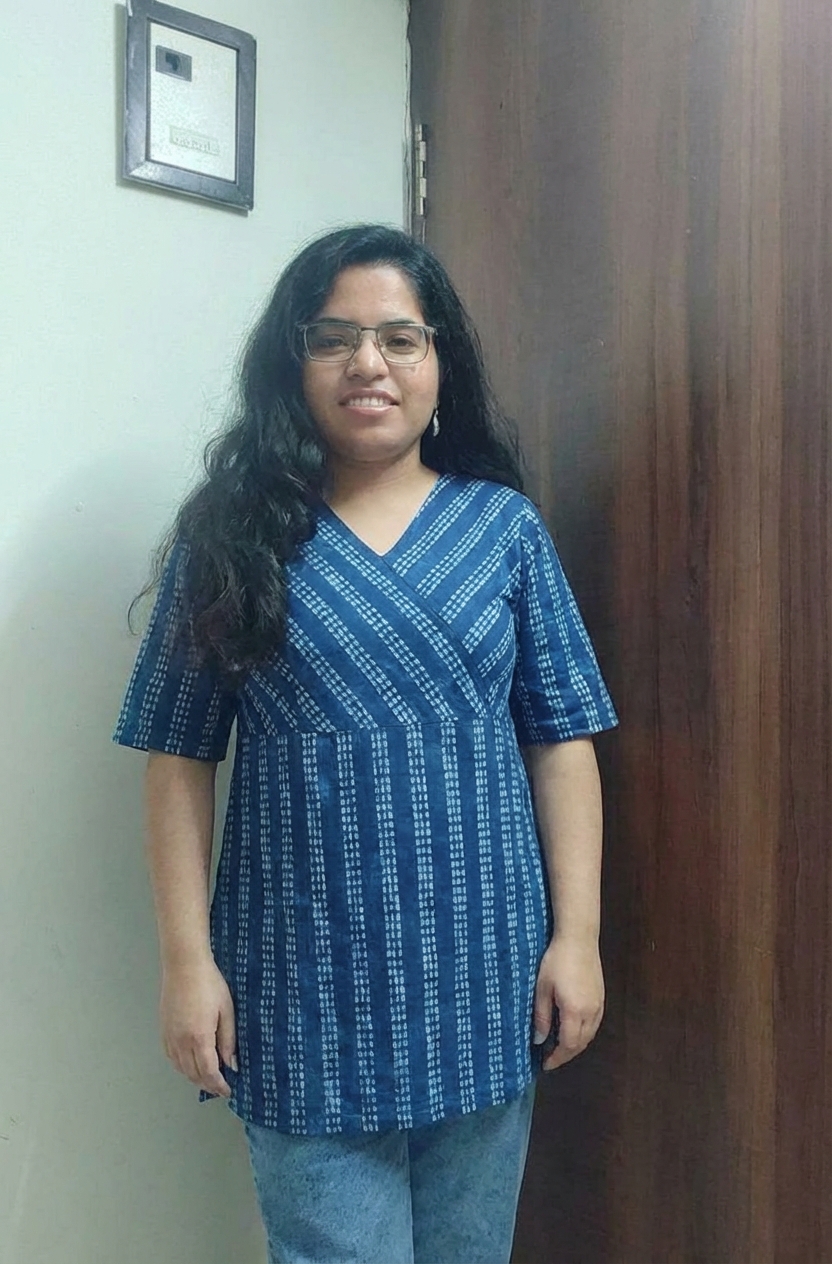
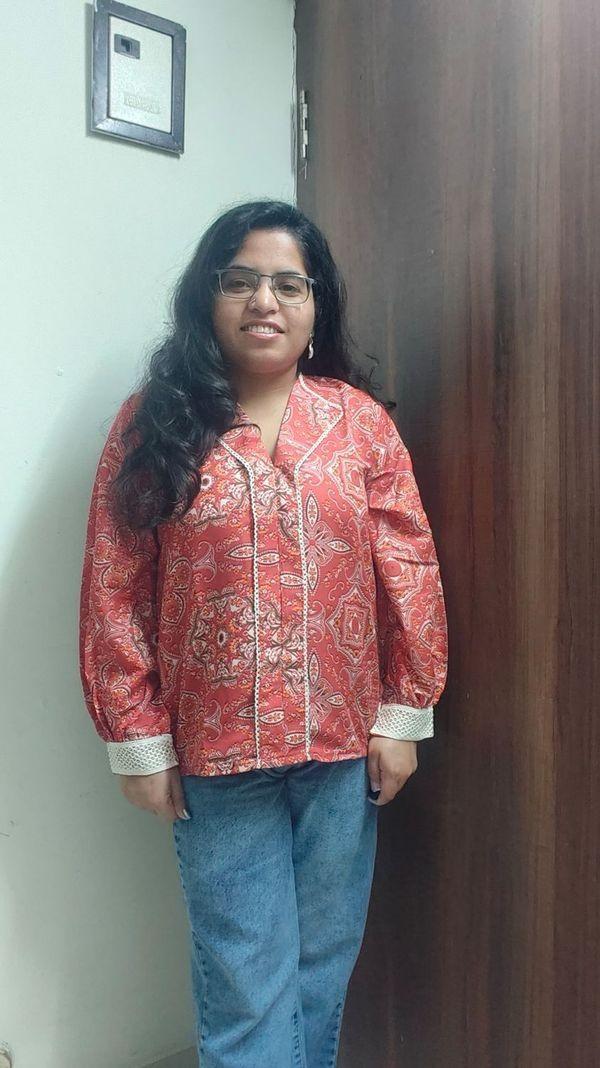
- **Body Mapping:** The Kurta is a straight-cut silhouette. On the target user, the fabric must fall vertically from the bust line, skimming the waist rather than cinching in. The V-neckline will sit wider on the user's chest compared to the source model. Since the source sleeves are elbow-length and the user is wearing long sleeves, the simulation must effectively "remove" the lower forearm fabric of the red shirt and generate natural skin texture to match the user's complexion.
- **Occlusion Handling:** **High Priority:** The user has voluminous dark hair cascading over both shoulders, particularly obscuring the left clavicle and upper chest. The new blue garment must be rendered *underneath* these hair layers. The user's hands are positioned at the hips; if the Kurta length extends past the hips, the fabric must drape behind the hands or break naturally where the wrists touch the body.
PHASE 3: ENVIRONMENT & LIGHTING
- **Light Match:** The source image has high-contrast, warm outdoor sunlight. The target environment is soft, diffuse, slightly cool artificial indoor lighting. The new garment must be relit to eliminate the harsh solar highlights and cast soft, downward shadows (ambient occlusion) consistent with the overhead light source in the room. Shadows should accumulate naturally in the folds of the elbows and under the bust.
- **Color Calibration:** The vibrant indigo blue of the source needs to be slightly desaturated and exposure-balanced to match the lower dynamic range of the indoor photo. The bright white patterns on the Kurta should be tone-mapped to a softer off-white to blend with the room's white balance.
PHASE 4: IDENTITY PROTECTION
- **Facial Lock:** The user's entire head region, including glasses, facial structure, and the specific fall of the hair around the face, must be frozen and pixel-preserved. The neck area exposed by the new V-neck must match the user's existing skin tone perfectly.
- **Body Integrity:** Strict prohibition on warping the user's torso to match the source model's dimensions. The Kurta must be expanded to fit the user's shoulder width and bust measurements, preserving the user's original silhouette and posture.