Thinking Process
PHASE 1: VISUAL DECONSTRUCTION
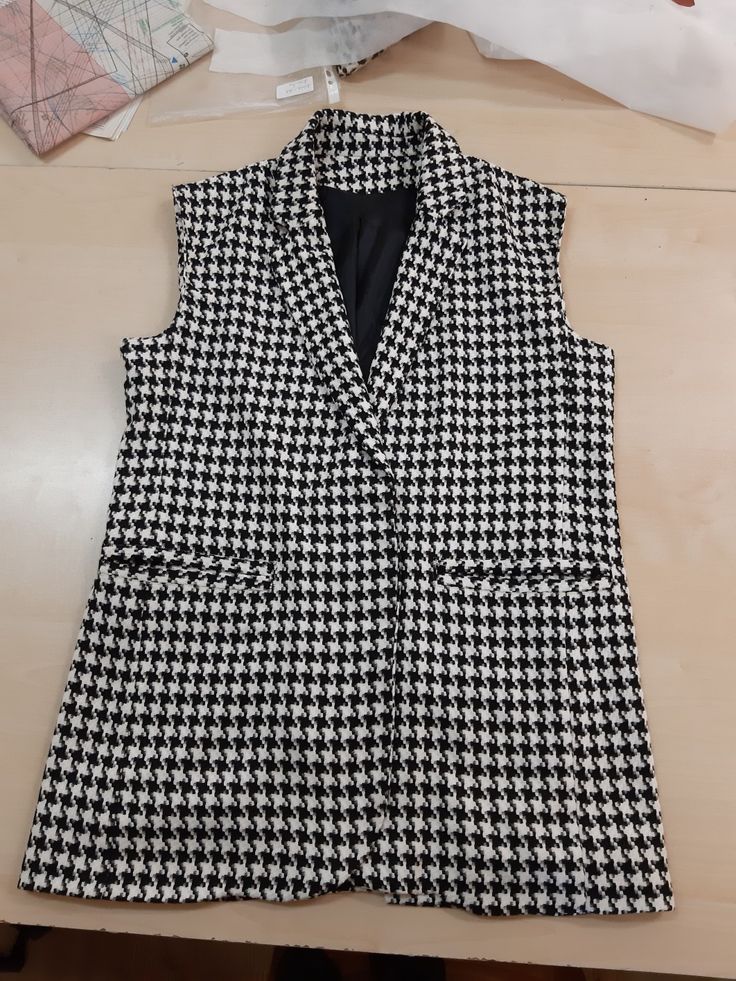
- **Fabric Physics:** The source garment is a structured, woven textile (likely a wool blend or heavy tweed) featuring a houndstooth pattern. It possesses high bending stiffness and shear resistance; it should not cling to the body like the current jersey top but rather hold its own architectural shape. Surface reflectance should be matte and diffuse, absorbing light rather than reflecting it specularly.
- **Key Features:** The notched lapel collar is critical and must retain its 3D folding geometry. The central vertical opening (deep V-neck) and the distinct lack of sleeves (armholes) must be defined. The black inner lining visible at the neck and the implied welt pockets on the lower hips must be preserved to maintain realism.
PHASE 2: FIT & DRAPE SIMULATION
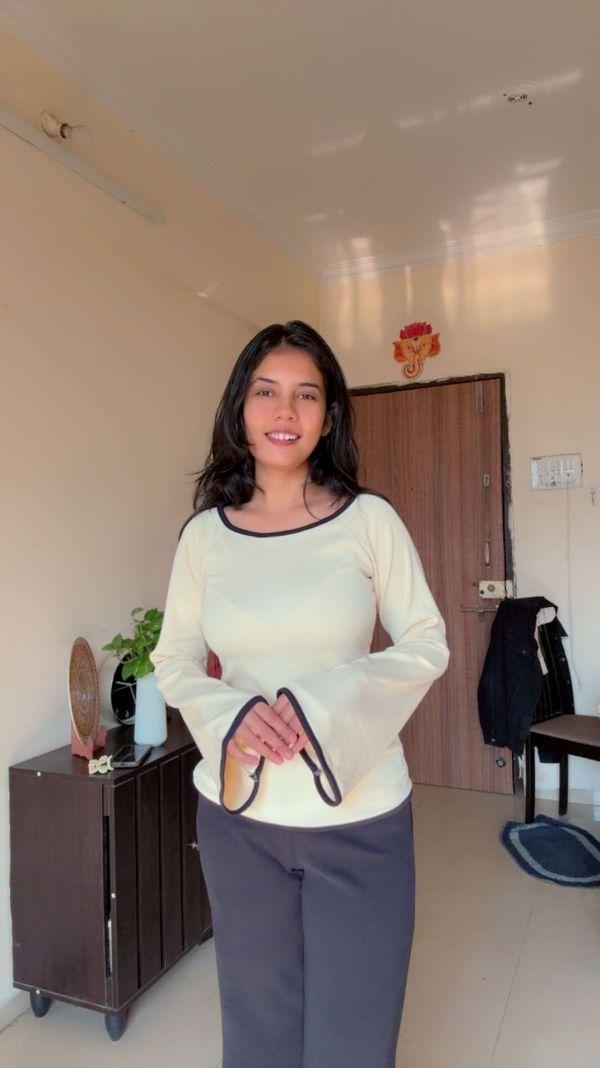
- **Body Mapping:** Due to the material stiffness, the vest will hang from the shoulder line and bridge over the bust points, falling relatively straight to the hips (a "boxy" fit) rather than following the concave curve of the waist. The hemline should settle just below the user's waistline, interacting with the top of the trousers. Since the source is sleeveless and the user is wearing wide bell sleeves, the simulation must account for the boundary at the shoulder/armpit, effectively terminating the garment width there.
- **Occlusion Handling:**
1. **Hands:** The user's clasped hands are positioned exactly where the lower hem of the vest will fall. A precise segmentation mask is required to layer the hands *over* the garment.
2. **Hair:** The user has long, dark, wavy hair cascading over both shoulders and the chest area. This hair MUST be segmented and composited *on top* of the new vest, specifically covering parts of the lapels and shoulder seams.
PHASE 3: ENVIRONMENT & LIGHTING
- **Light Match:** The user environment is lit by a warm, overhead artificial light source (tungsten), coming from the top-left quadrant (casting shadows to the right). The vest needs to receive a lighting gradient that is brighter on the user's right shoulder (viewer's left) and slightly shadowed on the lower right side. Self-shadowing from the lapels onto the chest is required for depth.
- **Color Calibration:** The source image has neutral/cool white balance. The "white" in the houndstooth pattern must be color-graded towards a warmer, creamy yellow/orange tint to match the ambient room temperature and the skin tone lighting of the user. The black in the pattern should be lifted slightly to match the black point of the user's dark trousers/hair, avoiding a "crushed black" look.
PHASE 4: IDENTITY PROTECTION
- **Facial Lock:** Strict pixel-preservation mask applied to the entire head area above the neck, including eyes, nose, mouth, and jawline. The hair shape and volume must remain identical.
- **Body Integrity:** The user's underlying skeletal structure must remain unchanged. Do not slim the waist or alter the hip width. The final silhouette should appear slightly bulkier than the original image, as the tweed vest adds material thickness compared to the thin top currently worn.
