Thinking Process
PHASE 1: VISUAL DECONSTRUCTION
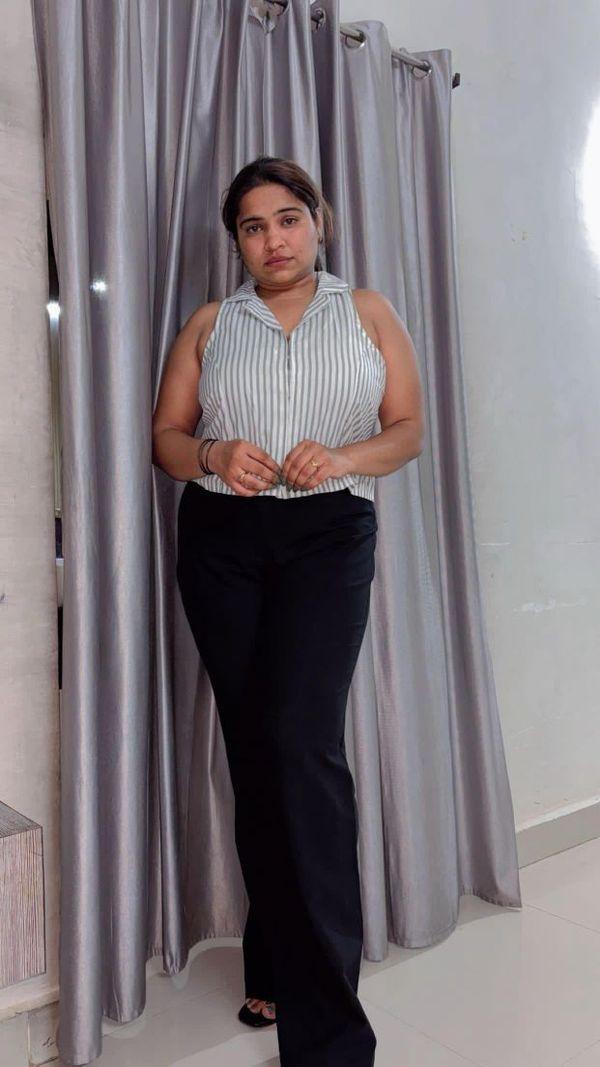
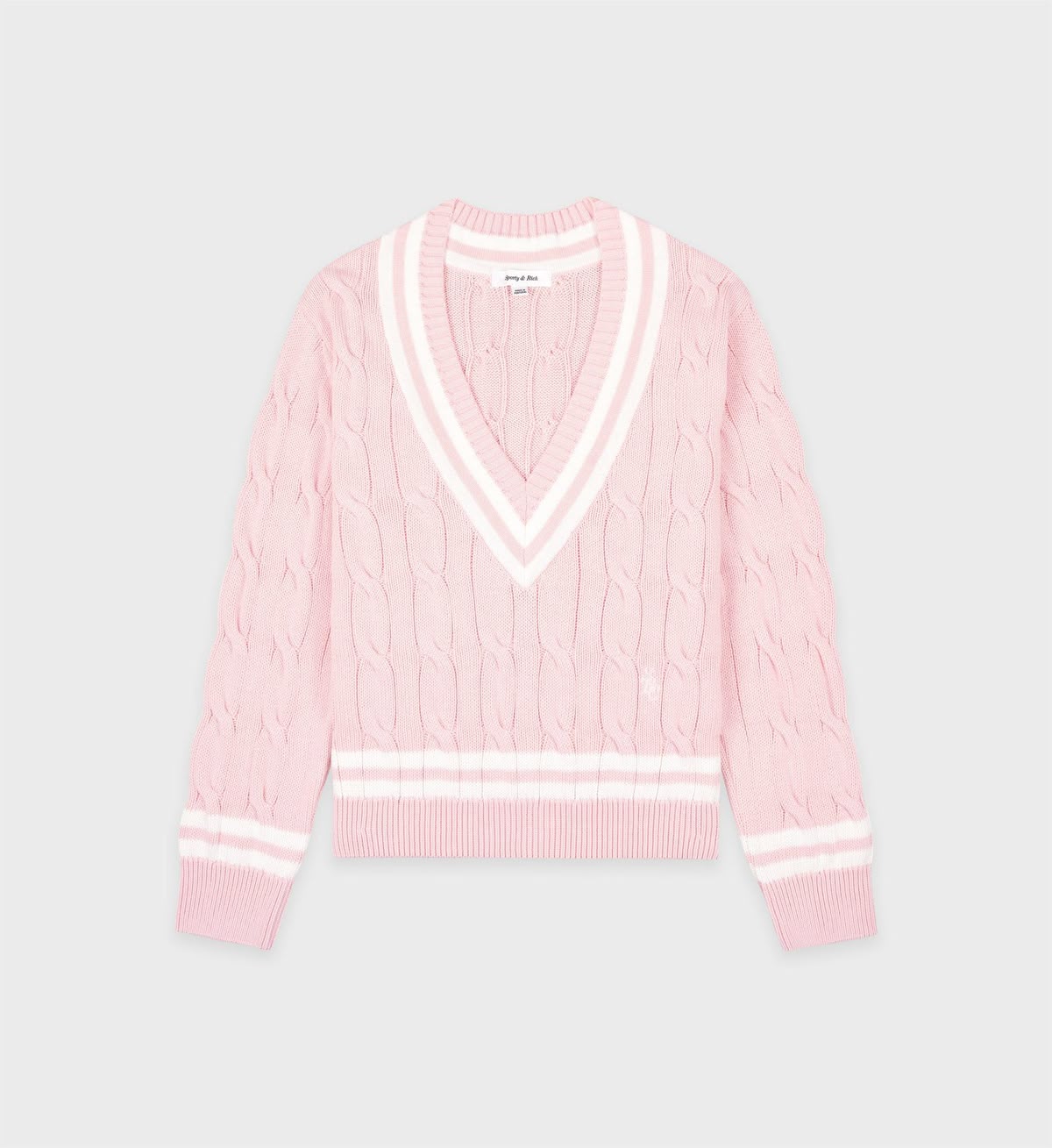
- **Fabric Physics:** The source garment is a heavy-gauge cable knit (wool or cotton blend). It possesses significant structural weight and thickness. Unlike the current lightweight striped top, this material will not cling tightly to the skin; it acts as a matte surface with high light absorption and low reflectivity. The texture relies on ambient occlusion within the cable patterns to create depth.
- **Key Features:** The deep V-neckline with double white stripes, the ribbed hemline, and the matching ribbed cuffs with white stripes are critical design elements. The specific "braided" cable texture and the subtle "Sporty & Rich" branding text on the upper left chest must be preserved with high-frequency detail.
PHASE 2: FIT & DRAPE SIMULATION
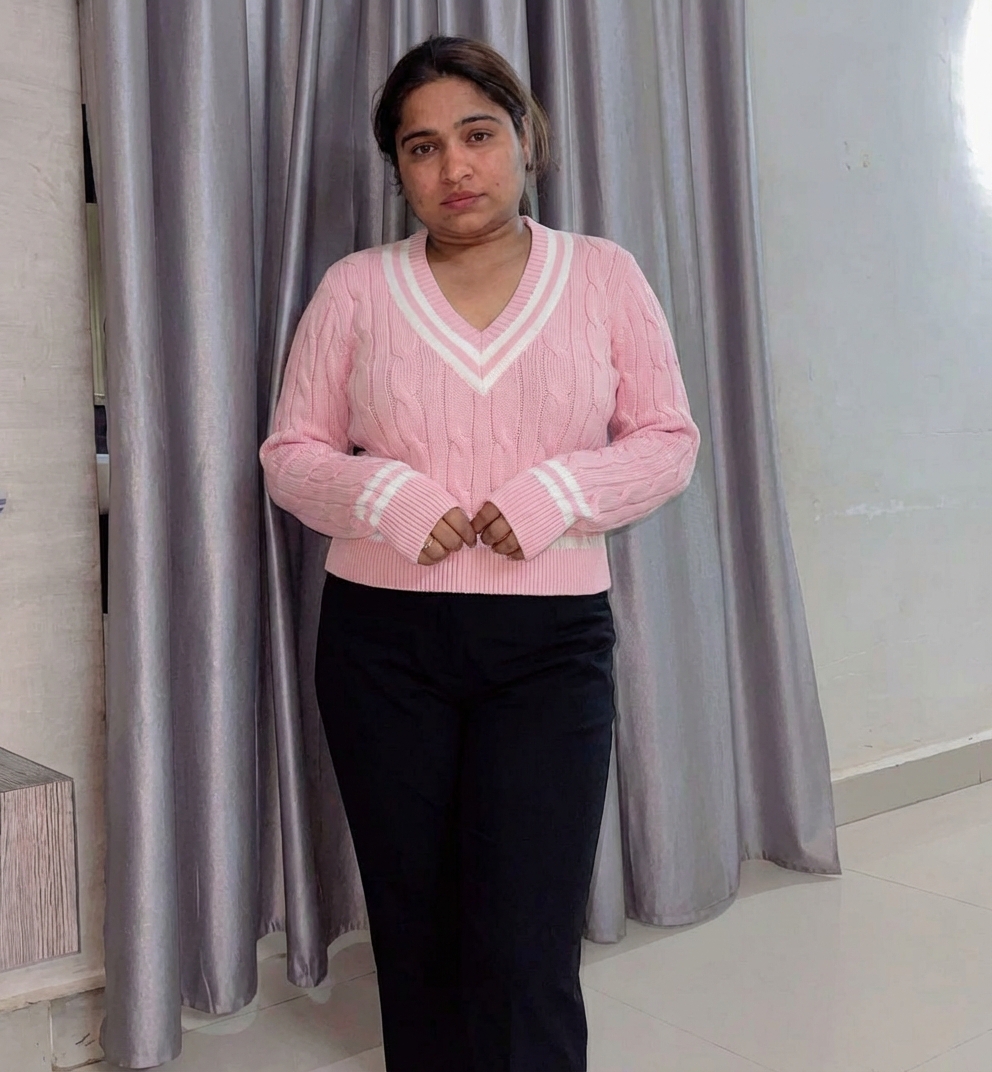
- **Body Mapping:** Due to the user's pose (arms bent, hands clasped at waist), the heavy knit fabric must exhibit significant compression and transverse folding at the inner elbows (antecubital fossa). The sleeves will not hang straight; they will follow the arm contour and bunch slightly at the wrists. The torso fit should be relaxed, adding natural volume to the silhouette compared to the current fitted tank top.
- **Occlusion Handling:** CRITICAL: The user's clasped hands and wrists are positioned in front of the lower torso. The sweater generation must be masked *behind* the hands. The bottom hem of the sweater will likely interact with the top of the wrists/hands; the simulation must render the sweater terminating or draping around the hands, not covering them.
PHASE 3: ENVIRONMENT & LIGHTING
- **Light Match:** The user is in a room with diffuse, cool-toned indoor artificial lighting, predominantly coming from the left/front (casting soft shadows to the right). The sweater's shadows (particularly within the cable knit grooves and under the bust) must align with this directional lighting.
- **Color Calibration:** The studio-lit pink of the source garment is likely too warm and vibrant for the user's setting. The sweater's hue should be slightly desaturated and cooled to match the grey tones of the curtains and the ambient light temperature of the room. The white stripes must match the white balance of the scene (e.g., the light reflection on the curtain rod) rather than remaining pure digital white.
PHASE 4: IDENTITY PROTECTION
- **Facial Lock:** The user's face, hair, and neck must be completely frozen. As the new sweater has a deep V-neck and the current top has a high collar, generative inpainting will be required to create realistic skin texture on the upper chest/sternum area, seamlessly blending with the existing neck skin tone.
- **Body Integrity:** Strictly forbid any slimming algorithms. The user's arm width and waistline must remain true to reality. Furthermore, the simulation must account for the *added* visual weight of the thick knit fabric, naturally expanding the silhouette slightly rather than shrinking the body to fit the clothes.