Thinking Process
PHASE 1: VISUAL DECONSTRUCTION
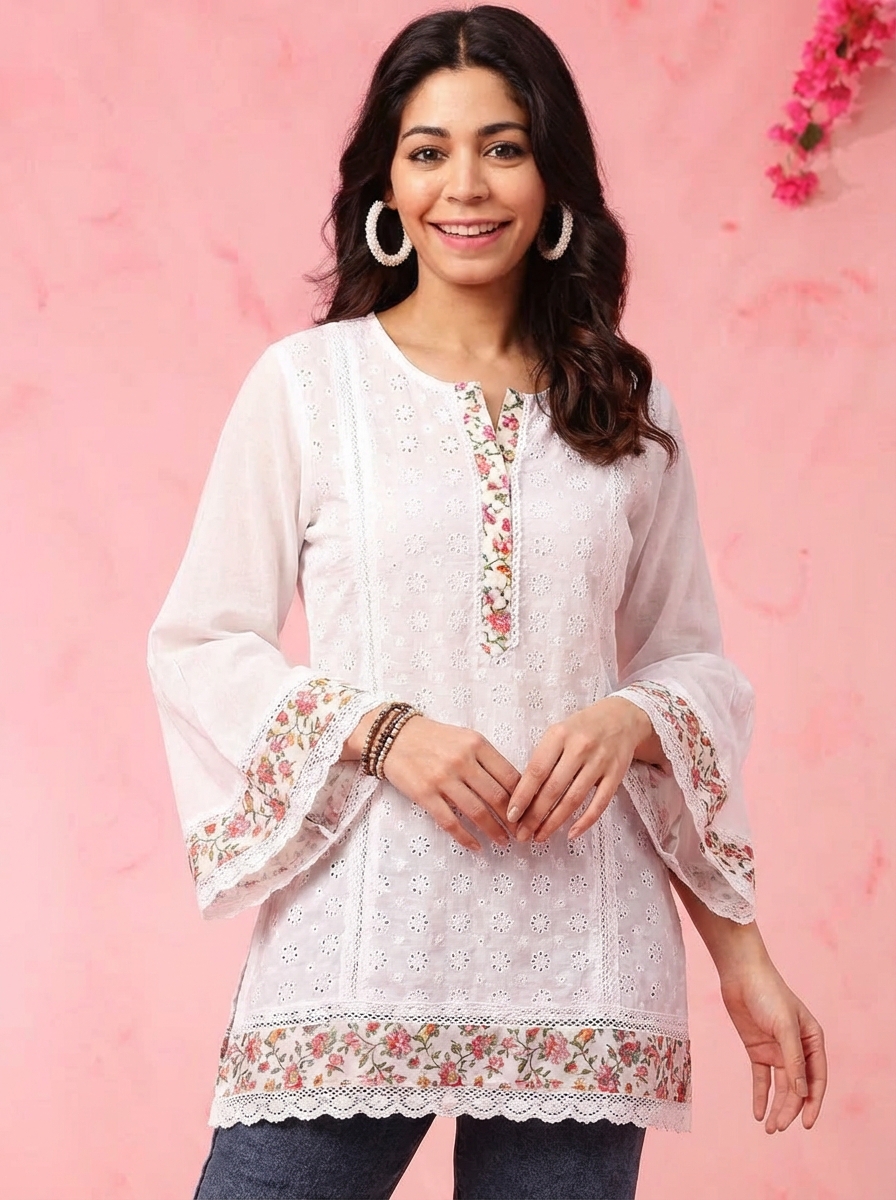
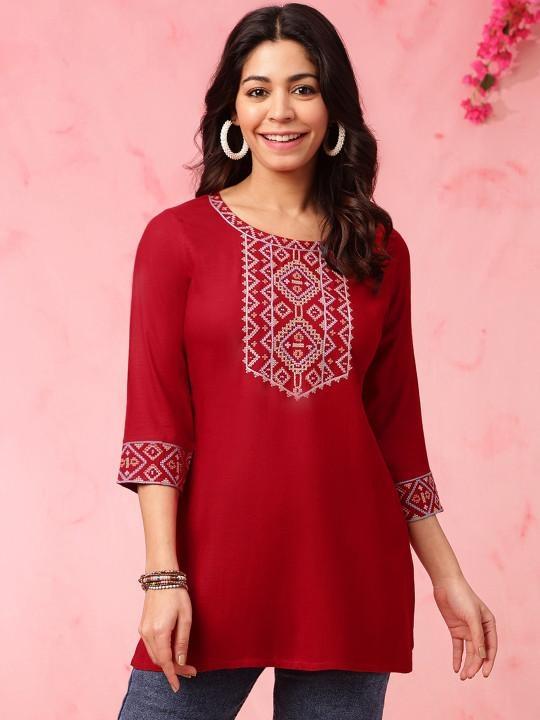
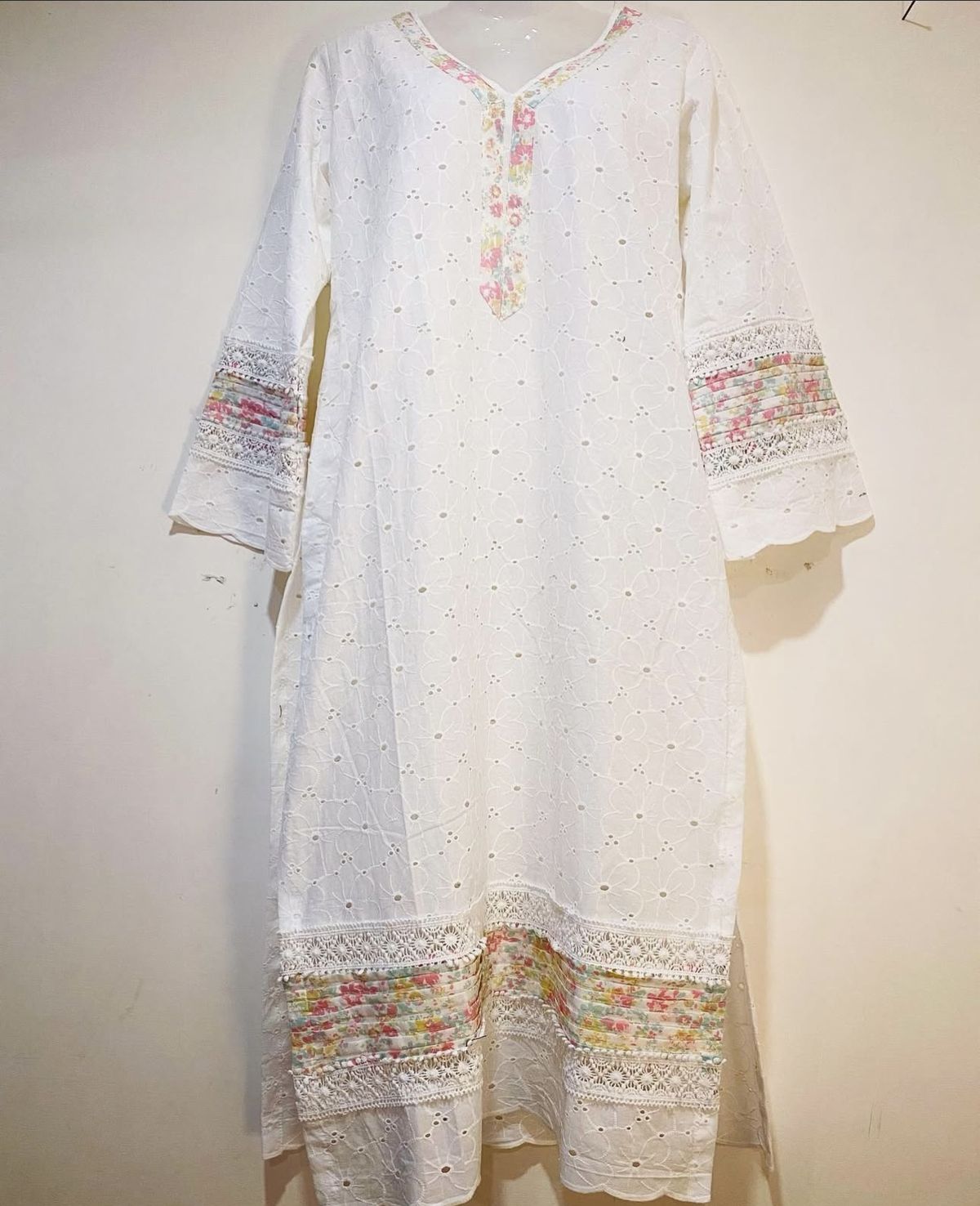
- **Fabric Physics:** The source garment is a lightweight, semi-sheer cotton or georgette with "Chikankari" style eyelet embroidery. The material has a matte finish with low specular highlights. Unlike the current red rayon/modal garment, the new fabric is airier and less elastic. It should demonstrate high flexibility but low stretch.
- **Key Features:**
- The intricate eyelet (hole) pattern throughout the body requires handling for partial transparency (skin or inner lining visibility).
- The floral printed panels on the neckline placket, sleeve cuffs, and bottom hem.
- The delicate lace trims at the sleeve ends and hemline.
- The bell-shaped/wide sleeve structure (distinct from the fitted sleeves of the current red top).
PHASE 2: FIT & DRAPE SIMULATION
- **Body Mapping:**
- **Shoulders & Chest:** The garment must settle on the trapezoids and clavicle, draping vertically without clinging to the waist, contrasting the fitted nature of the current red top.
- **Sleeves:** The source sleeves are wide/bell-shaped. They must hang loosely around the user's forearms, creating negative space between the arm and the fabric, rather than wrapping tight. Gravity will pull the lace cuffs downward over the wrist area.
- **Length:** The source garment is a long kurta/tunic. It will extend past the hips to the bottom edge of the user image frame.
- **Occlusion Handling:**
- **Hair:** The user has long, wavy hair falling over both shoulders and resting on the upper chest. This is a critical occlusion layer; the white fabric must appear *underneath* the hair strands.
- **Accessories:** The bracelets on the right wrist must be handled carefully—either partially covered by the longer sleeve or causing the sleeve to bunch slightly if they interact. The hoop earrings must remain the top layer.
PHASE 3: ENVIRONMENT & LIGHTING
- **Light Match:** The target environment utilizes soft, diffused, front-facing studio lighting with a pink backdrop. The white garment must pick up a subtle pink ambient color cast in the shadows to integrate physically. Shadows should be soft and diffuse (ambient occlusion), located primarily under the bust, inside the sleeve openings, and at the armpits.
- **Color Calibration:** The source image lighting is cool/fluorescent. The white balance of the garment must be warmed slightly to match the skin tone warmth of the user and the pinkish hue of the environment. Avoid "bleached white" brightness; lower exposure slightly to retain texture detail in the white embroidery.
PHASE 4: IDENTITY PROTECTION
- **Facial Lock:** Absolute pixel freeze required for the user's face, including the jawline, ears, and neck area above the collarbone. The hairline interface must be masked precisely.
- **Body Integrity:** Strict prohibition on warping the user's skeletal structure. The shoulder width, arm volume, and torso width must remain consistent with the original image. The garment must expand to fit the user, the user must not be slimmed to fit the garment.