Thinking Process
PHASE 1: VISUAL DECONSTRUCTION
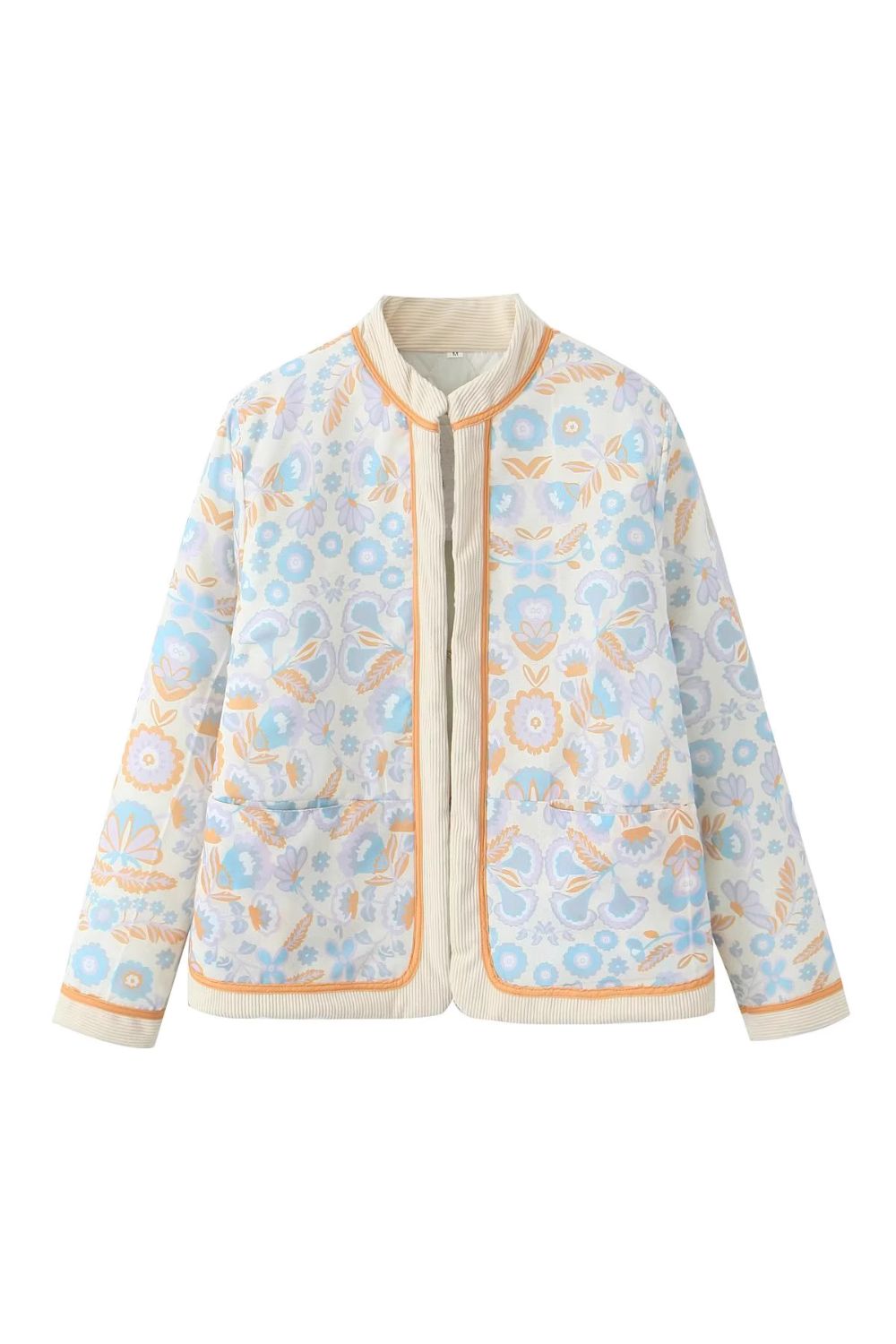
- **Fabric Physics:** The source garment is a quilted textile with a corduroy trim. It possesses a high bending stiffness and thickness (unlike the user's current thin knit top). It simulates as a semi-rigid shell with low drape. The surface is matte, diffusing light rather than reflecting it speculatively, though the corduroy trim should exhibit subtle anisotropic highlights (velvet-like sheen) on the collar and cuffs.
- **Key Features:** The diamond/wave quilt stitching pattern must remain visible to convey texture. The pastel floral print (blues, oranges, purples) and the distinct cream corduroy piping along the placket, collar, hem, and pocket edges are critical design elements. The front patch pockets must retain their dimensional volume and not appear painted on.
PHASE 2: FIT & DRAPE SIMULATION
- **Body Mapping:** Due to the quilted material's thickness, the garment will not conform tightly to the bust or waist. It must maintain a slightly boxy, structural silhouette. At the user's bent elbows (particularly the left arm), the fabric will create thick, sharp transverse folds rather than soft ripples. The collar stands slightly away from the neck due to the corduroy stiffness. The hemline should hang relatively straight due to gravity, resisting the curve of the waist more than the current shirt.
- **Occlusion Handling:**
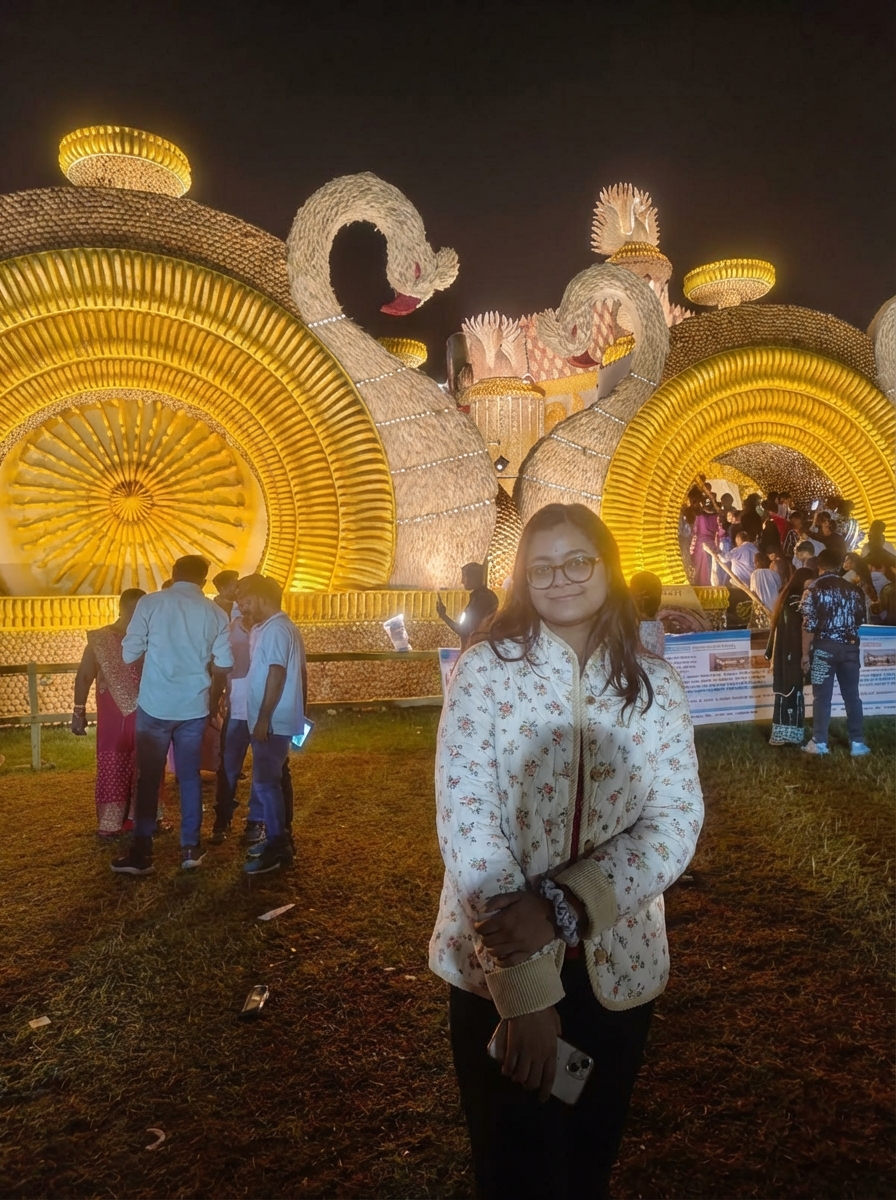
1. **Hair:** The user's long dark hair falls over both shoulders and down the chest. This hair must be segmented and layered *over* the new jacket collar and chest panels.
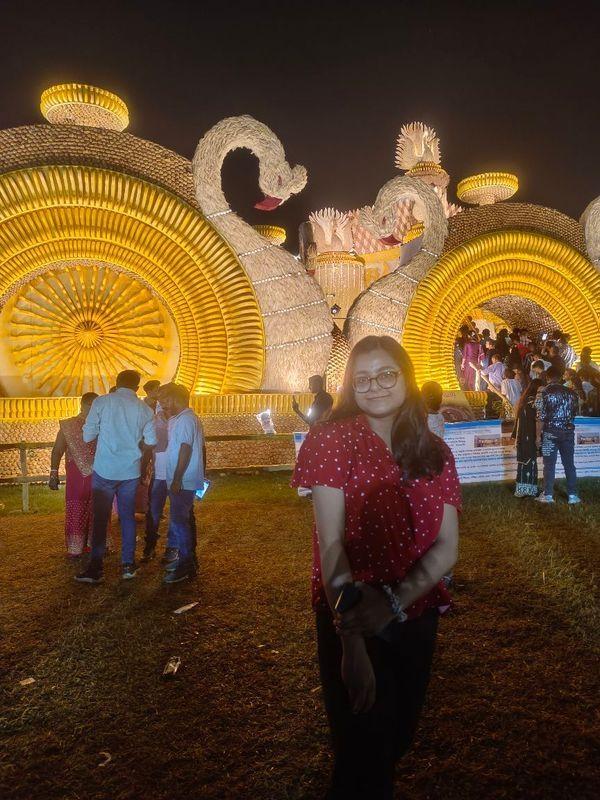
2. **Hands/Arms:** The user's arms are crossed low. The left wrist (wearing a scrunchie/watch) and hand (holding an object) overlap the torso area. The jacket must be rendered *behind* these elements. The sleeves must terminate naturally at the wrists, likely bunching slightly due to the user's arm bend.
PHASE 3: ENVIRONMENT & LIGHTING
- **Light Match:** The scene is a night setting with strong, warm, artificial backlighting (from the giant swan structures) and a diffuse frontal fill light. The jacket must absorb the warm yellow/orange ambient cast of the environment, shifting the stark white background of the cloth image to a warmer cream/candlelight tone. Rim lighting should be applied to the shoulders and outer arm edges to match the backlighting profile.
- **Color Calibration:** The pastel blues and purples of the floral print must be desaturated slightly and warmed up to integrate with the low-light, sodium-vapor-style lighting of the background. Contrast must be increased to simulate night photography.
PHASE 4: IDENTITY PROTECTION
- **Facial Lock:** The user's face, including glasses, jawline, and neck, acts as a hard freeze zone. No pixels above the collarbone line (excluding the garment collar area) may be altered.
- **Body Integrity:** The simulation must respect the user's current biomechanics. While the jacket adds volume due to its quilted nature, the underlying shoulder width and arm thickness must not be artificially slimmed or warped. The user's skin tone on the hands and neck must remain untouched.