Thinking Process
PHASE 1: VISUAL DECONSTRUCTION
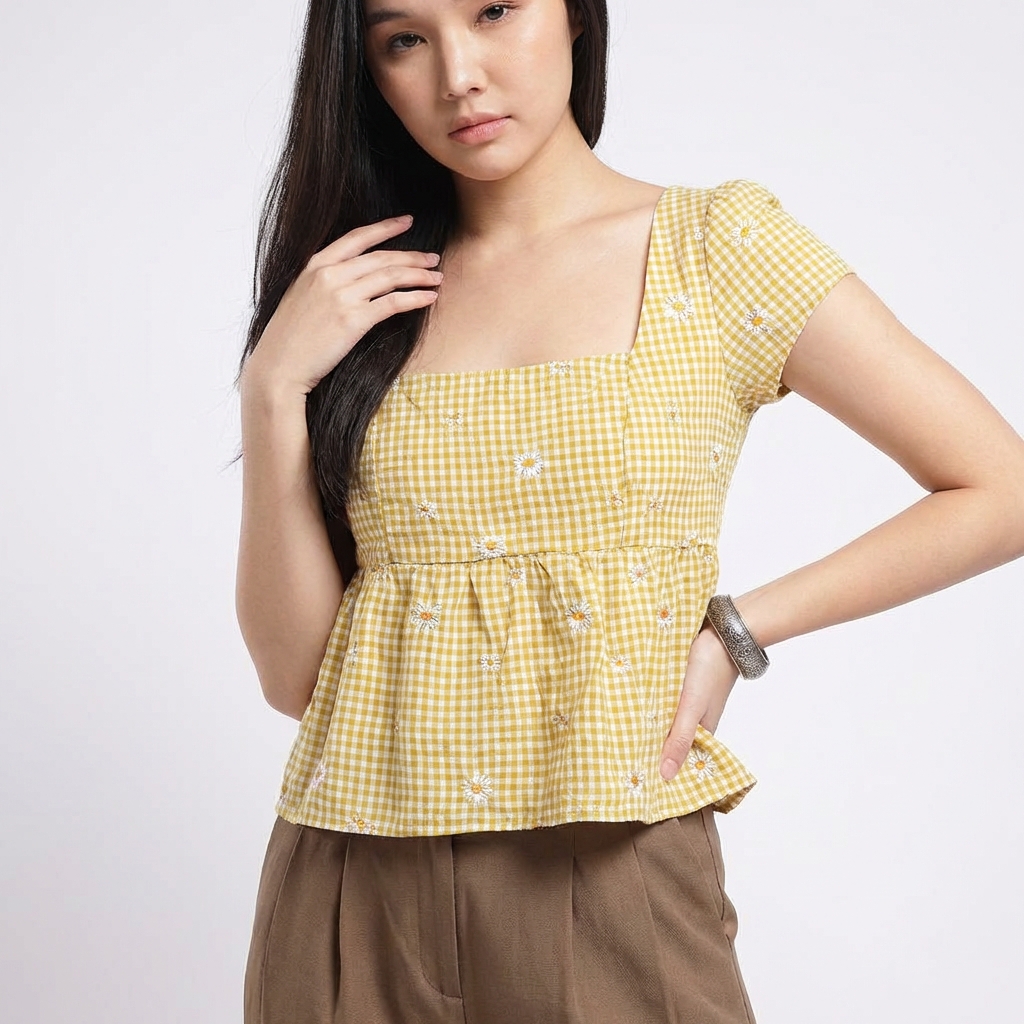
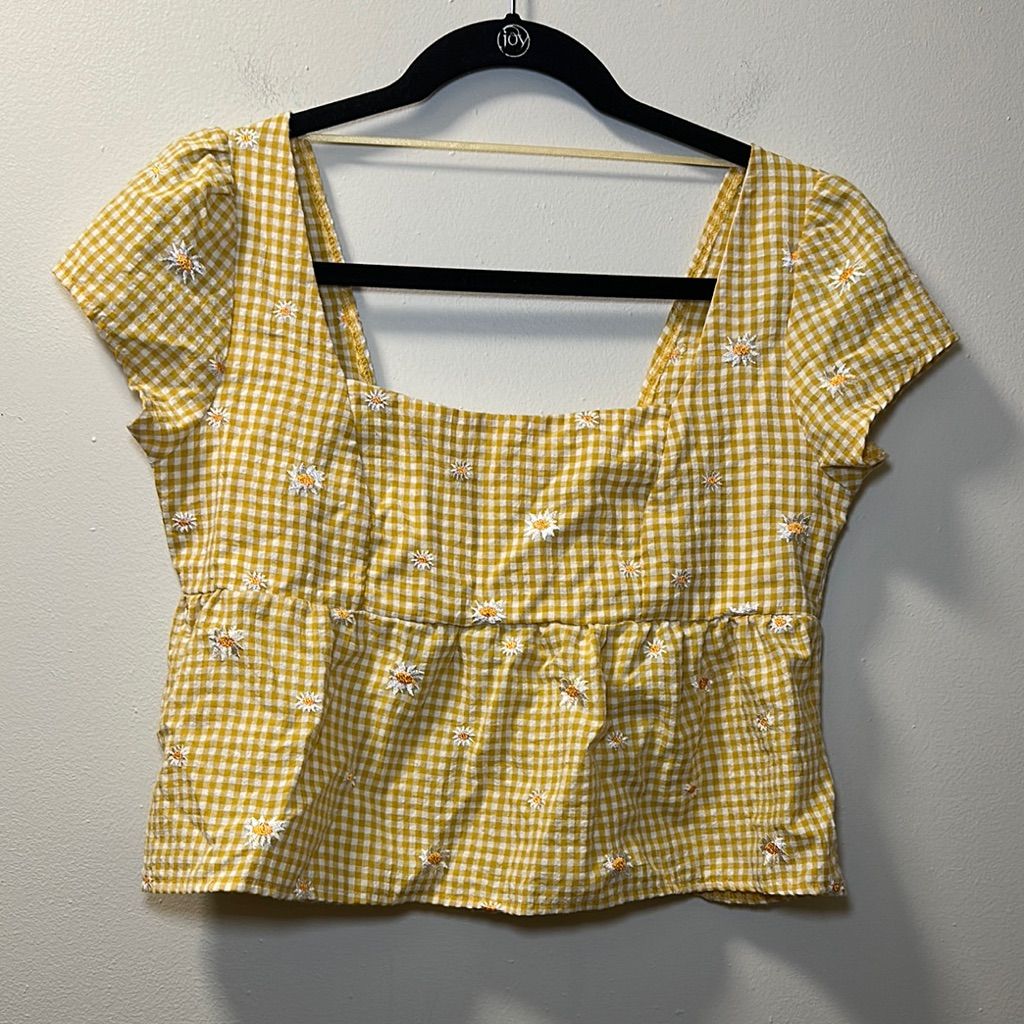
- **Fabric Physics:** The source garment appears to be a lightweight woven cotton or linen blend with a gingham check pattern. It has a matte finish with low specularity (no shine). The fabric has moderate stiffness, evident in the puff sleeves and the gathered empire waist, meaning it will hold structure rather than draping like liquid. The embroidery adds localized rigidity and surface texture depth.
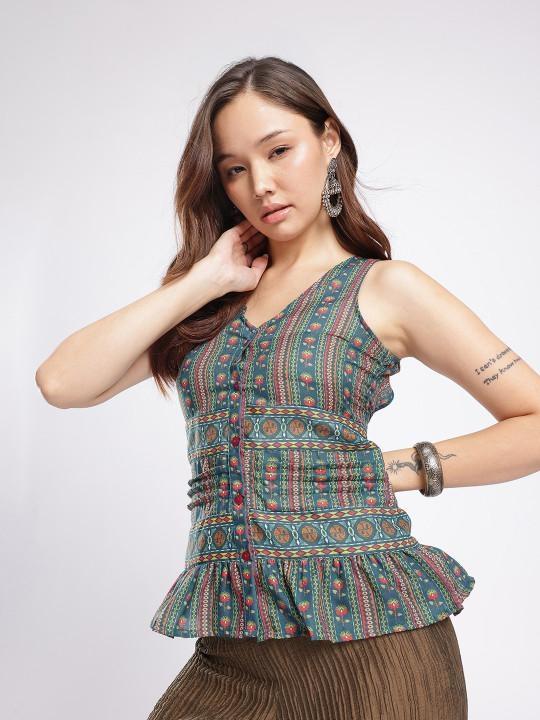
- **Key Features:** The square neckline is critical and distinct from the target's current V-neck. The short cap/puff sleeves must be generated where the target is currently sleeveless. The empire waist seam (horizontal stitching under the bust), the gathered "peplum" style flare at the bottom, and the specific distribution of the white daisy embroidery must be preserved. The yellow and white gingham pattern requires precise texture mapping to avoid aliasing.
PHASE 2: FIT & DRAPE SIMULATION
- **Body Mapping:**
- **Right Arm (Raised):** The right shoulder strap and sleeve must conform to the lifted deltoid. The fabric at the right armpit should lift and bunch slightly due to the raised arm.
- **Left Arm (Akimbo):** The left sleeve should sit naturally on the shoulder. The torso fabric should drape relatively straight with a slight outward flare at the waist due to the garment's cut.
- **Torso:** The empire waistline of the new top must align with the user's under-bust area. The hemline of the source garment appears cropped; it should fall near the user's natural waist, likely exposing the top of the brown trousers more than the current garment.
- **Occlusion Handling:**
- **Hair:** The long dark hair falling over the user's right shoulder and chest is a critical occlusion layer. It must be masked and composited *over* the new yellow strap and bodice.
- **Right Hand:** The fingers touching the neck/shoulder area must remain on top of the garment if the new neckline interacts with that space.
- **Left Arm/Wrist:** The silver bracelet and the left hand resting on the hip must be segmented out. The hem of the new shirt must settle around the hand/hip contact point, potentially draping slightly over the thumb depending on final length.
PHASE 3: ENVIRONMENT & LIGHTING
- **Light Match:** The target image utilizes soft, high-key studio lighting, predominantly from the front-left (based on forehead highlights). The new yellow garment must adopt this lighting model: brighter exposure on the left bodice, with subtle, soft shadowing under the bust gather and on the right side of the torso.
- **Color Calibration:** The source image has a slightly warmer, indoor cast. The white squares in the gingham pattern must be white-balanced to match the neutral/cool white of the target studio background. The yellow saturation should be adjusted to match the vibrancy of the target's skin tone without becoming neon.
PHASE 4: IDENTITY PROTECTION
- **Facial Lock:** The user's entire head, including eyes, nose, lips, jawline, and dangling earring, must be frozen. The skin tone on the neck and exposed chest (in the square neck area) must seamlessly match the face.
- **Body Integrity:** The user's arm volume and waist width must remain unaltered. Specifically, the tattoos on the user's left outer arm must be preserved and remain visible below the new short sleeve. Do not slim the waistline to match the hanger shape; warp the cloth to the user's existing silhouette.