
Thinking Process
PHASE 1: VISUAL DECONSTRUCTION
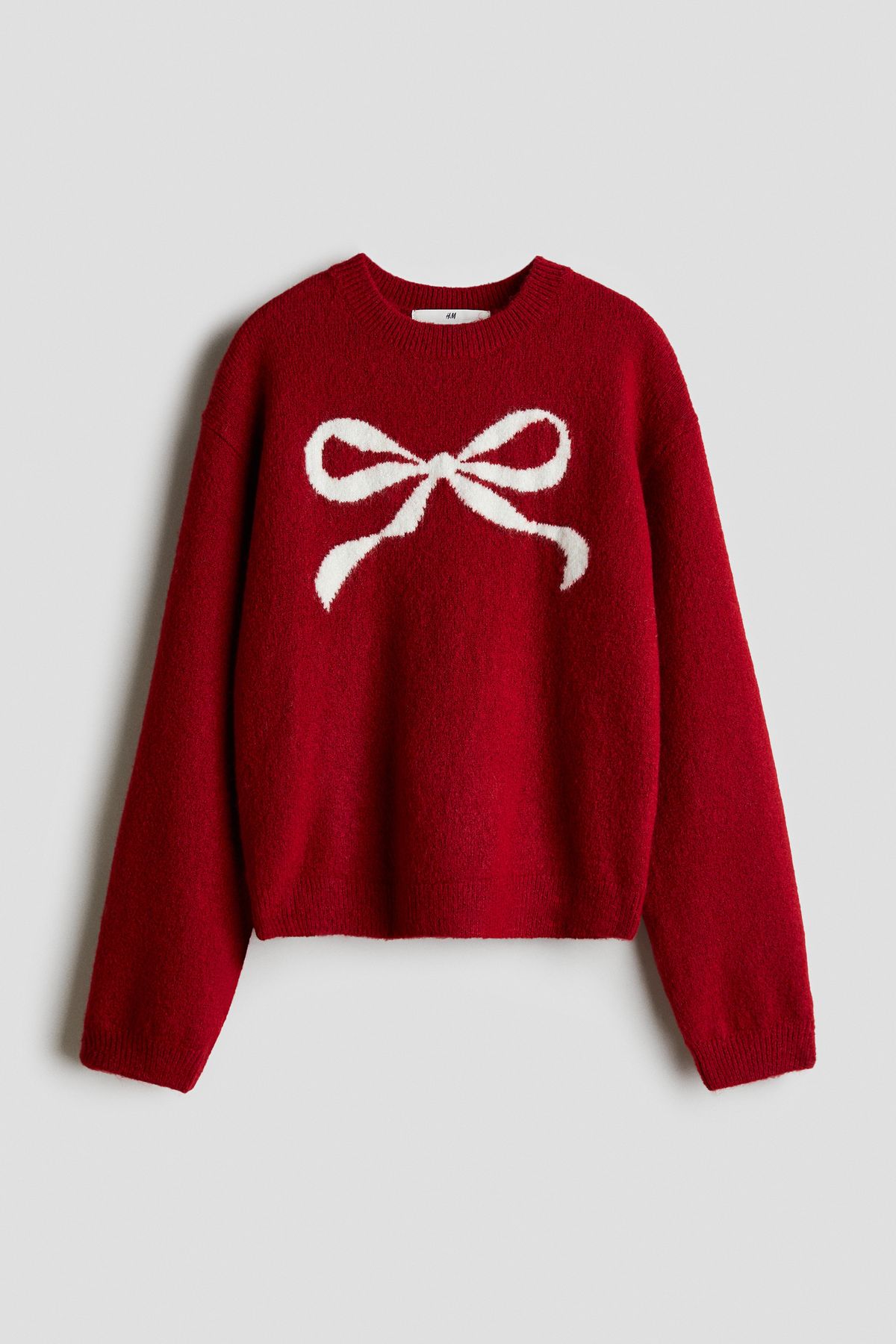
- **Fabric Physics:** The source garment is a medium-weight knit sweater (wool or synthetic blend) with a soft, fuzzy texture. Unlike the user's current thin, woven floral shirt, this material is thicker, opaque, and matte. It will absorb light rather than reflecting it. The simulation must replicate the "micro-fuzz" or halo effect on the edges to distinguish it from a flat print.
- **Key Features:** The large white bow graphic on the chest is the central focal point and must warp correctly over the curvature of the bust. The ribbed texture on the crew neckline, sleeve cuffs, and bottom hem must be preserved. The drop-shoulder seam construction needs to be maintained.
PHASE 2: FIT & DRAPE SIMULATION
- **Body Mapping:** The user is in an open pose with arms extended sideways to hold a railing. The sweater simulation must account for tension across the chest due to the arm spread. The sleeves should follow the arm line but exhibit soft, transverse folds near the armpits and elbows due to the knit fabric's resistance to sharp creasing. The hem of the sweater is likely shorter than the current yellow shirt; it should fall naturally at the hip line, interacting with the jeans waistband.
- **Occlusion Handling:** The horizontal metal railing is a critical occlusion object. It cuts across the user's lower torso/hip area. The sweater must appear *behind* the railing at the waistline. The user's hands at the far ends of the sleeves must remain visible; the sleeve cuffs should end at the wrist bone, ensuring the hands layer *over* the garment if the sleeves extend that far.
PHASE 3: ENVIRONMENT & LIGHTING
- **Light Match:** The target environment is a large indoor space (mall) with diffused, cool-toned daylight entering from skylights/windows above and behind. Lighting is soft with no harsh directional shadows. The sweater must cast soft ambient occlusion shadows on the jeans and under the arms.
- **Color Calibration:** The source image is a high-contrast studio shot. The red value needs to be slightly desaturated and exposure-adjusted to match the somewhat muted, natural lighting of the mall setting to prevent the sweater from looking like a "sticker."
PHASE 4: IDENTITY PROTECTION
- **Facial Lock:** The user's entire head, including face, ears, neck, and the pulled-back hairstyle, must be frozen and pixel-perfectly preserved.
- **Body Integrity:** Strictly forbid slimming of the waist or arms. The simulation must respect the user's natural silhouette. Note that the thick knit fabric will naturally add slight volume compared to the current thin shirt; this volume increase is physically accurate and should not be artificially reduced.