Thinking Process
PHASE 1: VISUAL DECONSTRUCTION
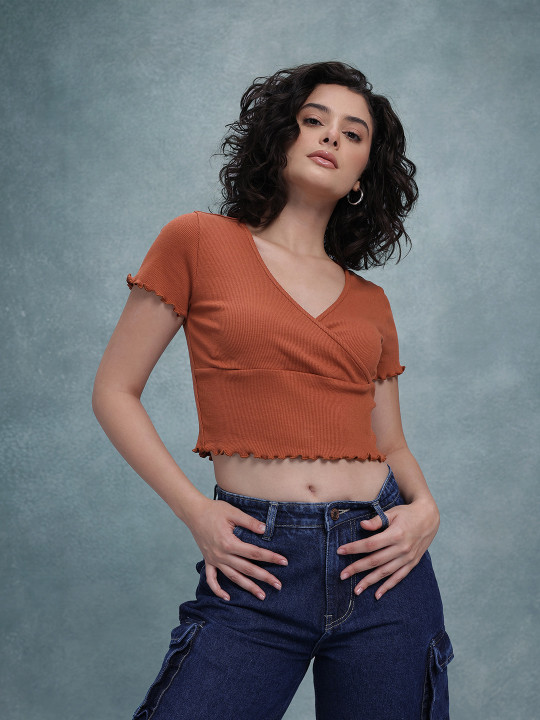
- **Fabric Physics:** The source garment is a ribbed jersey knit (likely cotton-elastane blend). It possesses high elasticity and a matte finish with very low specularity (no shine). The physics simulation must treat this as a "soft body" material that clings to contours rather than hanging stiffly. The "lettuce edge" (wavy hem) on the sleeves and bottom hem requires high-frequency cloth simulation to maintain its ruffle structure without looking rigid.
- **Key Features:**
1. **Ribbed Texture:** Vertical ribbing lines must remain parallel to the body's vertical axis, deforming only slightly with curvature.
2. **Surplice Neckline:** The specific V-shape cross-over construction on the chest.
3. **Lettuce Hems:** The wavy, unfinished-style edging on the sleeves and waist must be preserved.
4. **Cropped Length:** The garment terminates above the naval; this is significantly shorter than the user's current top.
PHASE 2: FIT & DRAPE SIMULATION
- **Body Mapping:**
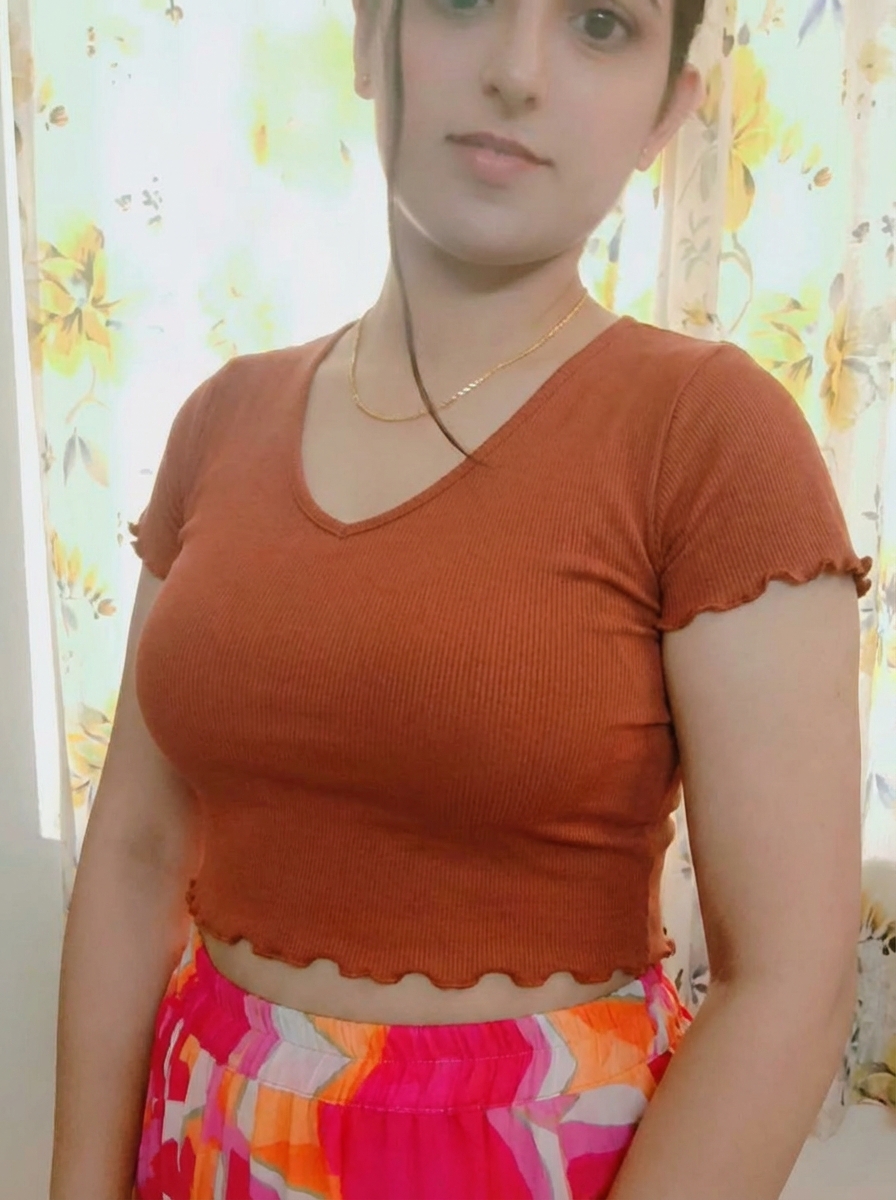
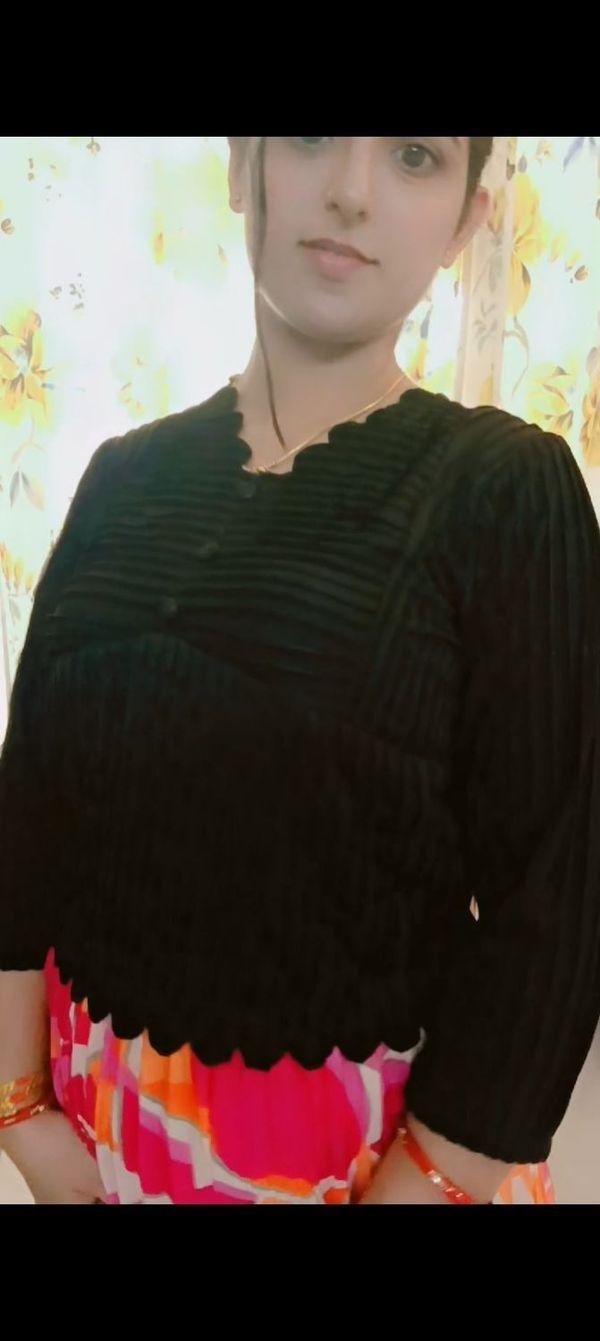
- **Generative Requirement (Critical):** The user is currently wearing a high-neck, long-sleeve top. The target garment is a deep V-neck with short sleeves and a cropped waist. The simulation must perform extensive **inpainting** to generate realistic skin texture for the user's exposed arms, décolletage, and midriff area.
- **Fit:** The source top is form-fitting/tight. It must map closely to the user's torso volume without the loose folding seen in the user's current heavy black top. Gravity will pull the V-neck slightly downward, but tension will keep the wrap-front taut across the bust.
- **Occlusion Handling:**
- **Hair Strand:** The long tendril of hair falling on the user's right shoulder (viewer's left) and along the cheek must be segmented and layered *over* the new rust-colored fabric and generated skin.
- **Necklace:** The gold chain currently sits on the black fabric. It must be digitally lifted and re-composited onto the newly generated skin of the neck area.
- **Waistline Interface:** The user's colorful skirt waistband will be visible. The new crop top should hover above this, necessitating a clean boundary between the new hem and the existing skirt.
PHASE 3: ENVIRONMENT & LIGHTING
- **Light Match:** The user image features diffuse, slightly hazy indoor lighting, likely back-lit or side-lit by a window (evident from the blown-out curtain background). The source garment's sharp studio shadows must be softened and diffused. A slight "bloom" effect should be applied to the garment to match the lower contrast/hazier quality of the user's selfie camera.
- **Color Calibration:** The source garment is a rich rust/brick orange. In the user's environment (dominated by warm yellows and pinks), the garment's color temperature must be shifted warmer (more yellow/orange) to integrate naturally. The saturation should be slightly reduced to match the noise floor of the target image.
PHASE 4: IDENTITY PROTECTION
- **Facial Lock:** The user's eyes, nose, lips, jawline, and the specific wisps of hair framing the face must be masked with a high-fidelity freeze. No pixels above the chin line should be altered.
- **Body Integrity:** The user's torso width and shoulder alignment must remain strictly unchanged. The "slimming" effect of the model's pose in the source image must NOT be transferred. The new garment must expand to fit the user's natural biometrics, not compress the user to fit the clothes.