Thinking Process
PHASE 1: VISUAL DECONSTRUCTION
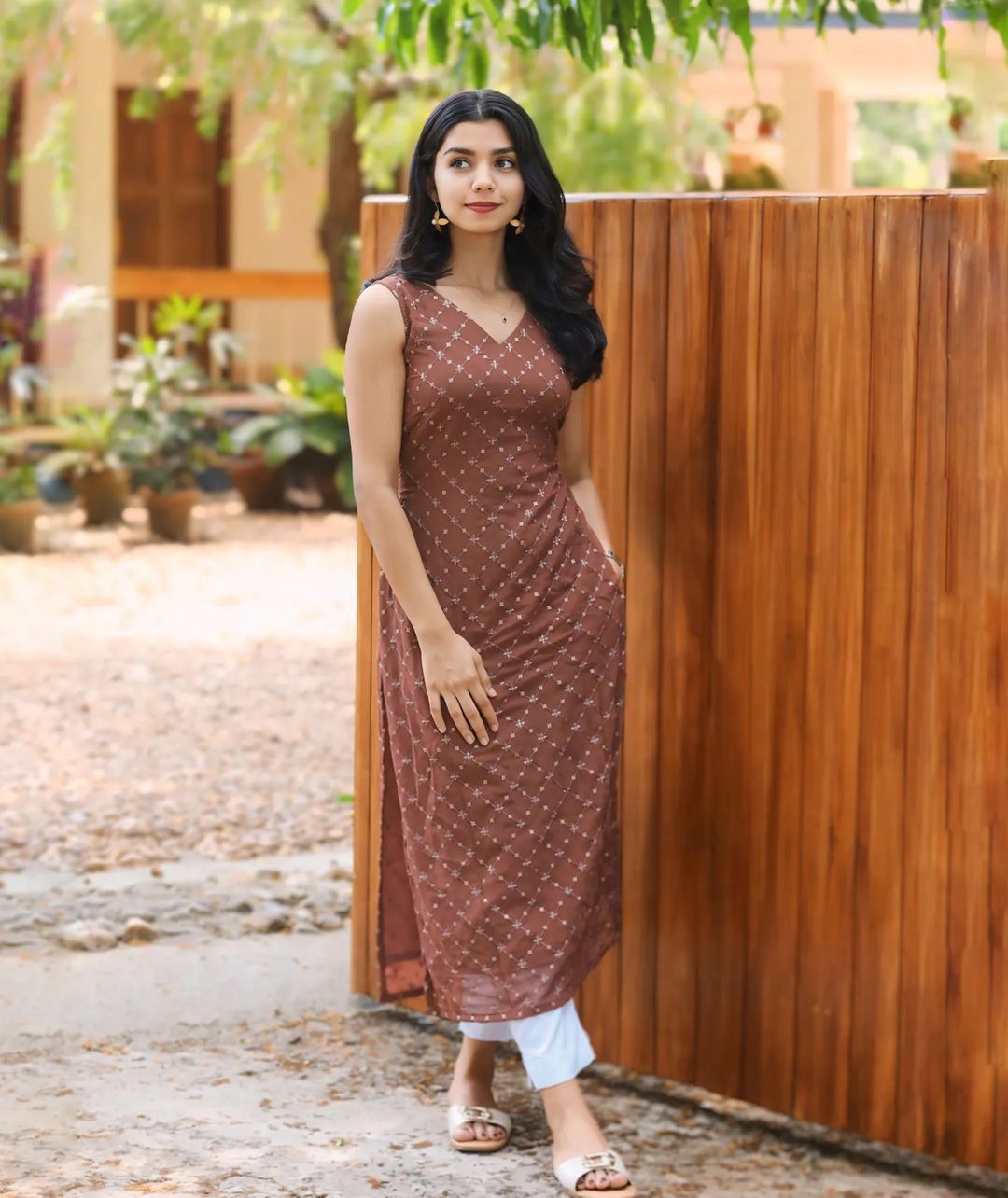
- **Fabric Physics:** The source garment is a medium-weight cotton or cotton-synthetic blend with a matte finish. It possesses a structured drape that falls vertically with gravity rather than clinging to curves (unlike jersey or silk). It has low reflectivity; light should diffuse across the surface rather than creating specular highlights.
- **Key Features:** The specific geometric cross-stitch/diamond embroidery pattern must be preserved with high fidelity. The V-neckline cut, the sleeveless armhole structure, and the side slits (if visible within the frame) are critical structural elements. The rust/brown earth tone must be maintained.
PHASE 2: FIT & DRAPE SIMULATION
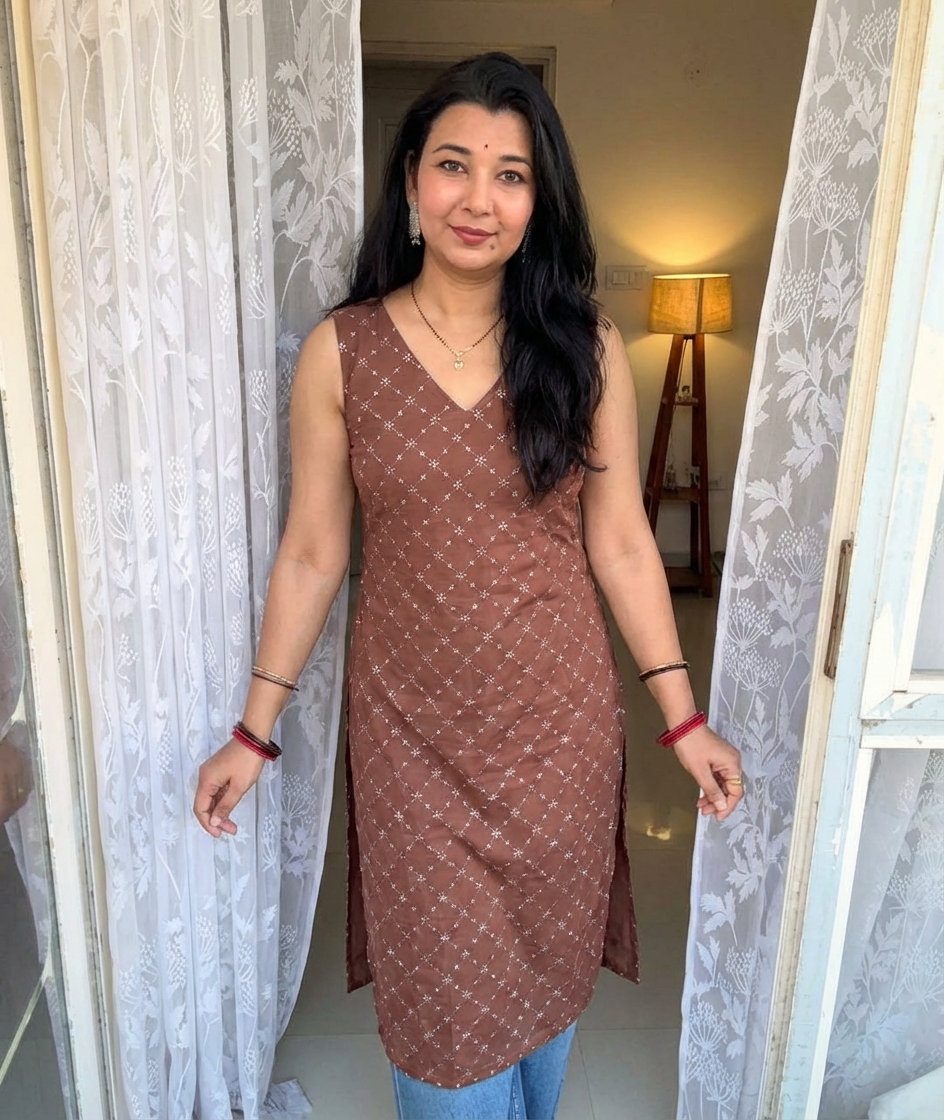
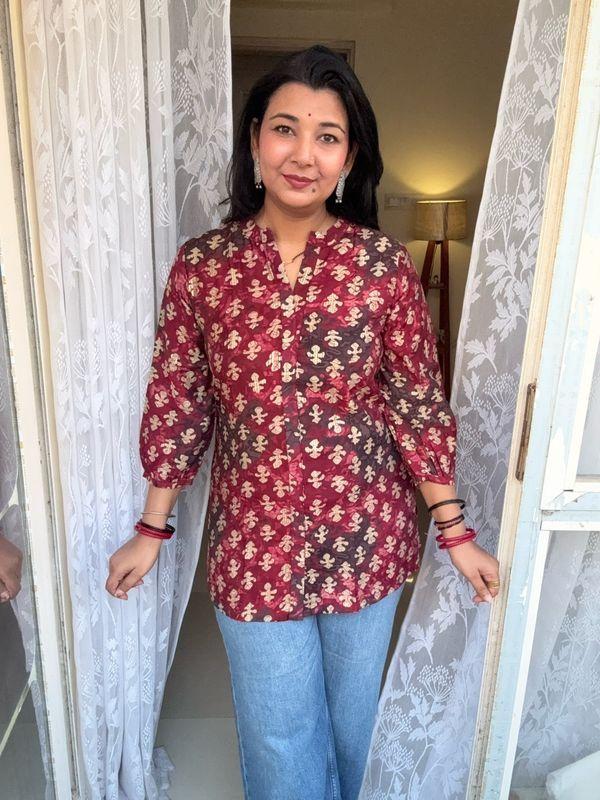
- **Body Mapping:** Since the source is sleeveless and the user is currently wearing 3/4 sleeves, the simulation must generate realistic skin texture for the user's upper arms to replace the current red sleeves. The garment is a long tunic (Kurti); it must drape over the user's hips and upper thighs, hanging straight down without tucking into the jeans. The shoulders of the garment must align with the user's natural shoulder width, sitting flat rather than bunching.
- **Occlusion Handling:** The user's long black hair draping over her left shoulder (viewer's right) is a primary occlusion layer; the fabric must be rendered *under* this hair. The necklace and the bangles on both wrists must be segmented and layered *over* the new arm skin/garment.
PHASE 3: ENVIRONMENT & LIGHTING
- **Light Match:** The user's environment has soft, diffuse indoor lighting, likely warmer in tone due to the lamp in the background. The source image is bright outdoor daylight. The transferred garment's exposure must be lowered, and the white balance warmed to match the indoor ambiance. Soft shadows should be cast on the garment consistent with the room's ambient occlusion, particularly under the hair and chin.
- **Color Calibration:** The "outdoor" brightness of the rust fabric needs to be desaturated slightly to match the lower-contrast indoor setting. The white embroidery threads should reflect the ambient warm room light, not bright sunlight.
PHASE 4: IDENTITY PROTECTION
- **Facial Lock:** Absolute pixel-lock required for the user's face (eyes, nose, mouth), ears, and earrings. The jawline definition must remain untouched.
- **Body Integrity:** The user's shoulder width, hip width, and torso volume must be preserved strictly. Do not impose the slimmer silhouette of the source model onto the user. The generated skin for the arms must match the user's facial skin tone and suspected arm volume precisely.