Thinking Process
PHASE 1: VISUAL DECONSTRUCTION
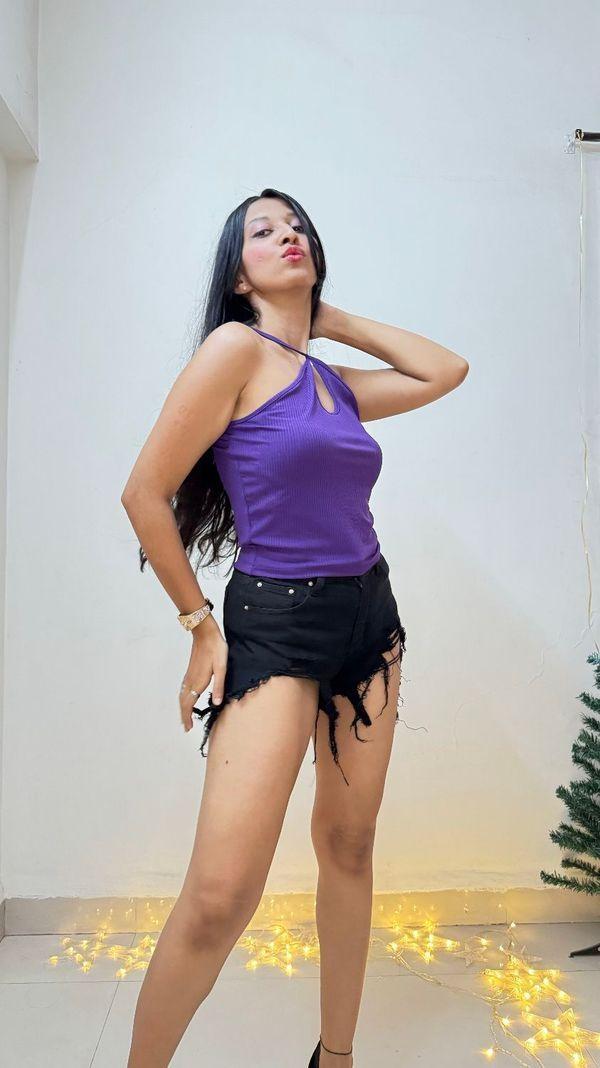
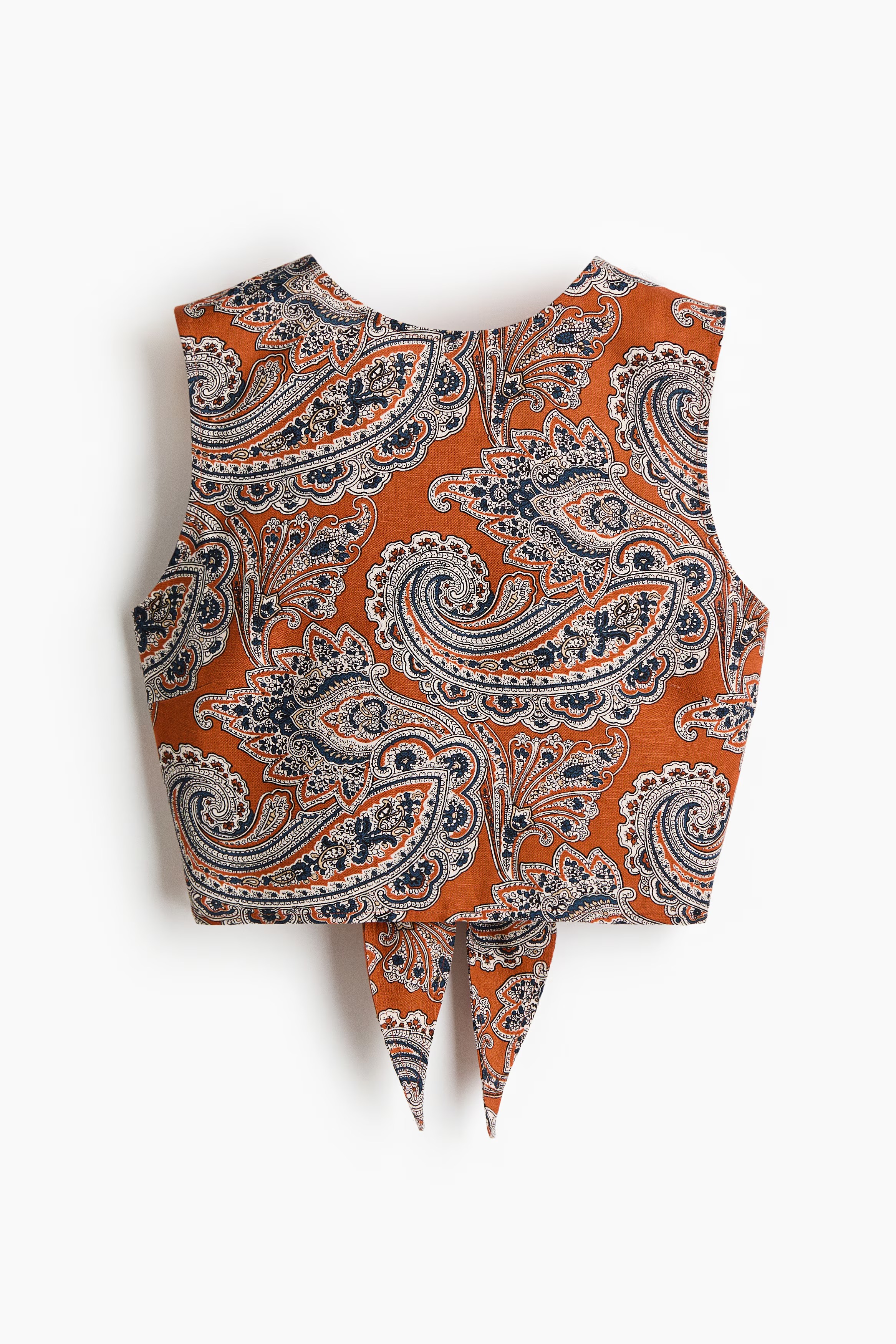
- **Fabric Physics:** The source garment appears to be a woven cotton or linen blend with a matte finish. It lacks significant elasticity, meaning it should not cling tight to the skin like the current ribbed purple top. It should exhibit semi-structured draping with crisp folds rather than fluid, liquid-like ripples. Light reflection should be diffuse with low specularity.
- **Key Features:** The complex paisley pattern (rust, navy, white) must maintain high resolution without pixelation. The signature tie-knot detail at the center-bottom hem is critical and must retain its volumetric 3D shape. The sleeveless cut with standard shoulder straps (opposed to the user's current halter neck) must be clearly defined.
PHASE 2: FIT & DRAPE SIMULATION
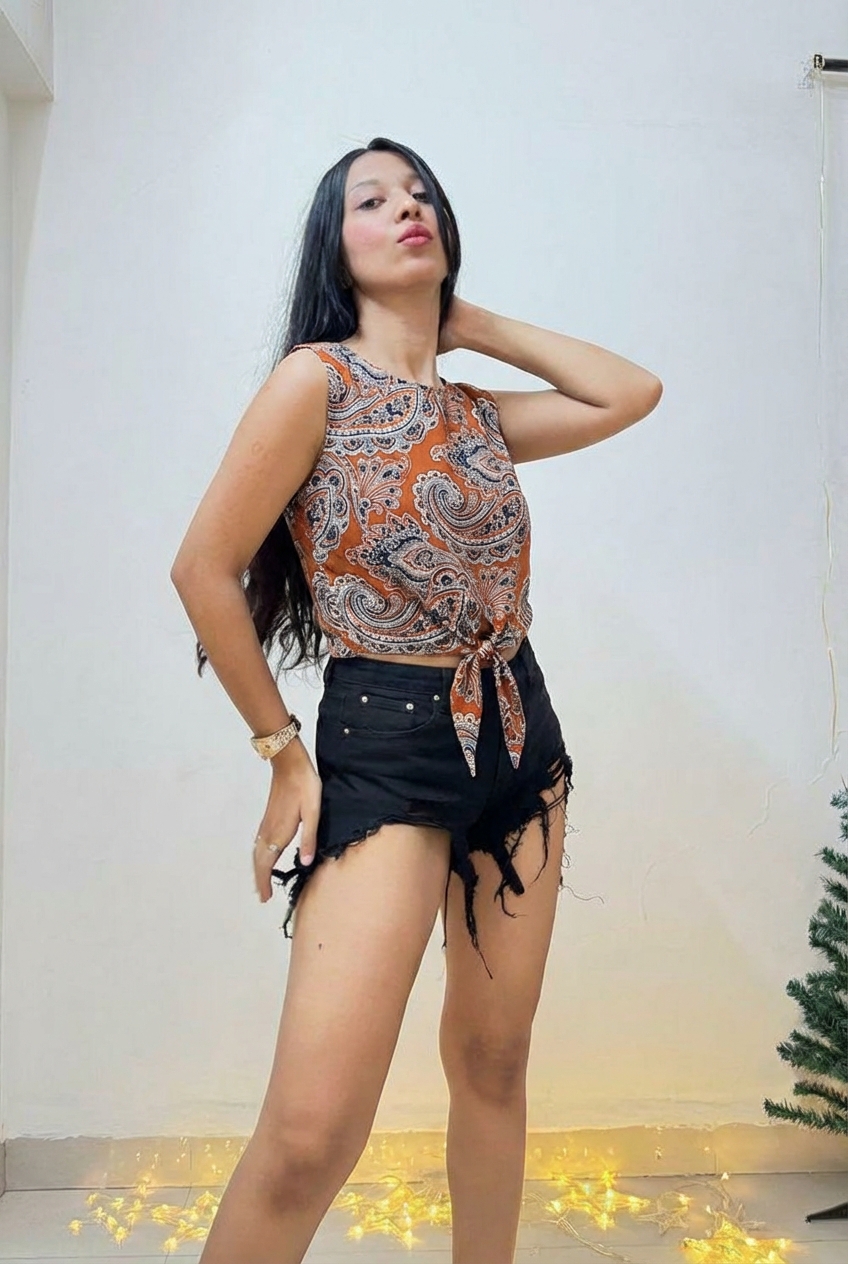
- **Body Mapping:** Due to the user's raised right arm, the garment's right shoulder strap must lift and bunch slightly near the clavicle. The bodice fits boxier than the current tight top; therefore, there should be a visible gap between the fabric and the user's waist, casting a small shadow onto the midriff. The tie-knot should rest centrally, slightly above the waistband of the shorts, responding to gravity by hanging downwards.
- **Occlusion Handling:**
- **Hair:** The user's long black hair cascades over the left shoulder and chest. The new garment must be rendered logically *underneath* these hair strands using alpha masking to preserve individual hair details.
- **Shoulders/Neck:** The current purple halter straps must be digitally removed. The skin where the halter straps currently sit must be inpainted to look natural before overlaying the new garment's shoulder straps.
PHASE 3: ENVIRONMENT & LIGHTING
- **Light Match:** The user scene has diffuse, soft indoor lighting coming primarily from the front-left, casting soft shadows to the right. The new garment must simulate ambient occlusion in the folds (especially around the tie-knot) and cast a drop shadow onto the user's midriff and the waistband of the black shorts.
- **Color Calibration:** The source image is high-contrast studio lighting. The rendered garment needs its exposure slightly lowered and temperature cooled marginally to match the ambient, slightly yellowish/warm glow of the fairy lights and indoor room tone, ensuring it doesn't appear "superimposed."
PHASE 4: IDENTITY PROTECTION
- **Facial Lock:** Absolute freeze on the user's face, specifically the eyes, nose, lips (pout expression), and jawline. The position of the head and the hand resting on the back of the head must remain untouched.
- **Body Integrity:** NO slimming filters or liquefy effects on the user's waist or hips. The user's skin tone on the exposed midriff, arms, and legs must remain consistent with the original image. The black shorts are to remain 100% unaltered.