Thinking Process
PHASE 1: VISUAL DECONSTRUCTION
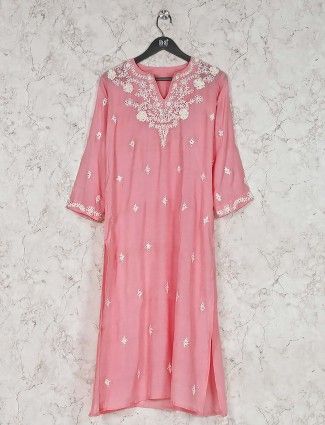
- **Fabric Physics:** The source garment is a lightweight, semi-sheer material (likely georgette or chiffon blend) with a gentle, non-rigid drape. It possesses a matte finish with low specularity; light should diffuse softly across the surface rather than creating harsh highlights. The fabric has high pliability, meaning it will fold readily rather than holding a stiff shape.
- **Key Features:**
- The intricate white floral embroidery (Chikankari style) around the V-neckline, scattered across the bodice, and on the sleeve cuffs must be preserved with high fidelity.
- The garment is a "Kurta" (long tunic), extending significantly below the waist.
- 3/4 length sleeves with a loose fit.
- Side slits (chaak) visible near the hem which affect how the garment spreads.
PHASE 2: FIT & DRAPE SIMULATION
- **Body Mapping:**
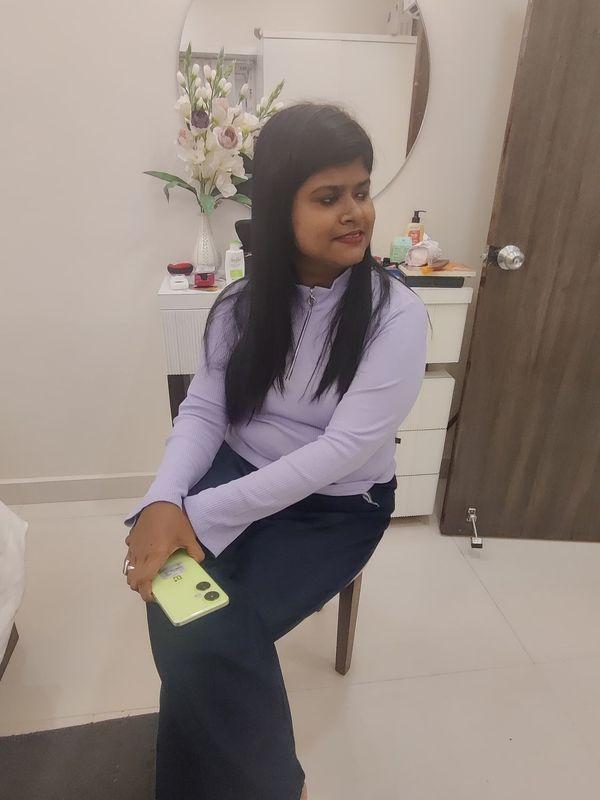
- **Shoulders & Chest:** The garment must sit flatteringly on the shoulders, replacing the current tight ribbed silhouette with a looser, relaxed fit.
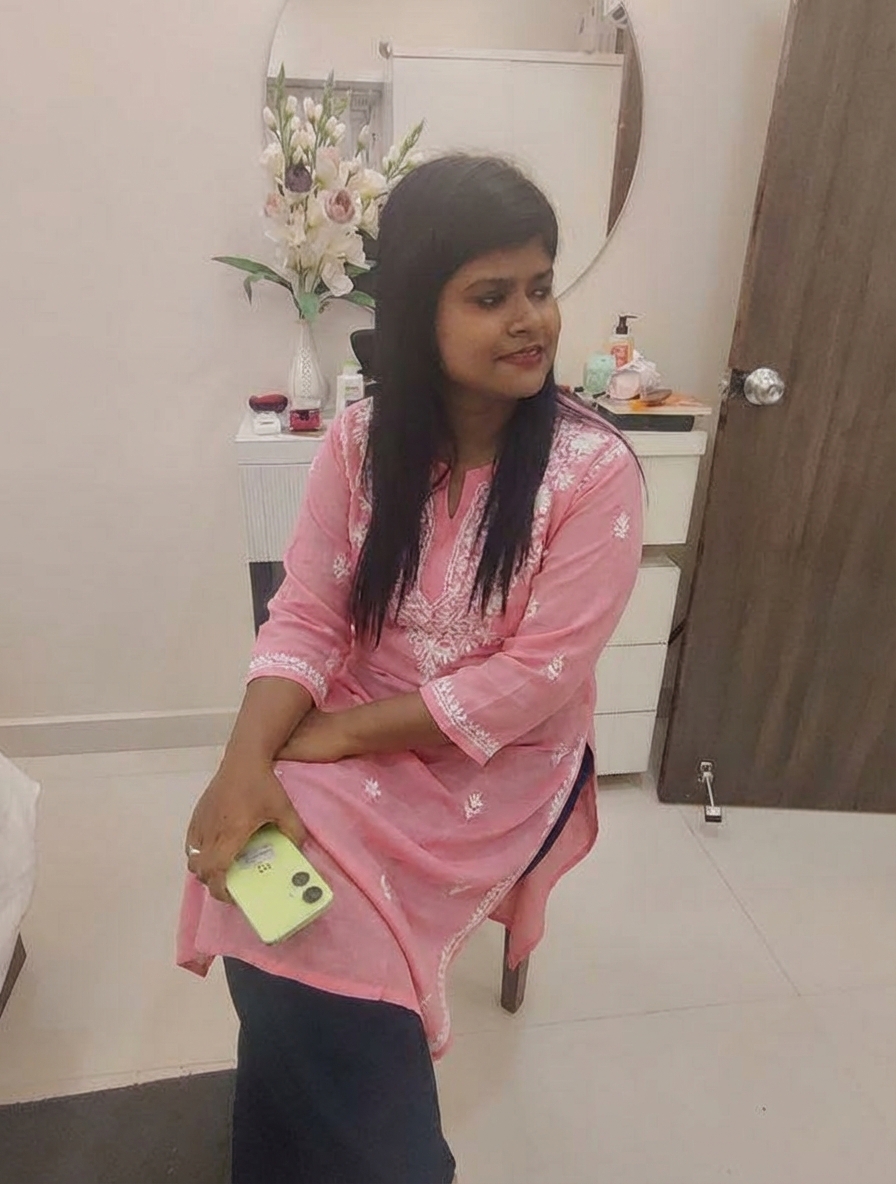
- **Sitting Physics:** Since the user is seated, the lower portion of the long Kurta cannot hang straight down. It must pool and fold naturally over the user's lap and upper thighs, conforming to the bend of the legs. The fabric should drape *over* the dark trousers, likely splaying slightly at the side slits due to the seated posture.
- **Sleeves:** The new 3/4 sleeves should hang somewhat loosely around the elbows, distinct from the user's current tight long sleeves.
- **Occlusion Handling:**
- **Hair:** The user has long black hair draped forward over both shoulders and the chest. This is a critical occlusion layer; the hair must be masked and rendered *on top* of the new pink garment, casting appropriate shadows onto the fabric.
- **Hand & Phone:** The user's right hand and the lime green smartphone rest on the thigh. The Kurta fabric must appear to pass *behind* the hand and phone, or drape around them if the length covers that area.
- **Chair Edge:** The garment hem may interact with the seat of the chair/stool.
PHASE 3: ENVIRONMENT & LIGHTING
- **Light Match:** The user image features soft, diffuse indoor lighting, slightly warm, with the primary source likely overhead or frontal. The new garment must shed the sterile, cool, bright studio lighting of the source image. Shadows on the Kurta should be generated within the deep folds at the lap and under the hair.
- **Color Calibration:** The source pink is high-exposure/cool. It must be color-graded to match the warmer, slightly dimmer ambient tone of the user's room to prevent a "cut-and-paste" sticker effect. The white embroidery should reflect the room's warm ambient light, not pure white.
PHASE 4: IDENTITY PROTECTION
- **Facial Lock:** Absolute freeze on the facial region (eyes, nose, mouth, chin) and the neck skin tone. The user's facial expression and head tilt must remain identical.
- **Body Integrity:** Do not slim the user's arms or alter the shoulder width. While the clothing silhouette will change from tight to loose, the underlying volumetric data of the user's body must remain constant. Do not modify the leg position.