Thinking Process
PHASE 1: VISUAL DECONSTRUCTION
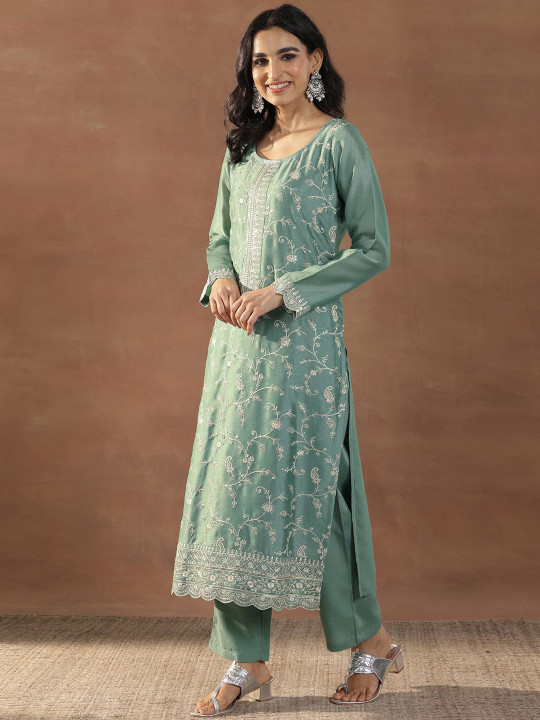
- **Fabric Physics:** The source garment is a sage green kurta, likely made of a silk-blend or Chanderi fabric. It exhibits moderate specular highlights (sheen) and fluid draping properties, but possesses structural stiffness due to the extensive embroidery. Unlike the user's current cotton shirt, this fabric will not crumble easily; it should hang with vertical weight and resist sharp micro-creases.
- **Key Features:** The intricate white floral/vine embroidery covering the front panel and sleeves must be preserved with high fidelity. Critical edge details include the scalloped, heavily embroidered hemline and the matching scalloped sleeve cuffs. The round neckline with the specific central slit/placket detail must be maintained.
PHASE 2: FIT & DRAPE SIMULATION
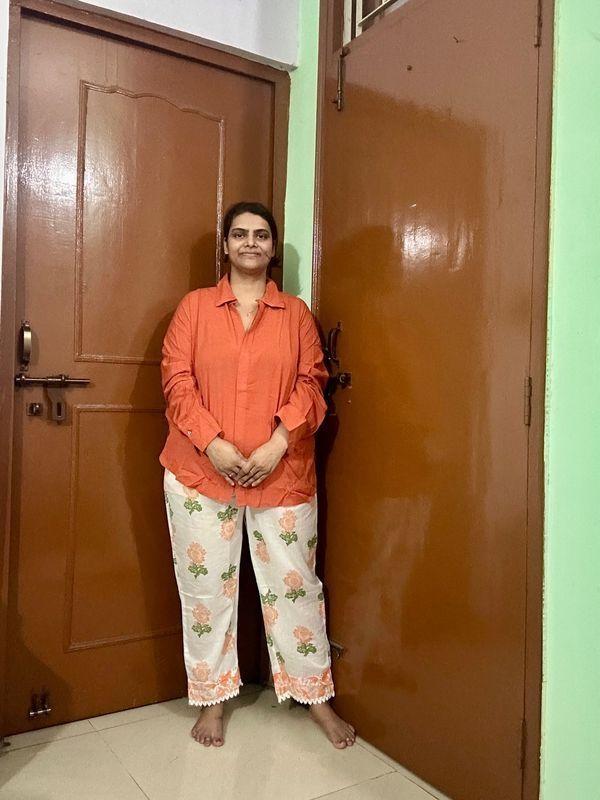
- **Body Mapping:** The source garment is a long tunic (kurta). It must extend significantly lower than the user's current orange shirt, likely reaching mid-thigh or knee level, covering the upper portion of the floral trousers. The fabric should drape vertically from the bust, following the "column" silhouette of the kurta rather than tucking in. At the elbows (where the user's arms are slightly bent), the long sleeves should bunch naturally in the inner elbow crease while maintaining the cylindrical shape of the cuff at the wrist.
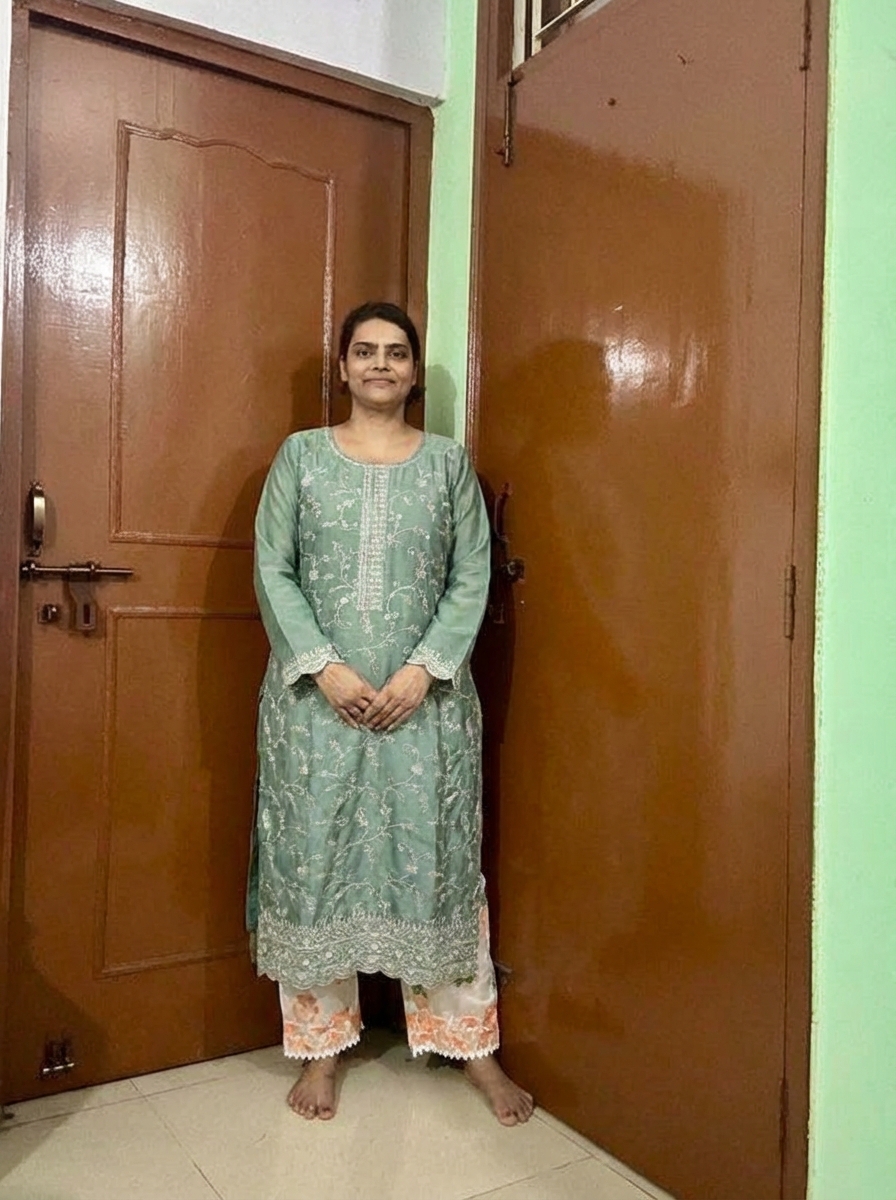
- **Occlusion Handling:** The user's hands are clasped in front of the lower abdomen. This is a critical occlusion zone. The green kurta fabric must appear to pass *behind* the hands and wrists. The simulation must generate the fabric flowing around the forearms, ensuring the hands and any visible skin on the feet remain the top-most layer. The user's hair is tied back, so shoulder occlusion is minimal, but the neck area must blend seamlessly.
PHASE 3: ENVIRONMENT & LIGHTING
- **Light Match:** The user is in an indoor environment with overhead, somewhat harsh artificial lighting (likely LED), casting a hard drop shadow behind her onto the brown door. The studio-lit source garment must be relit to match this. The sheen on the green silk must be dulled slightly to match the ambient room noise, and a directional shadow must be generated behind the new garment onto the background door to ground the subject.
- **Color Calibration:** The source image has warm, soft studio tones. The target room has a mix of green wall reflection and yellow/white artificial light. The sage green of the kurta needs to be color-graded to reflect the indoor color temperature, likely slightly desaturating the green and adding a warm cast to blend with the brown wooden doors.
PHASE 4: IDENTITY PROTECTION
- **Facial Lock:** The user's entire head, including hair, facial structure, ears, and neck skin, must be masked and frozen. No pixels above the collarbone should be altered.
- **Body Integrity:** The user's shoulder width, arm thickness, and stance must remain strictly unchanged. The garment simulation must wrap around the user's existing biometric volume. Do not slim the waist or elongate the limbs to match the source model's proportions. The user's feet and the visible lower sections of the floral pants (below the new kurta hem) must remain untouched.